
OLTS versus OTDR: specify the fiber test you need
Understand what OLTS and OTDR results establish, then request a fiber acceptance package that matches the link and application.
Quick answer: Use an optical loss test set to measure the installed link's insertion loss against the agreed acceptance requirements. Use an OTDR when the specification calls for event characterization or the project needs evidence about individual connections, splices, and fault locations. The tools answer different questions; an OTDR trace should not silently replace the required loss test.
A fiber report can contain an impressive graph and still leave the buyer's main question unanswered. The graph may describe events along the cable without providing the agreed measurement of the complete link. Conversely, a passing total-loss result may offer little help in understanding where a particular event occurs.
You do not have to become a test-equipment operator to purchase useful acceptance work. You do need to know what each result is supposed to establish, how the result relates to the installed labels, and which exceptions require correction. Start there before deciding whether a quote's testing line item is adequate.
Separate the two questions the instruments answer
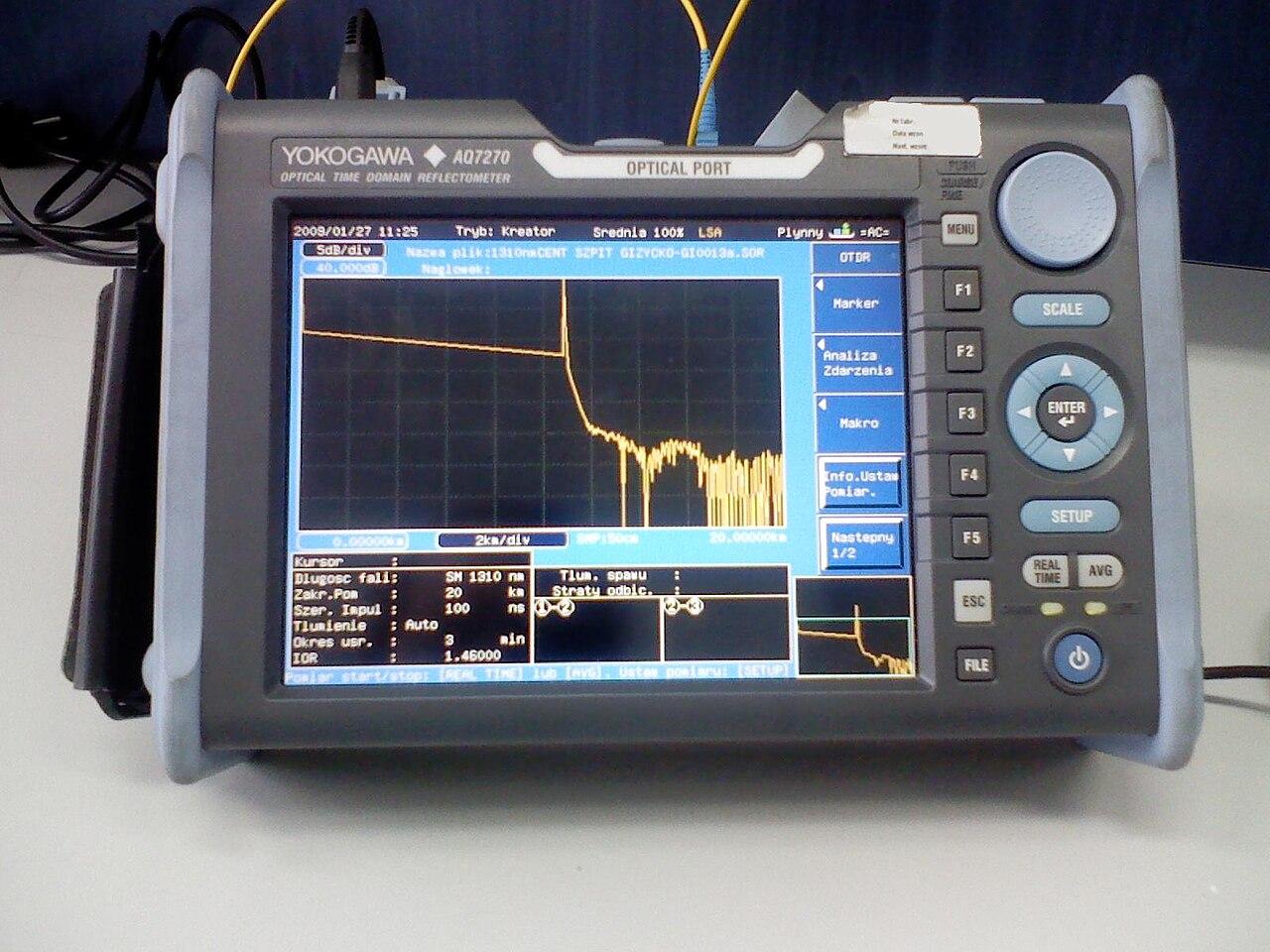
An OLTS, or optical loss test set, uses a source and meter to determine insertion loss through the tested link. An OTDR, or optical time domain reflectometer, uses returned light to characterize events along the fiber. Fluke Networks describes the methods as complementary, rather than interchangeable versions of the same test.
For procurement, translate that distinction into two questions. Does the complete installed link meet the agreed loss requirement? What do the events along that link reveal about its construction or a problem? The first question supports acceptance of the end-to-end passive path. The second supports examination of specific parts of that path and can be valuable during installation or later troubleshooting.
Neither question is answered merely by seeing a network device show a link light. An active connection is useful evidence for an operational test, but it does not identify the test method, limit, and documented passive-link result your project required. Keep those forms of evidence in their respective places.
Decide what is being accepted before naming the tester
Define the link boundaries and intended application. A panel-to-panel permanent link is not the same test boundary as a connection that also includes equipment patch cords. Identify the fiber type, required interface, and relevant design requirements with the responsible designer. The acceptance specification should tell the tester what must be demonstrated.
Corning's system-testing tutorial places application and fiber decisions in the planning stage. It also distinguishes passive-link performance from the active electronics eventually connected to it. That matters commercially: a cabling test result cannot by itself establish that an incorrectly selected transceiver will support the proposed application.
Avoid a universal pass threshold copied from another project. Ask for the basis of the selected limit and how the installed configuration fits it. The report should identify that limit clearly enough that a reviewer can tell what passed. If the design changes, have the acceptance requirements reviewed rather than assuming the original test settings still apply.
Ask what the loss measurement includes
A measured loss value needs its test context. Ask which reference method will be used, which endpoints are included, and how the setup matches the agreed link boundary. Fluke's guidance explains that different reference methods can include or exclude different end connections. Two numbers are not directly comparable merely because both are expressed in decibels.
This is a question for the qualified testing team, not an invitation for the buyer to improvise a procedure. Request the chosen method in the specification and enough information in the records to establish that it was followed. If equipment compatibility requires a different setup, ask for the reason and its effect on the acceptance interpretation.
Also settle which strands and wavelengths will be tested. Do not assume “all fiber tested” means the spare strands were included or that every required test condition was recorded. Your fiber acceptance checklist should connect each installed identifier to the expected evidence, including any strands reserved for future use.
Use the OTDR where event information has a purpose
An OTDR can help locate and characterize events within a link, including connectors, splices, and faults. Fluke's OTDR overview explains that diagnostic role. For the owner, the useful question is what event information the project needs and how it will be documented.
Consider a hypothetical link between two buildings with an intermediate splice enclosure. A total-loss result may address the agreed overall limit, while an event record can help identify the enclosure's location within the tested path and support examination of a suspicious event. The additional evidence has a practical purpose because the owner will need to maintain that route after installation.
An OTDR result also depends on a suitable setup and interpretation. Ask the testing team to specify the required directions, wavelengths, launch and receive arrangements, and retained trace files. Have unexplained events reviewed by someone qualified to interpret them. A polished event map should not turn an unresolved anomaly into an accepted condition simply because it is easier to read than a trace.
Resolve disagreements between results before handover
When one test appears acceptable and another raises a concern, do not choose whichever report makes the project easier to close. Ask the testing team to check the identifiers, setup, limits, and physical link involved. Establish that the two records actually refer to the same installed path and intended acceptance conditions.
Corning cautions against using an OTDR as the primary method for overall link-loss certification because the result is inferred from returned light. That supports a straightforward purchasing rule: require the specified loss measurement and use event evidence for its stated role. A disagreement calls for investigation, not an undocumented substitution of methods.
Keep the correction record attached to the original exception. If a connector is cleaned, a termination repaired, or a route changed, record the action and the required retest. Preserve the final accepted results without leaving obsolete failed files mixed into the handover package as though all versions represent the same completed condition.
Request files that another reviewer can understand
A useful report connects physical labels to a documented measurement. The file name alone may not be enough, particularly when several cabinets use similar port numbering. Ask the testing team to demonstrate one sample record before the full project is tested so ambiguous identifiers can be corrected early.
Include these items in the requested package:
- The link and strand identifier, with endpoints that match the installation record.
- The test method, required settings, applicable limit, and recorded result.
- The relevant instrument and test date information.
- Native results or traces where agreed, plus a readable report.
- A resolved exception list or clearly assigned outstanding items.
Request appropriate calibration and setup records as part of the agreed quality process. Do not turn the instrument's logo into a substitute for those details. A report from a Fluke Networks tester still needs the correct identifiers, method, and limits to be useful for your project.
Keep passive testing and business acceptance connected
After the cabling evidence is accepted, the operating connection still needs its own checks. Verify the selected optics and network configuration, then test the workflows within scope. That might mean communication between switches or access to an approved business application. Describe the expected result before the work window begins.
This staged approach helps assign a problem to the right part of the project. If the passive link passes its agreed tests but the operating connection fails, the investigation can examine the electronics and configuration without pretending that a passing cable result proves the entire system. If passive testing fails, resolve that evidence before relying on the link for production.
Keep the accepted records accessible to the people who will maintain the installation. Our single-mode and multimode guide discusses the broader application choice; the testing package should preserve what was actually installed and verified. Future troubleshooting becomes easier when the starting condition is documented rather than remembered.
The takeaway
OLTS and OTDR results should be purchased for the questions they answer. Define the installed link and application first, agree on the loss-testing requirements, and add event characterization where the specification or maintenance needs call for it. Do not allow a change in instrument to quietly change the acceptance promise.
The result worth paying for is a traceable record. Every accepted strand should connect to the correct label, method, limit, and final evidence. That makes the test package useful at installation, during an expansion, and when someone investigates a problem years later.
Include acceptance in the installation scope
Discuss your link, application, and testing deliverables with BlueHouse Telecom through our fiber installation service for projects nationwide.
FAQ
Does an OTDR replace an OLTS? Not in the acceptance workflow described here. The OLTS provides the specified insertion-loss measurement; the OTDR provides event characterization and diagnostic information. Follow the project's approved test specification.
Do all projects need OTDR testing? The answer depends on the specification and purpose of the work. Ask the designer to identify required event testing and explain what additional evidence it provides for the particular installation.
Is a passing test enough to accept every future network upgrade? No. The result applies to the documented link and acceptance conditions. A different optical application may require another compatibility and performance review.
Should spare strands be tested too? Specify the intended treatment of every installed strand, including spares. If future use depends on them, request identification and the agreed test evidence so their condition is known at handover.