
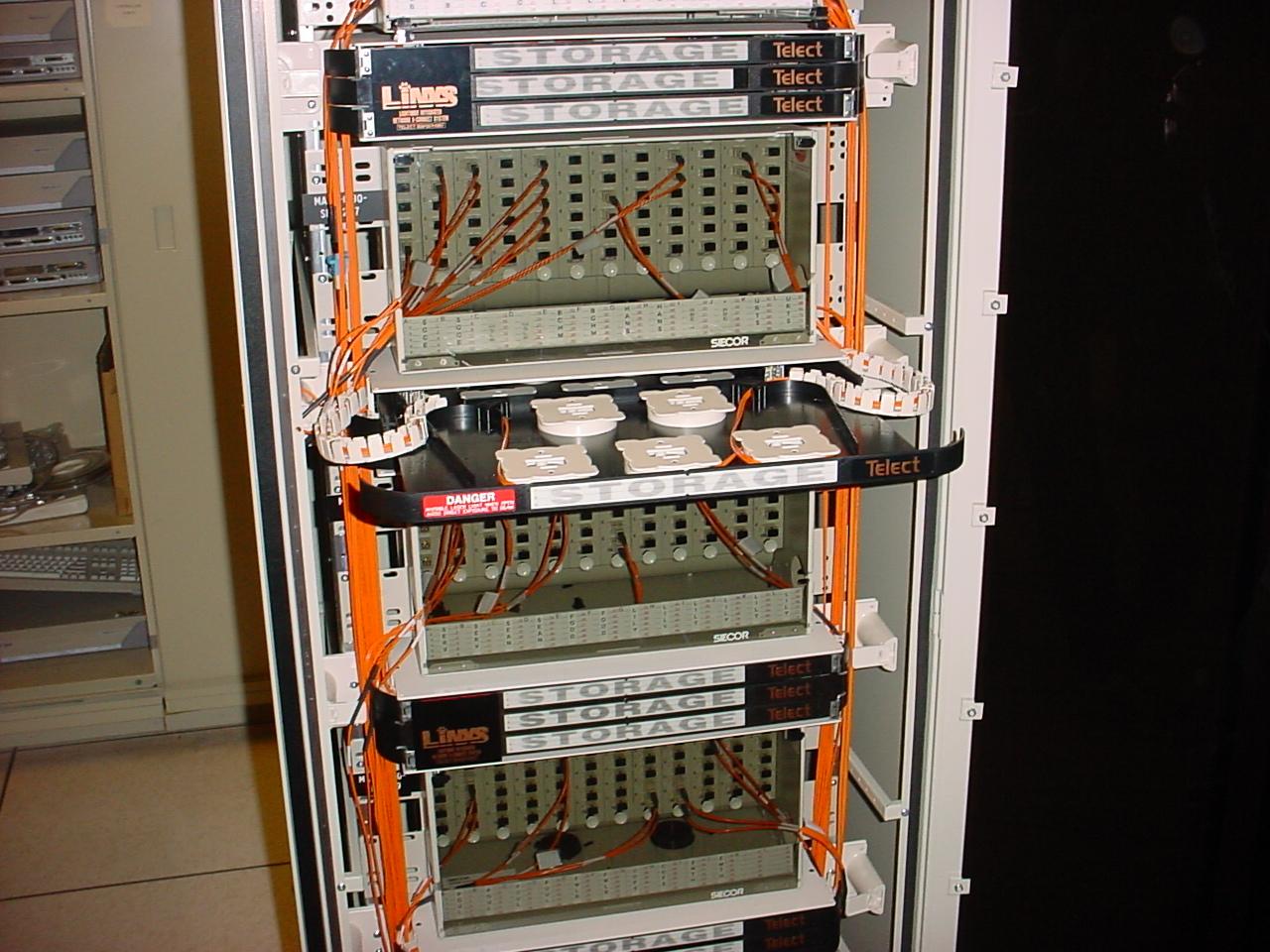
The fiber labels and drawings your next technician needs
Specify a fiber handover that connects cabinet labels, strand maps, routes, test files, spare capacity, and later changes in one usable record.
Quick answer: Require a handover that lets someone trace a labeled equipment connection through panels and strands to its opposite endpoint and supporting test file. Include the actual route, installed component details, spare-strand status, and any exceptions. Agree on the record format before installation so labels and test identifiers match from the start.
The most useful fiber drawing is the one a technician can reconcile with the cabinet in front of them. A polished floor plan that omits panel numbers or shows the intended route instead of the installed route may be less helpful than a clear, current sketch with accurate identifiers.
Documentation is part of the purchased installation. It reduces the amount of discovery needed when the business changes equipment, adds another connection, or investigates a fault. If that evidence is left until closeout, the team may have to reconstruct details that were obvious while the cable was being installed.
Design the record around a real maintenance question
Start with a practical task: someone needs to identify the fiber serving a specific equipment port without disturbing adjacent services. Ask what information they need to move from the port label to the remote endpoint, the physical route, and the relevant acceptance evidence.
That exercise quickly reveals the difference between a drawing and a usable record. A drawing can show two rooms connected by a line; a maintenance record must distinguish the cable, the panel position, the strand, and the application using it. Decide which of those identifiers are stable physical assets and which are service assignments that may change.
The Fiber Optic Association's design guidance connects documentation with routes, individual fiber paths, interconnections, and test results. Use that principle to structure the handover. The business should not need separate detective work to discover whether three files refer to the same physical connection.
For a small site, a clear drawing and coordinated schedule may be enough. A large campus may need a more structured system. Choose the format the operating team can maintain rather than demanding elaborate software that nobody will update after acceptance.
Establish identifiers before printing labels
Use a consistent scheme for sites, rooms, cabinets, panels, cables, and ports. If the organization already has an infrastructure naming convention, review it before inventing a project-specific one. Labels should remain unambiguous when the business adds another cabinet or opens another site with similar room names.
Keep names readable at the point of use. A long identifier may be useful in a database while a shorter linked label works better on a crowded panel. The relationship must be explicit, and the same reference should appear in the connection schedule and test result index.
Avoid relying only on tenant names or employee names for physical infrastructure. Those change more frequently than the cable route. Record the current business assignment as a separate field so a department move does not require pretending that the underlying cable has become a different asset.
Confirm the label material and placement are suitable for the environment and accessible without disturbing the connection. The technical design should define any required standard. This article proposes a practical record structure; it does not claim that one invented naming format satisfies every project's administration specification.
Map each strand without calling every spare available
A multi-strand cable needs more detail than its total count. Identify which strands are terminated, which are assigned, which have been tested, and which remain unverified or unavailable. An unused strand can be a useful resource without being ready for immediate service.
Show the correspondence between the two endpoints. If the cable passes through a splice or cross-connect, preserve that mapping as well. A local port number should lead to a specific remote position, not merely to the name of the other building.
Consider a hypothetical twelve-strand link with four strands assigned to active services, four terminated and accepted as spares, and four left unterminated. Calling it “eight spare fibers” hides the difference between the two unused groups. The expansion planner needs to know which work remains before each group can support another connection.
Record any reservation separately from physical readiness. A strand reserved for a planned project may be electrically unused but unavailable for an unrelated change. Keeping allocation and test status distinct helps prevent a future installation from consuming capacity someone else already depends on.
Draw the route that was actually installed
Update the drawing when installation conditions change the path. An approved deviation around an obstruction should appear in the final record, including relevant access points and intermediate locations. Keeping the original design as the only drawing can misdirect later troubleshooting or building work.
Use enough detail for the next team to identify the cable along its route. The required precision depends on the environment and project scope. Inside a building, useful references may include rooms, pathways, risers, and termination locations. Outside work needs its own appropriately detailed survey and asset documentation.
Do not infer hidden conditions from a photograph alone. A photo can show a panel or accessible pathway at a moment in time, but it may not establish the entire concealed route. Identify what was observed, what was recorded during construction, and what remains uncertain.
Keep permitted photographs alongside the drawing with a date and location reference. Avoid filling the handover with repetitive cabinet images that add no information. A small set showing identifiers, entry points, and unusual conditions can be more useful than hundreds of unlabeled pictures.
Connect the test evidence to the physical schedule
FOA's testing quickstart lists basic test-record information such as fiber identification, date, equipment, reference method, wavelength, and measured loss. Those fields become valuable when the result can be matched to the installed panel and strand schedule.
Agree on file naming and test identifiers before the first measurement. Require a result index that identifies the tested path and the acceptance criterion. If the test equipment uses a different internal label format, provide a clear mapping rather than expecting the reviewer to guess that two similar names refer to the same strand.
Distinguish the tested permanent link from any final equipment channel. Note whether equipment patch cords or later cross-connects are outside the submitted result. Our fiber testing acceptance guide explains why that boundary matters when deciding what has actually been accepted.
Retain the requested native result files as well as a readable export where appropriate. Confirm that the operating team can open them using an available viewer. A proprietary file that nobody can read is a weak handover, even when the filename looks complete.
Review the handover by tracing a sample connection
Before signing off, choose a representative connection and follow it using only the proposed handover. Start at the actual label, find the corresponding drawing and strand record, then locate the test evidence. This is a straightforward way to reveal contradictions without re-performing the installation.
Check the package for:
- Identifiers that match between labels, schedules, drawings, and test files.
- The final route and any intermediate transitions.
- Installed component specifications and endpoint interfaces.
- Clear allocation, termination, and test status for unused strands.
- An explained list of exceptions and incomplete work.
- A usable file format and an identified location for the accepted record.
A hypothetical mismatch between panel port six and a test file labeled fiber seven should be resolved before acceptance. It may be a documentation error, a different numbering convention, or an actual mapping problem. The reviewer should not silently rename the file without confirming the physical relationship.
Keep the result of the handover review concise: accepted items, corrected discrepancies, and remaining actions. The purpose is to prove the record is usable, not to create a second undocumented version of the installation while auditing the first.
Make updates part of future work orders
After acceptance, specify where the authoritative record lives and who may change it. The organization can allow broad read access where appropriate while restricting edits to the responsible process. Keep suitable backups and a way to identify the current revision.
Every later move, addition, repair, or reassignment should include a documentation task. A work order that changes a patch position but leaves the schedule untouched creates uncertainty for the next visit. The update should state what changed and which earlier results or drawings remain applicable.
I would also include the record location in the support handover. A maintained drawing does little good if the person diagnosing an outage does not know it exists. The network hardware guide offers a related approach to retaining equipment ownership and support information alongside the physical infrastructure.
Do not rewrite history by overwriting all earlier evidence. Preserve enough revision information to understand a repair or changed application, while making the current installed state obvious. A technician should not have to choose among five files called “final” to find the one that describes today's cabinet.
The takeaway
Fiber documentation should let the next qualified technician trace a real connection without guessing. That requires consistent identifiers, an accurate installed route, a strand-level schedule, and test evidence linked to the same names. Spare capacity needs its own status rather than a single optimistic count.
Agree on that package before installation and verify its usability during handover. Then make updates part of every later change. The documentation earns its value when the business can reuse the infrastructure or investigate a problem without paying to rediscover what it already installed.
Specify a useful fiber handover
BlueHouse Telecom helps businesses nationwide scope fiber installation and documentation. Share existing drawings, endpoint locations, and your operating team's record requirements to define a maintainable handover.
FAQ
Is a floor plan enough for a small fiber project? It can be part of the record, but it should connect to identifiable ports, strands, components, and test evidence. The appropriate level of detail depends on the actual installation.
Are unused strands automatically ready for expansion? No. Record whether they are terminated, tested, reserved, or still unverified. Each condition implies different work before another application can use them.
Should the installer provide native test files? Include the required formats in the scope. Native data can support later review, while a readable export and clear index help the business use the results immediately.
Who updates the drawings after a repair? Assign that responsibility in the operating process and the repair work order. The accepted record should describe the final installed state, with enough revision history to explain the change.