
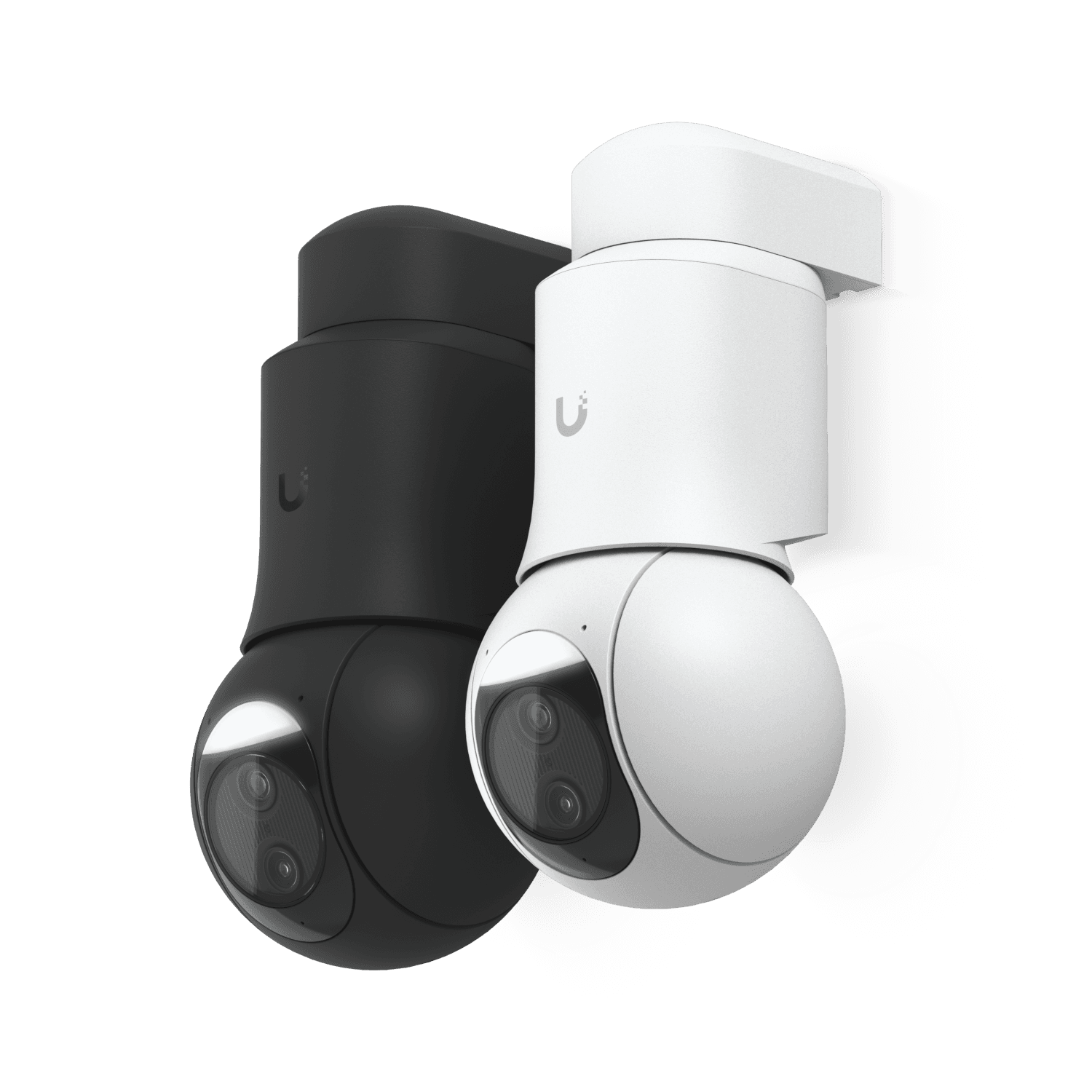
PTZ or fixed cameras: decide what must always be visible
Compare PTZ movement, fixed coverage, operator attention, guard tours, and recorded evidence before choosing cameras for a business property.
Quick answer: Use fixed views for events that must remain continuously visible, and evaluate a mechanical PTZ when someone or a supported automation needs to direct attention to different areas. A PTZ looking closely at one location cannot simultaneously supply every other view in its travel range. Compare the recorded result during competing events, not only the camera's zoom demonstration.
A PTZ demonstration can be persuasive: the camera turns across a yard, zooms toward an entrance, and shows a detail that the wide view barely reveals. The missing part of the demonstration is what happens elsewhere while that close view fills the screen. That tradeoff should be settled before a purchase.
The decision is rarely about choosing one camera style for an entire property. A business may need a fixed overview that preserves context and a PTZ that supports an operator's investigation. Each camera should earn its place through a clear task, including what it is expected to record when nobody is watching.
Mark the views that cannot disappear
Start with the events that the business would regret missing. An entrance transaction, a vehicle crossing a boundary, and a material handoff may happen at unrelated places at the same time. Identify which locations need an uninterrupted recorded view during their required operating hours.
Draw those locations separately from the area a PTZ can physically reach. A camera's movement range describes where it can point, not all the places it captures simultaneously. The distinction becomes especially important when a proposal uses one PTZ symbol to imply coverage over a large circle on a drawing.
For a hypothetical warehouse, the main entrance and loading doors may both require continuous context. A PTZ could inspect an unusual vehicle near the perimeter, but turning it there should not remove the only useful view of an active loading transaction.
Ask the designer to explain which evidence remains when the PTZ points somewhere else. If the answer is that a tour will return shortly, decide whether that gap is acceptable for the event. The right answer depends on the task, not on a general preference for moving or stationary cameras.
Distinguish physical movement from digital navigation
A mechanical PTZ changes its direction and may change its optical field of view. Digital navigation enlarges or selects part of an image already captured. Those functions can look similar in a software demonstration while having different consequences for what was recorded.
Ask what the recorder actually stores in each proposed mode. Can a reviewer later inspect a wider source image, or is the only recorded view the one the mechanical camera faced at that moment? Confirm the answer for the exact camera, recording configuration, and client software.
A fixed camera with digital zoom does not create detail that was never present in its image. Likewise, a mechanical camera cannot recover an event outside its view merely by turning toward that location during playback. These are basic limits worth making explicit before comparing impressive screenshots.
Use the Axis and Hanwha camera comparison guide to organize the wider product discussion. Lens choice, recording integration, and review tools still need to match the use case whichever brand or camera format the business chooses.
Decide who will direct the camera
A PTZ can support a staffed operation when an authorized person has a clear reason to move it. Identify the actual role, workstation, hours of attention, and response task. A camera control feature does not create the staffing needed to use it continuously.
For an intermittently staffed office, manual PTZ control may be an occasional convenience rather than the basis of reliable incident capture. That can still be useful, but the proposal should not describe it as an actively monitored security service unless such a service is specifically arranged.
Decide which users may steer the camera and whether they can change presets. Too many people experimenting with the view can undermine the intended coverage. On the other hand, restricting all control to a person who is rarely available may defeat the reason for selecting a PTZ.
Ask how the view returns to its intended state after manual use. Demonstrate that behavior on the chosen system, including any configured timeout or home position. Do not rely on an operator remembering to restore the original view every time an unrelated task interrupts them.
Evaluate tours as a sequence, not simultaneous coverage
Axis's guard-tour documentation describes preset tours that display positions one after another for configured periods. It also describes recorded movement tours and control priorities among users and automated functions. The details reinforce a practical point: a tour changes what the camera sees over time.
Watch an entire proposed tour in playback. Look at how long the useful areas are visible, what occurs during movement, and whether the recorded image settles into a usable view at each position. The demonstration should include the actual lens settings and installation location.
A hypothetical tour might alternate among a gate, yard, and parking approach. If a vehicle passes the gate while the camera is watching the parking approach, the tour's broad reach has not preserved that event. Increasing the number of presets can add destinations while also lengthening the interval between visits.
Decide whether the tour's purpose is periodic situational awareness or evidence of every event at a specific point. Those are different expectations. Keep a fixed view wherever the business needs continuous evidence that the rotating sequence cannot provide.
Test autotracking with competing movement
Autotracking should receive a site trial rather than a blanket assumption that it follows the important thing. Define which object or event deserves attention and what the system should do when several plausible targets appear. The difficult case is often deciding what matters, not merely moving the camera.
The Axis Q6325-LE manual describes its tracking behavior and notes that the application is intended for limited movement in open areas without obscuring objects. It also states how tracking and guard tours interact on that model. Those qualifications should shape a trial rather than disappear from a sales summary.
Use authorized staged movements that resemble the normal site. Include two simultaneous movements, an obstruction, and an object leaving the intended area where those conditions are relevant. Review the resulting recording to see which context survived and what the camera stopped observing.
Do not generalize one model's feature behavior to every PTZ from Axis, Hanwha, or another manufacturer. Confirm the supported analytics, software versions, and integration for the proposed equipment. A successful feature demonstration on a different camera is a starting point for questions, not final acceptance.
Compare the complete installed arrangement
A fair comparison includes the number of useful views, installation locations, supporting equipment, recording requirements, and maintenance access. One moving camera may reduce some physical installation work, while several fixed cameras may preserve simultaneous evidence. Neither configuration has a universal cost advantage.
Review the alternatives against a short set of questions:
- Which required events remain visible during manual control or tracking?
- Who is allowed and expected to move the camera?
- What is recorded while the camera travels or changes its view?
- How does it return to an approved observation position?
- Which views need independent recording if the PTZ is unavailable?
- Can the mounting location be reached for appropriate maintenance?
Separate purchasing preferences from demonstrated requirements. A manager may enjoy the ability to explore the property remotely, but that preference should not remove an entrance view needed for routine review. Conversely, a complex fixed-camera layout may be unnecessary when the actual task is a limited attended inspection.
The camera installation checklist helps turn those answers into acceptance steps. Include any excluded condition in the comparison, so a less expensive alternative is not judged as though it delivers a broader task than its design supports.
Rehearse an incident before accepting the layout
Give the reviewer a hypothetical event that spans more than one area. Have authorized participants stage the relevant movements and then ask the reviewer to reconstruct the sequence from the recordings. This is more revealing than letting the installer choose a single attractive live image.
Include a period when no operator touches the controls. If the business expects unattended evidence, acceptance should show unattended behavior. A camera that performs well only while an experienced demonstrator follows the action may not satisfy the site's ordinary use.
Inspect permissions and exports as part of the exercise. The person who investigates an event should be able to find and share approved footage without being granted unrelated configuration rights. Confirm the actual platform supports the intended separation and document any limitation.
Keep the accepted presets, coverage purposes, and representative results with the project. Revisit the relevant tests after a significant scene change or camera relocation. A new storage area or changed vehicle route can alter both the value of a preset and the gaps between the views.
The takeaway
A PTZ is valuable when changing its view serves a defined operational purpose. It is a weaker substitute for fixed coverage when the business expects simultaneous evidence from several locations and has no clear plan for directing the camera.
Choose around what must remain visible, then test tours, tracking, and manual control against competing events. A complementary fixed overview and PTZ may provide a clearer result than treating either camera style as a universal answer.
Compare cameras around the required evidence
BlueHouse Telecom helps businesses plan security camera installations nationwide, including fixed coverage, PTZ use, and recorded acceptance demonstrations.
FAQ
Can one PTZ replace several fixed cameras? Sometimes for a defined task, but its movement range is not simultaneous coverage. Confirm which events may occur while it is pointing elsewhere and whether the remaining recorded views are sufficient.
Does a guard tour guarantee every entrance is recorded? A tour visits views in sequence. An event can occur between visits. Require a continuous suitable view wherever the business needs evidence of every relevant passage.
Will autotracking always follow the most important object? Do not assume it will. Supported behavior depends on the model, application, configuration, and scene. Test competing movement and obstructions against the intended business task.
What should a PTZ acceptance test include? Review unattended operation, authorized manual control, tour and tracking behavior, return to the intended view, simultaneous events, and usable playback. Judge the actual recorded evidence rather than only the live zoom performance.