
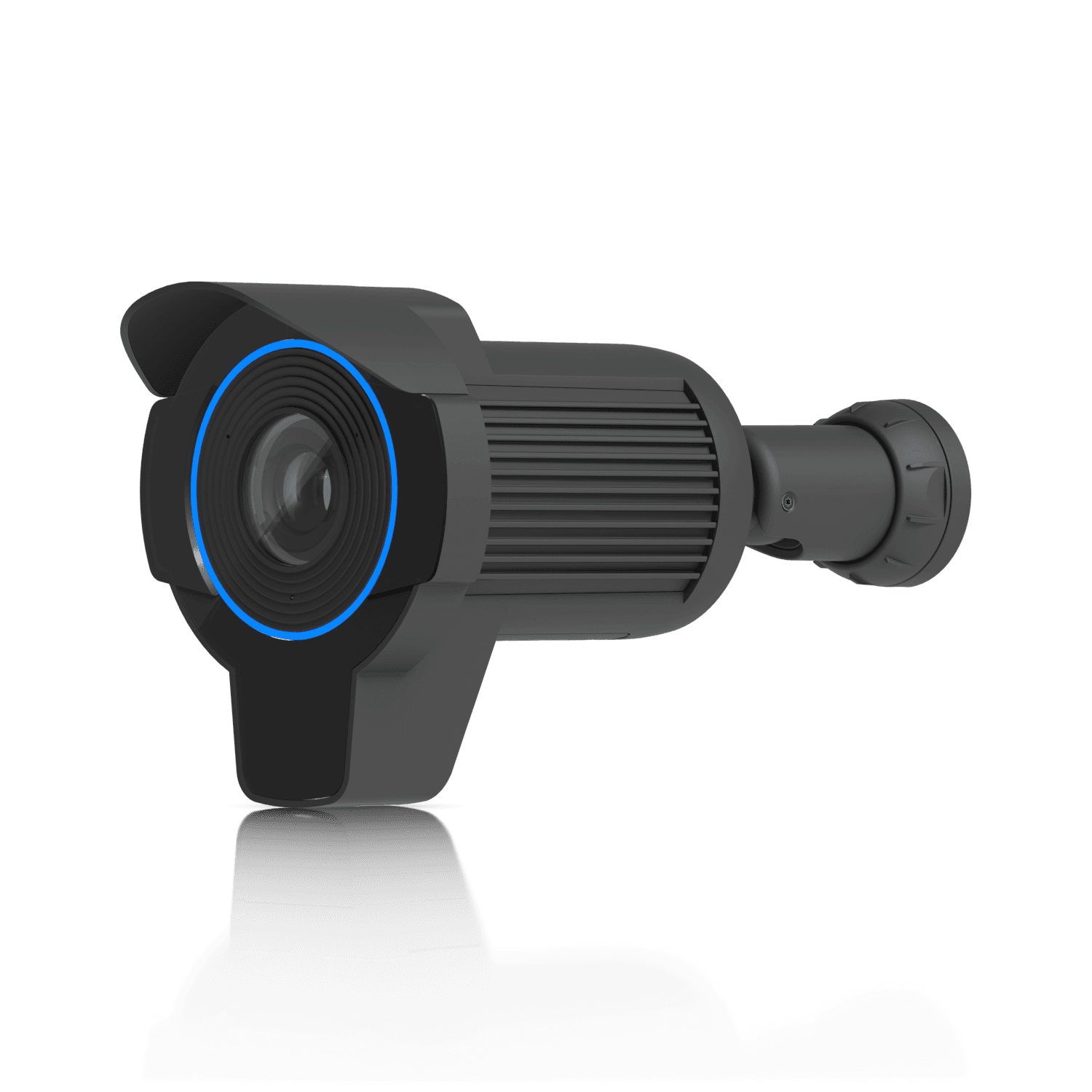
License plate capture and overview cameras do different jobs
Choose plate capture around the lane, moving vehicles, night conditions, and review workflow; keep context coverage where the business needs it.
Quick answer: A camera that shows vehicles entering a property does not necessarily produce readable license plates. Define whether you need a human-readable plate image, searchable plate recognition, or an approved vehicle-entry workflow, then test that exact result at the lane. Keep an overview when you also need to understand the vehicle's route and surrounding activity.
A parking entrance can look well covered in a wide camera image while every plate remains too small or blurred to read. Enlarging the recording later makes the vehicle bigger on the screen; it does not guarantee that the missing characters become available. The purchase should begin with the evidence needed from a moving vehicle.
Plate capture also changes the information the business collects and how people use it. A searchable plate record is different from ordinary video review, and an automated gate decision adds another responsibility. Decide which of those tasks the project actually includes before accepting a proposal described simply as a license plate camera.
Choose the required result before the product
Separate three possible outcomes. The first is an image an authorized person can inspect manually. The second is software that reads characters and stores a searchable event. The third uses a plate result in an entry decision. Success at one does not establish that the others are configured or appropriate.
For a hypothetical office parking entrance, the immediate goal might be to identify a vehicle involved in a reported incident. Searchable recognition could be helpful, but the business may have no need to open a barrier automatically. That narrower purpose should guide both the equipment scope and the operating policy.
Ask the supplier to state which outcome its quote includes. Identify the camera, relevant application, recording platform, license requirements, and any integration work. A compatible camera without the required software configuration is not the same deliverable as a working searchable plate system.
Axis's License Plate Verifier documentation illustrates this specificity: the application requires supported devices and firmware and distinguishes free-flow use from access-control scenarios. Treat those as product requirements, not as a capability automatically present in every Axis camera or every video platform.
Evaluate the lane instead of the parking-lot area
A plate task starts with where the vehicle passes. Identify direction, likely lane position, normal movement, and the point where the plate should be captured. Include the actual entrance geometry rather than assuming a camera overlooking the whole lot can serve the same purpose.
Observe where vehicles turn, queue, stop, or pass one another. A useful view of the front of an approaching vehicle may become a poor view after it turns. A queue may also hide the next vehicle's plate. These are placement questions that a broad coverage drawing can miss.
Consider different legitimate vehicle types using the property. A delivery vehicle and an employee car may present plates at different positions or along different approaches. Include the intended plate locations and operating conditions in the survey, without assuming every vehicle presents an unobstructed plate from both directions.
A good demonstration uses the real lane and an authorized test vehicle. Do not arrange unusual stopping positions just to create an impressive sample. If the application requires a controlled stopping point, the project must include an approved traffic arrangement that can produce it during ordinary operation.
Test moving images under the difficult conditions
A clear still image of a parked car is an incomplete acceptance test. Ask for recorded examples at the normal vehicle movement expected for the site. The installer should choose settings against the selected equipment's instructions and demonstrate that the resulting plate detail meets the agreed task.
Include the lighting conditions that could change the result. Headlights, reflections, low light, and changing sun direction can make a lane more difficult than it looks in the middle of an overcast day. Record the conditions actually tested and leave unobserved conditions explicitly open.
The manufacturer documentation provides mounting and plate-image requirements for its supported application. Use the requirements for the selected camera and scenario; do not lift a capture distance from a different kit and treat it as a universal range. A familiar brand name cannot compensate for an unsuitable angle or image.
If a lighting or traffic change is proposed, involve the people responsible for that property. The camera installation should fit an approved operating arrangement. Any remaining limitation should be visible in the acceptance result, including cases where the chosen viewpoint cannot consistently present the required plate detail.
Preserve the context around the plate
A plate image can answer which characters were visible without explaining what the vehicle did. An overview may show its route, nearby people, another vehicle, or the sequence before a reported event. Those are useful but different kinds of evidence, so decide whether both views are required.
The Axis application offers different event-image capture choices, including plate, vehicle, and full-frame images. That is a reminder to inspect the configured output rather than assume every search result contains the same context. Also verify what associated video the reviewer can retrieve from the actual recording system.
For a hypothetical loading entrance, a plate event could help locate the arrival time while a separate overview shows the vehicle approaching the correct bay. The combination may be more useful than forcing a single camera to provide both tight plate detail and broad operational coverage.
The camera installation checklist can help describe each view's acceptance task. Label their purposes clearly in the proposal so the overview is not later removed as redundant merely because the plate camera faces the same general entrance.
Judge recognition separately from readable video
If automated recognition is included, test the complete result: vehicle passage, captured image, recognized characters, event time, and retrieval. A readable image with an incorrect text result is a different failure from an unreadable image. Keep those observations separate when reviewing the trial.
Use an agreed sample of authorized vehicle movements that represents the intended use. Include repeated passes under different relevant conditions rather than relying on one successful demonstration. The test does not establish a universal accuracy guarantee, but it can reveal problems with the proposed lane and configuration.
During review, check:
- Whether the relevant plate is present and readable in the saved image.
- Whether the software's text matches that image when recognition is included.
- Whether entry direction and event timing support the intended search.
- Whether an authorized reviewer can find the associated context.
- Whether missed or uncertain results have a sensible handling process.
Do not let a polished search interface hide weak source imagery. A reviewer should be able to inspect the original evidence behind a result, understand any uncertainty, and avoid treating an automated match as proof of facts beyond what the image actually shows.
Decide how plate information may be used
Set a defined business purpose, authorized audience, and retention approach before routine collection begins. Involve the organization's responsible privacy and legal reviewers where appropriate to its locations and use. A camera manufacturer's technical capability does not answer those organization-specific decisions.
Limit searchable plate access to the roles that need it. Someone who can monitor a general lobby view does not automatically need permission to search vehicle histories or change an entry list. Verify the available controls in the selected platform instead of assuming every role can be separated in the same way.
If a gate integration is proposed, treat it as a separate approved project scope. Plate matching, physical barrier operation, visitor handling, and exceptions need coordinated review. This article's camera planning steps do not establish that a vehicle barrier is safe or suitable for automatic operation.
Include a process for correcting bad data or removing an obsolete authorization. A business should understand how a replaced vehicle, changed plate, or temporary visitor affects its records. Avoid creating permanent access merely because a plate appeared during a one-time delivery.
Accept the review workflow, not just the camera image
Ask an authorized business user to complete a realistic review from beginning to end. Give that person an approximate time and the kind of information an actual report might contain. Confirm that they can find the event, inspect the relevant image, obtain needed context, and produce an approved export.
Test the exported result on an appropriate separate workstation. It should contain the agreed information in a usable form, with enough explanation to avoid confusing a plate crop with the complete scene. Follow the organization's handling process when sharing any footage or personal information.
Keep the acceptance examples and configuration references with the project record. Include the conditions tested, unresolved limitations, and the equipment or application version used. A later camera relocation, changed lane arrangement, or application update may justify a focused repeat of the relevant tests.
Price the maintenance access as well as the installation. The lens and mounting position must remain serviceable, and the business needs a way to notice when normal scene changes reduce usefulness. A camera can continue recording while a new sign, landscaping, or parking pattern undermines its original task.
The takeaway
License plate capture deserves its own lane survey and acceptance exercise. A wide view, readable plate image, searchable text result, and vehicle-entry decision are separate outcomes, each with different dependencies.
Buy the combination that answers the business's actual question. Demonstrate it with normal vehicle movements, retain the context needed for review, and make information access and limitations clear before the system becomes part of daily operations.
Scope vehicle coverage for your property
BlueHouse Telecom helps businesses plan security camera installations nationwide, including plate-capture requirements, overview coverage, and practical acceptance checks.
FAQ
Can an existing overview camera become a plate camera? Possibly, but evaluate its placement, image detail, supported software, and intended conditions. Reusing the camera is worthwhile only if the actual plate task can be demonstrated without losing necessary overview coverage.
Does readable plate video mean recognition software is included? No. Human-readable images and automated character recognition are different deliverables. Confirm the application, compatibility, licensing, event storage, and search workflow in the proposal.
Should a plate camera also control the gate? Only when that is part of a separately reviewed and approved entry design. Useful recording does not by itself establish the requirements for barrier operation, exceptions, or authorization management.
What is the most useful acceptance demonstration? Test representative authorized vehicles in the real lane, under relevant operating conditions. Review the saved image, recognition result if applicable, associated context, and export using the actual business user's permissions.