
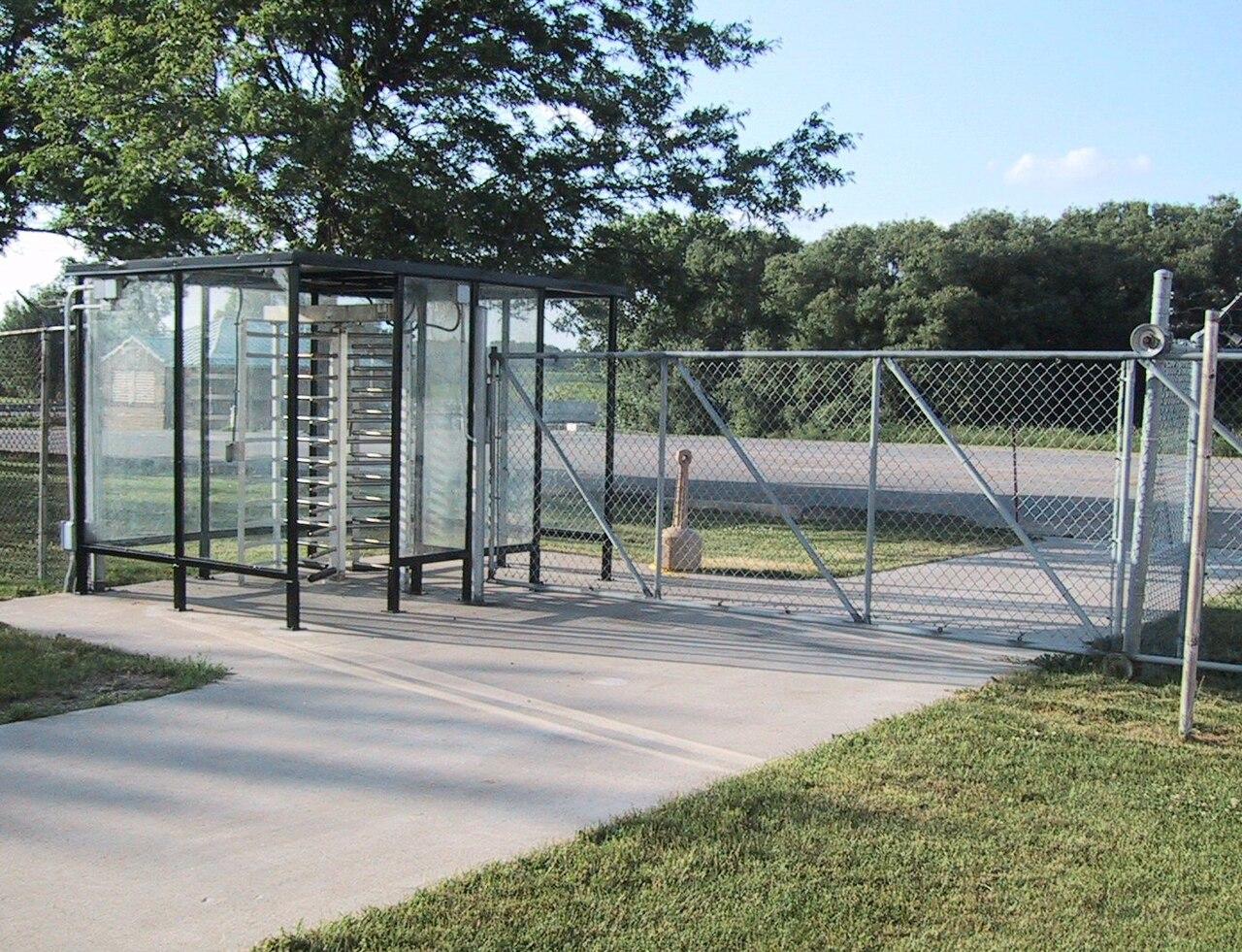
Exterior door access needs more than an outdoor reader
Review exposure, door movement, component ratings, cable entry, and seasonal acceptance when planning access control for exterior business doors.
Quick answer: Evaluate an exterior access-controlled door as a complete exposed opening. Confirm the environment and installation requirements for the reader, locking hardware, sensors, enclosures, and cable routes, then address the door's mechanical condition. An outdoor-rated reader does not make every connected component suitable for the same location or prove reliable operation through seasonal changes.
A reader under a deep canopy and a reader on a wind-exposed service entrance may appear identical on a hardware schedule. Their surroundings are not. Water reaches them differently, people approach them differently, and the door itself may behave differently when weather or building pressure changes.
Exterior access planning should start with that physical context. We would rather see a site-specific exposure note and a confirmed parts list than a broad promise that all the equipment is weatherproof. The latter sounds reassuring while leaving the important limitations undefined.
Describe the exposure at the actual location
Survey where the reader and door hardware will sit, not merely the building's general climate. Note the canopy, prevailing exposure, nearby irrigation or washdown activity, coastal or industrial conditions where relevant, and the equipment's position relative to the doorway. Ask facilities staff about recurring water or seasonal problems.
Use observations rather than assumptions. A sheltered location may still receive wind-driven rain. An interior-mounted power enclosure may be exposed to moisture through a poorly considered route. The qualified installer should assess the conditions and propose components and installation methods suitable for them.
HES's outdoor strike guidance identifies rain, dust, corrosion, and temperature as relevant exposure dimensions. Treat those as questions to resolve for the actual product. Do not turn a general discussion of outdoor testing into a promise that every strike from the brand suits every environment.
The door survey checklist can retain these observations with opening photographs. A useful note identifies where a condition occurs and what evidence remains needed, so the installer can price the correct solution.
Check the reader separately from the rest of the system
The reader's environmental suitability is one item in a longer component review. The lock, door-position sensor, junctions, enclosures, power equipment, and cable materials may have different installation conditions. Each exposed part needs a supported application, even when the reader is the only component the buyer notices.
For example, ASSA ABLOY's Signo overview describes an IP65 outdoor rating for that reader line. That product-family statement is useful context, but the project should confirm the exact model supplied in its region and follow its current installation requirements. It does not confer the same rating on a nearby box or the complete doorway.
Ask for the manufacturer documentation behind the selected components and any mounting accessories. If a substitution is proposed, compare its environmental and functional suitability rather than accepting it because the faceplate looks similar. A change in enclosure or connection method can matter even when credential reading remains unchanged.
Keep product ratings and site acceptance distinct. A rating supports selection under stated conditions. The installed opening still needs inspection and testing appropriate to its actual arrangement.
Repair the door before blaming the credential system
Watch the exterior door close and latch under ordinary conditions. Look for dragging, inconsistent alignment, damaged seals, or a closer that does not return the door as intended. Those problems can create access complaints that a new reader or software update will not solve.
Ask staff when the problem occurs. A complaint tied to a windy day or a particular building operating condition gives the hardware team more useful information than a general report that cards sometimes fail. The team can then investigate whether the credential decision, electrical release, or mechanical movement caused the experience.
The scope should distinguish known repair from the electronic installation. If the existing opening needs mechanical correction, assign that work and establish the baseline before acceptance. Do not require the user to compensate for a defective door with an unusual pull-and-present routine that was never part of the approved design.
- Observe ordinary closing and latching before the retrofit.
- Record reported conditions that make the entrance harder to use.
- Identify required mechanical corrections and the responsible qualified party.
- Test the completed opening under representative conditions without unsafe weather experiments.
Choose a usable reader position
An exterior credential interaction must work for the people approaching the entrance. Consider the side from which they arrive, the swing of the door, packages they may carry, and the approved accessible route. Position should be reviewed by the responsible design team rather than selected solely for the shortest cable run.
Visibility and shelter can affect the experience. A reader hidden behind an open leaf may confuse users. A location that makes someone stand in a vehicle path or reach across moving equipment is a poor operating choice even if it has a convenient wall surface. Evaluate the real approach with site personnel.
If the workflow uses mobile credentials, test the selected method on supported devices in the intended position. Do not assume a successful phone demonstration indoors proves that the outdoor interaction is obvious or practical for every employee. Cards, phones, and any approved alternate method should be considered within the organization's credential policy.
The mobile credentials and key cards guide helps compare those everyday choices. The exterior-door survey should then test the chosen method at the actual entrance, with normal work conditions and authorized participants.
Include penetrations and cable routes in the design
Water exposure is not limited to the face of the reader. Cable entries, enclosure locations, and the transition into the building need an appropriate installation approach. Have the qualified team follow the selected products' instructions and the building's requirements for penetrations and restoration.
The quote should identify what is included around the opening. Surface routing, enclosure mounting, sealing or other required treatment, and finish work should not be discovered as extra tasks after the electronics are already installed. Where concealed conditions remain unknown, state how they will be evaluated.
Coordinate with building management before making changes to exterior assemblies. The access control scope should not imply authority to modify any wall, frame, or weather barrier without the required review. Identify any separate work that the installation depends on and schedule it accordingly.
Ask how the final arrangement will be inspected and serviced. A component placed where it is difficult to reach safely may turn a modest repair into a larger access project. Maintenance access belongs in the location decision, alongside appearance and the normal user approach.
Define power and communication failure behavior
An exterior entrance may be used before the office is staffed or after other doors are closed. Explain what an authorized person should do if a credential is rejected, the network is unavailable, or the required power is lost. The response should follow the approved opening and operating design.
Keep those scenarios separate. Loss of internet connectivity is not necessarily loss of controller power, and loss of building power may interact with a backup supply. The exact platform, controller, lock, and power arrangement determine which functions remain available. A general claim that the system works offline does not answer every case.
Qualified reviewers should determine egress and other applicable opening requirements, including the appropriate release behavior. The business should receive a plain-language description and a coordinated test plan. Do not use a power-state label as a substitute for explaining the complete entrance.
Staff should have a supported recovery and reporting process. Avoid a plan that depends on leaving an exterior door propped open whenever an account or device has a problem. The operating response needs to preserve the building's approved access and safety arrangements while the fault is addressed.
Use acceptance as the first baseline, not a weather guarantee
Commissioning should demonstrate normal entry and exit, denied access, closing, and any configured monitoring under the approved plan. Confirm the reader and hardware respond consistently and that the software's status matches what the system actually measures. Coordinate any failure tests with the qualified team and affected occupants.
The initial visit may not reproduce every seasonal condition. Instead of promising that a dry-day test proves years of performance, retain the accepted configuration and define how reported seasonal problems will be investigated. Site staff can provide the time, observed symptom, and relevant conditions without modifying equipment themselves.
For a nationwide rollout, classify meaningful exposure differences. A sheltered interior courtyard and an exposed perimeter door may use different components or require different installation details. A consistent survey process can accommodate those differences without abandoning the organization's credential and administration standards.
After a significant door repair, changed canopy, or revised cable route, review the affected access components again. The system's operating conditions may have changed even though the controller and user database stayed exactly the same.
The takeaway
Exterior access control depends on the whole opening, from the reader's location to the door's mechanical return and the route of its supporting cables. Product ratings help select components, but they should be checked for the exact equipment and conditions. One outdoor-rated device is not a complete environmental design.
Pair a realistic initial test with clear maintenance and fault-reporting responsibilities. Across multiple locations, retain the exposure differences that justify different hardware choices. The goal is a usable entrance with understood limits and a serviceable installation, not an unsupported promise that weather can never affect it.
Review exterior employee and service entrances
BlueHouse Telecom can help scope business access control installation nationwide. Share the opening photographs, exposure conditions, and intended credential workflow so the complete entrance can be evaluated.
FAQ
Does an outdoor-rated reader make the entire door system weatherproof? No. Locking hardware, sensors, enclosures, connections, and installation details need their own suitability review. Confirm the requirements for the complete exposed arrangement.
Should the same hardware be specified for every climate? Not automatically. Use consistent functional requirements, then check the actual exposure and product limits at each site. Shelter, corrosion conditions, and installation details can differ within the same city.
Can a reader replacement fix a door that will not latch in the wind? It may not address the cause. Investigate the physical opening, the access decision, and the electrical release separately so the qualified team can correct the actual problem.
What if acceptance occurs in mild weather? Establish a documented operating baseline and a process for reporting seasonal faults. Do not treat an ordinary commissioning visit as proof of performance under every future condition, and avoid improvised exposure tests outside the approved plan.