
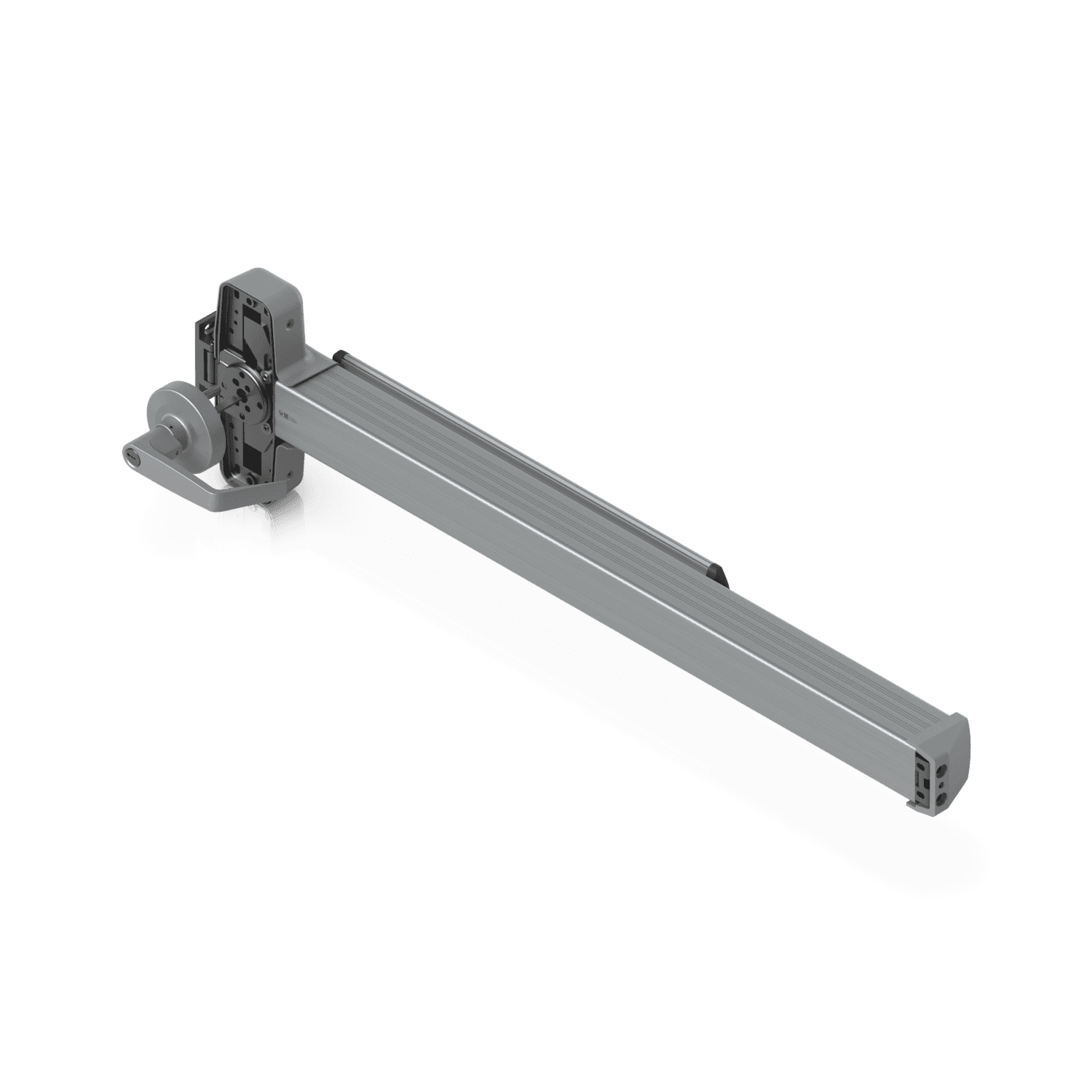
What to verify before electrifying an existing exit device
Review exit device models, retrofit kit compatibility, latch behavior, power routing, and acceptance before adding electronic access control.
Quick answer: Before electrifying an existing exit device, identify its exact model, condition, options, and opening function. Confirm whether the project needs latch retraction, electrified trim, or another supported arrangement, then verify the matching hardware and power scope. A retrofit kit can preserve useful equipment, but only when the existing device and complete opening support the intended operation.
Two doors can have push bars that look nearly identical and require different retrofit work. One may accept a documented conversion kit, while the other's model, internal condition, or existing options change the available approach. A photo of the front cover alone does not settle the purchase.
The appeal of reuse is reasonable. Replacing serviceable hardware can add cost and disruption, especially across many locations. But a retrofit should earn that advantage through compatibility and operation checks, not through an assumption that every push bar is a candidate for the same electrical upgrade.
Name the function you are buying
Electric latch retraction and an electrically controlled outside trim are different functions. The buyer should have a plain-language description of what changes when access is granted and what stays available for someone leaving. Avoid using electrified exit device as if it described one universal behavior.
Describe a normal arrival at the opening. Does a credential cause the latch to retract for entry? Does it enable the outside operating hardware? Is the door intended to allow scheduled passage for part of the day? Those requirements help the hardware team choose an appropriate documented arrangement.
Also identify any automatic door operator or existing control that interacts with the opening. The desired sequence must account for the hardware already present. A retrofit quote that addresses the reader but ignores the door operator may omit the coordination needed for the entrance to work as users expect.
Identify the installed device precisely
Record the manufacturer, series, relevant options, and physical configuration through an appropriate survey. Include the outside hardware and the door's identification, not only the push bar visible from inside. Where information is uncertain, the proposal should say what inspection is needed before the final part selection.
The Von Duprin QEL conversion kit document illustrates why this matters. It describes options for specified device families and distinguishes conversion approaches for mechanical hardware and legacy solenoid-driven latch retraction. It is not a universal kit for every device carrying the same brand name.
Use current documentation for the exact installed product and proposed kit. A familiar series name may still leave option differences unresolved. The access control door survey provides a useful inventory framework, but the final compatibility decision should come from the applicable manufacturer information and qualified hardware review.
For a portfolio project, group genuinely matching openings after the survey. Do not group them first merely because they look alike from a hallway photograph.
Decide whether the existing hardware deserves reuse
A supported conversion kit does not repair every mechanical defect in the device around it. Evaluate ordinary operation before the upgrade: how the door closes, whether the latch engages consistently, and whether the exit device works as intended. The survey should identify wear, damage, and prior modifications that affect the reuse decision.
Compare the complete retrofit effort with replacement. A conversion may preserve serviceable hardware and reduce disturbance. A different opening may require enough repair or modification that replacement is the clearer choice. The appropriate comparison includes the resulting function and condition, not just the motor or kit price.
Ask how uncertain conditions will be handled. If the installer discovers unsupported modifications after opening the device, the project needs a defined decision path. Ordering every kit before confirming the first representative device can turn an avoidable compatibility question into a rollout delay.
- Identify the device and relevant options using the required level of inspection.
- Confirm the mechanical baseline before adding electrical control.
- Obtain the exact supported retrofit or replacement approach for that opening.
- Separate known repair work from allowances for conditions still awaiting inspection.
Review latching and power loss as separate observations
An electrical command is only part of the sequence. The latch must reach the intended position, the door must move normally, and closing must restore the required condition. A successful credential read does not prove that those physical actions occurred.
Allegion's fail-safe and fail-secure discussion notes that electric latch retraction hardware allows the latch to project when power is removed. That hardware description should not be mistaken for proof that an open door has closed or that the entire opening meets its requirements. Observe the complete sequence under the approved design.
Qualified project reviewers should address egress, fire-door conditions, and any applicable opening requirements. Avoid treating a component's capabilities as approval for every schedule or modification the business might request. If the entrance is intended to remain available during business hours, the chosen operating method must be appropriate for that particular opening.
The buyer's job is to obtain a clear operating explanation, including power restoration, and to confirm that it matches the approved project. It is not to improvise control wiring from a product summary.
Include the route from the controller to the moving door
Electrifying equipment on a moving door introduces a physical routing question. The selected power and signal path must suit the hardware, door construction, and opening use. Existing conductors or transfer hardware should be inspected and confirmed for the proposed function rather than assumed reusable because they are present.
The quote should identify required power equipment, cable work, transfer components, and any door or frame preparation. Ask which items are included in the installation and which conditions still require investigation. Finish restoration can also matter where prior hardware or routing leaves visible openings.
Check the supporting documentation for the exact electrical requirements. Different retrofit types and generations may have different demands; the business should not assume a power supply selected for an older device automatically suits its replacement. This is a manufacturer and installer verification task, not a reason to publish a generic wiring recipe.
Access to the opening affects the work plan. A busy employee entrance may need a scheduled alternative route, while a public entrance may require coordination with building operations. Discuss those needs before a delivery date is treated as an installation commitment.
Test any operator and access control interaction
If an automatic operator is involved, acceptance must include its coordinated operation with the locking hardware. The exact sequence and required safeguards belong to the qualified design and commissioning team. A reader test performed with the door already open says little about that interaction.
Test the ordinary user workflow with authorized participants and the relevant specialists present. Observe what happens when access is granted but the person does not proceed, when another person arrives shortly afterward, and when the door returns to its closed position. Use only scenarios appropriate to the approved test plan.
Software events should be explained accurately. An access-granted entry records an authorization decision. A door-position input or other monitoring may be needed to describe physical movement or condition. Do not promise that the system can report a failed mechanical action unless the installed monitoring actually supports that conclusion.
The business door access control guide covers the wider operating workflow. Link the finished door behavior with credential permissions and schedules so a technically successful retrofit does not leave staff uncertain about when the entrance is available.
Pilot a representative opening before the rollout
For several similar doors, an early representative installation can resolve compatibility and operating questions before the remaining work proceeds. Choose a door that reflects the actual hardware and workload, not merely the easiest opening to access. Any nonmatching devices still need separate review.
Use the pilot to confirm the parts list, necessary mechanical work, installation access, and accepted sequence. Time observed on one opening is useful planning information, but it is not a promise that every site will take the same time. Concealed conditions, building coordination, and local requirements may differ.
- Demonstrate normal entry and exit under the approved operating design.
- Observe repeated closing and latching with the actual door and closer.
- Verify any configured monitoring and the operator interaction included in scope.
- Complete coordinated failure and recovery tests through the qualified project team.
- Retain the installed device, kit, and supporting component identification for service.
Train site staff on the ordinary workflow and the fault-reporting process. They should know how to report an entrance that behaves differently without trying to defeat or modify the hardware to keep the building operating.
The takeaway
An exit device retrofit can be a sensible way to add electronic entry to serviceable equipment. Its value depends on a confirmed hardware match, a sound mechanical baseline, and a complete plan for power, opening behavior, and any connected operator. A conversion kit should be the result of that review, not the starting assumption.
For nationwide work, a consistent survey and a representative pilot are more useful than a universal kit specification. Preserve the distinctions between device families and opening functions as the project scales. The finished entrance should work predictably for the people using it, with enough product detail retained to support future service.
Review your existing exit devices
BlueHouse Telecom can help scope electronic access control installation across business locations nationwide. Start with the existing hardware inventory and the entry behavior you want each opening to provide.
FAQ
Can any push bar be converted to electric latch retraction? No. Support depends on the manufacturer, device family, configuration, condition, and available documented options. Identify the installed hardware and confirm the exact conversion approach before ordering parts.
Does a QEL kit mean the whole door must be replaced? Not necessarily. Von Duprin offers conversion options for specified existing devices, but suitability must be checked for the actual opening. Mechanical condition or unsupported configurations may make a different approach appropriate.
Will an access-granted event prove that the latch retracted? Not by itself. The event records the access control decision. Confirm what physical status is monitored and test the actual door operation rather than relying solely on the software event list.
Should one successful retrofit be copied across every location? Only after confirming the other openings truly match the relevant hardware and operating conditions. Use the pilot to refine the process, while reviewing different device options, building requirements, and site constraints separately.