
Survey both leaves before pricing access control for a pair
Define active leaves, closing sequence, mullions, monitoring, and delivery use before pricing electronic access control for paired doors.
Quick answer: Survey a pair of doors as one opening with two interacting leaves. Identify which leaf people use, how each leaf latches, whether closing sequence or a mullion matters, and what the software must report. Price the complete operating arrangement instead of assuming a double door costs exactly twice as much as a single door or needs only one monitored leaf.
A paired entrance can appear to work during a demonstration because everyone uses the same side. The seldom-used leaf stays closed, the reader grants access, and the active leaf returns normally. Then a delivery opens both sides and exposes a problem the test never considered.
The purchasing challenge is to describe the pair's real use. Some entrances operate both leaves throughout the day. Others reserve one leaf for equipment moves. The access control design should acknowledge those differences instead of treating the second leaf as an unexplained part of the frame.
Observe how the pair is used today
Watch ordinary pedestrian entry, exit, and any permitted delivery use. Identify the leaf staff normally operate and the circumstances in which both leaves open. Confirm whether those habits match the opening's intended and approved function before copying them into the new system.
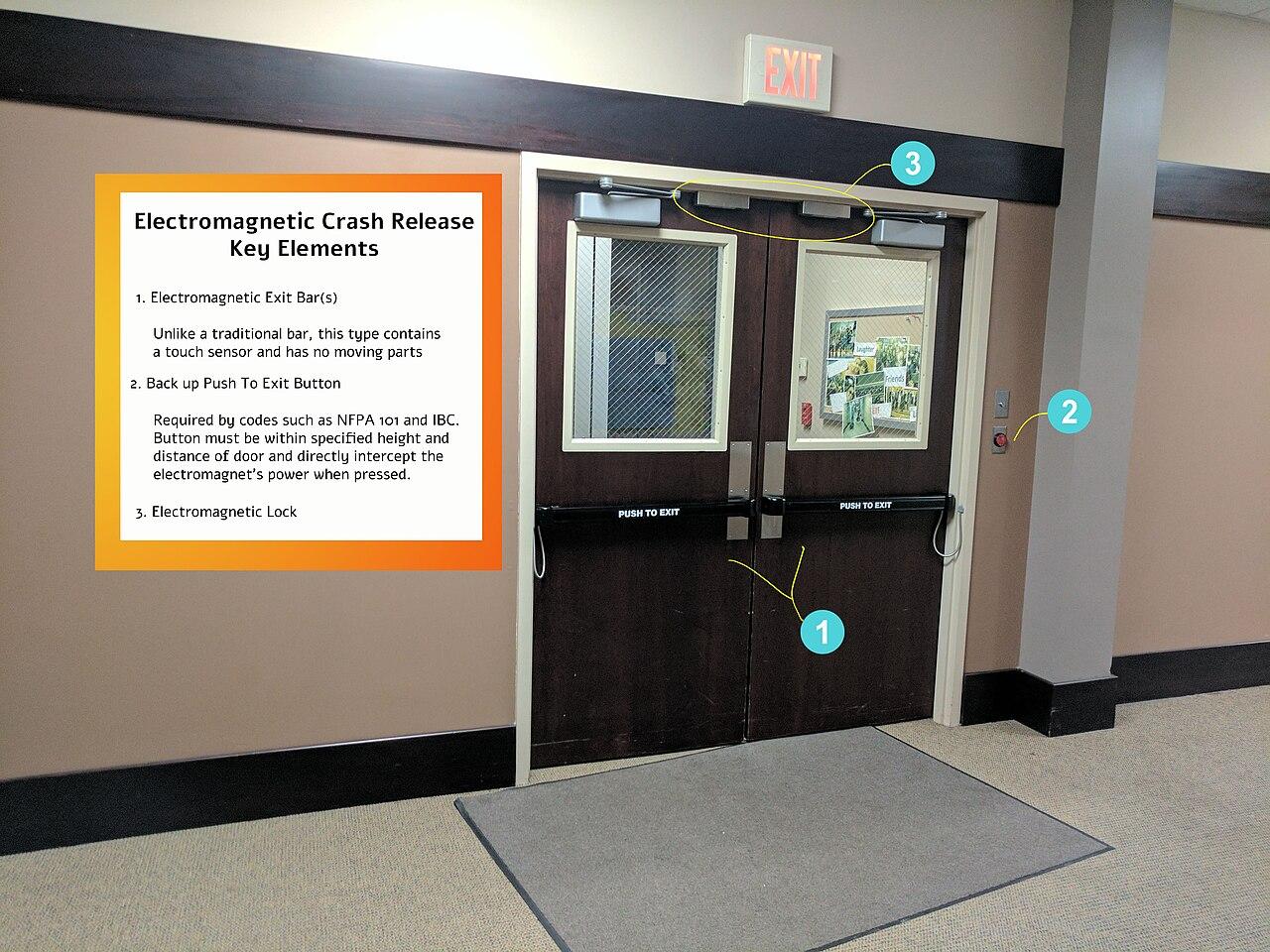
Photograph both sides, including the meeting edges, existing latches, exit hardware, closers, and visible identification labels. The survey should describe the whole opening, not only the side nearest the proposed reader. Where the exact device or function is uncertain, identify the inspection needed to resolve it.
Ask about recurring complaints. Staff may report that one side drags, that both leaves need a particular closing order, or that the entrance behaves differently after deliveries. Those observations are clues for the hardware survey, not reasons to prescribe a software delay without investigation.
The door survey checklist can capture the baseline. Keep the language concrete: which leaf, what movement, and under which condition. A note saying double door problematic gives the next person little to evaluate.
Distinguish daily access from occasional full opening
Define the normal credential interaction. Does one reader grant entry through one leaf or through both? Should a person be able to choose either side? Does the opening include an automatic operator that changes the intended path? Those choices affect hardware, controls, and user expectations.
Then describe the less frequent use. A hypothetical office may use one side for daily access but open the full pair for furniture deliveries. That second mode needs an approved procedure and a clear return to ordinary operation. It should not depend on leaving hardware defeated after the delivery ends.
Involve the team responsible for moving equipment through the opening. They can explain the required clear passage and how often the full opening is used. The qualified design reviewers can then assess the proposed hardware arrangement against those needs and applicable opening requirements.
Do not assume the simplest daily credential sequence is the only use that matters. A system can perform well for hundreds of routine entries and still fail the business when a planned delivery needs the full opening.
Understand any required closing sequence
Some paired openings need their leaves to close in a particular order because of their hardware arrangement. A coordinator manages that sequence. Allegion's door coordinator explanation describes this function and makes clear that coordinators are associated with particular paired-door conditions, not every pair by default.
For purchasing, the useful question is whether the existing or proposed arrangement requires coordinated closing and whether it works. The qualified hardware team should inspect the relevant components and identify necessary corrections. Do not assume a new reader will solve a mechanical sequence problem.
Observe the pair after both leaves are used through the approved test procedure. The normal single-leaf demonstration may not exercise the coordinator or other interacting hardware. If closing is inconsistent, resolve the cause before judging the access control system's ability to secure the opening.
Keep the explanation understandable to site staff. They do not need a hardware theory lesson, but they should know what normal closing looks like and how to report a leaf that remains out of position. Avoid assigning them an improvised manual sequence as the permanent solution to a defective arrangement.
Account for the mullion and delivery access
A mullion can divide a paired opening and provide a meeting point for hardware. Allegion's mullion guidance distinguishes fixed and removable forms and identifies hardware mullions commonly used with rim exit devices. The installed type influences both the retrofit and how the opening is used.
If a removable mullion is part of the approved arrangement, discuss its authorized use, storage, and restoration with the responsible team. The access control project should account for any electrical or monitoring components affected by that arrangement. A drawing that omits the center member can leave the installer and buyer working from different assumptions.
Do not propose removing or replacing a mullion simply to simplify the camera or reader layout. Its role belongs in the complete opening review. Required passage width, existing devices, and applicable approval conditions should be evaluated by the qualified project team.
For an entrance that must accommodate large deliveries, show the intended delivery configuration in the project discussion. The buyer can then compare the complete options instead of discovering after installation that a chosen arrangement interferes with an established business use.
Specify what the system should know about each leaf
One software door name may represent an opening with two separate physical leaves. Decide what the operator must know. If one leaf remains open while the other closes, should the system report the opening as open? Does the team need to distinguish which leaf requires attention?
The answer affects monitoring scope and how inputs are represented. Ask the supplier to explain the actual sensors and status logic rather than assume a single green icon proves both sides reached their intended condition. A granted credential event is also separate from any observation that the opening physically closed afterward.
Use a practical monitoring discussion:
- Identify the physical condition the operator must detect on each leaf.
- Confirm which sensors and inputs provide that information.
- Explain whether the interface reports the pair together or distinguishes the leaves.
- Define the expected alert and staff response when the condition is abnormal.
Do not add notifications without considering whether anyone can act on them. A maintenance-only location may need a different response from a staffed public entrance. The configuration should serve that operating model instead of producing unexplained alarms whenever a scheduled delivery occurs.
Compare proposals using the complete pair
The cost depends on the hardware and intended operation, not a universal multiplier. A pair may need different components on its two leaves, mechanical correction, additional monitoring, or coordination with other equipment. Another pair may have a supported arrangement that reuses much of the existing hardware.
Ask each supplier to show what is retained and what changes. Include the power and cable routes, any moving-door connection, required preparation, and finish work. Where the survey leaves uncertainty, request a clear condition or allowance instead of letting an unexplained line item cover every possibility.
Schedule around the opening's business role. A main entrance may need an approved alternative route during work, while a delivery opening may require coordination with a receiving window. The relevant building team should understand the temporary operating arrangement before installation begins.
The business door access control guide helps connect the opening scope with credentials, schedules, and account management. Both parts belong in the project, but neither should obscure unresolved hardware work on the second leaf.
Accept all intended operating modes
Use a test plan prepared for the actual opening and coordinate any failure or building-system tests with the qualified team. The ordinary checks should exercise the approved use of each leaf, both leaves together where appropriate, and restoration after the delivery configuration.
Observe closing and latching repeatedly. Confirm that the software shows the correct monitored condition, and check how it reports the abnormal states included in scope. Test an authorized and denied credential through the intended user path so the reader's location and the responding leaf are unambiguous.
- Demonstrate routine access through the designated leaf or leaves.
- Exercise approved full-opening use and return to the normal configuration.
- Verify closing sequence where the design requires it.
- Confirm each configured status and the resulting operator indication.
- Retain the exact hardware and monitoring description for both leaves.
A representative pilot can help a multi-site business refine its survey and acceptance process. Similar-looking pairs still need confirmation that their devices and use match. The pilot is evidence about one configuration, not permission to ignore differences at the next building.
The takeaway
Paired doors need a complete opening description. Daily access, occasional delivery use, closing sequence, center hardware, and the status of both leaves all influence the project. A demonstration on the convenient side can leave the most consequential interaction untested.
Price and accept the intended operating modes together. Across a nationwide portfolio, use consistent survey questions while allowing hardware and monitoring to follow each pair's actual condition. The finished system should make normal operation clear and make an incomplete closure visible to the people responsible for responding.
Scope paired-door access control
BlueHouse Telecom can help plan electronic access control installation nationwide. Bring photographs of both leaves and describe normal pedestrian and delivery use so the complete opening can be evaluated.
FAQ
Does a double door require two readers? Not automatically. Reader count and location depend on the intended access workflow and system design. First decide which leaf or leaves an authorized person should use and how the complete opening will operate.
Does every pair need a door coordinator? No. Coordinators serve particular hardware arrangements that require a closing sequence. Have the qualified hardware team identify whether the actual opening needs one and verify its operation.
Can one closed-door signal prove both leaves are secure? Only if the specified monitoring arrangement actually establishes the required condition. Ask how each leaf is sensed and how the software represents the pair; do not infer that from a label or icon.
Should acceptance include deliveries that open both leaves? If full-opening use is part of the approved operating plan, include it in coordinated acceptance and verify the return to normal operation. A single-leaf test does not demonstrate that separate mode.