
Door will not latch: check the closer before blaming access
Separate door-closing problems from credential faults before changing access-control settings, with observations that help a qualified technician.
Quick answer: If an access-controlled door releases correctly but fails to close and latch, inspect the whole opening before changing credentials or software. Describe where the closing cycle stops, what conditions change it, and whether the latch actually engages. A qualified hardware technician should evaluate closer settings, alignment, seals, and compatibility together.
A reader can flash green, the lock can release, and the door can still remain unsecured after the person walks through. To a user, the entire sequence looks like one access-control problem. For troubleshooting, the point where it fails matters much more than the brand of reader on the wall.
The closer is part of that sequence, but it is not the only possible cause. Increasing force until the door slams can conceal interference and create a different problem for people using the entrance. A useful service request separates the observed symptom from an assumed remedy.
Find the moment the sequence changes
Watch a normal authorized entry without altering the door. Does the credential work? Does the person need to pull or push unusually hard before the latch releases? After passage, does the door move toward the frame, stop short, bounce, or appear closed without engaging? Those observations direct attention to different parts of the opening.
Record the symptom in plain language. A hypothetical report that says the door stops about an inch before the frame after a normal entry is more useful than a ticket saying the badge system is broken. Include whether the problem occurs consistently or only at certain times, but avoid repeatedly exercising a door that is unsafe or has loose hardware.
Separate observed facts from conclusions. A green reader indication does not prove the mechanical release completed, and a closed-looking door does not prove the latch engaged. The technician needs to verify the full cycle, including entry, closing, latching, and the applicable safe-exit behavior.
Understand what the closer controls
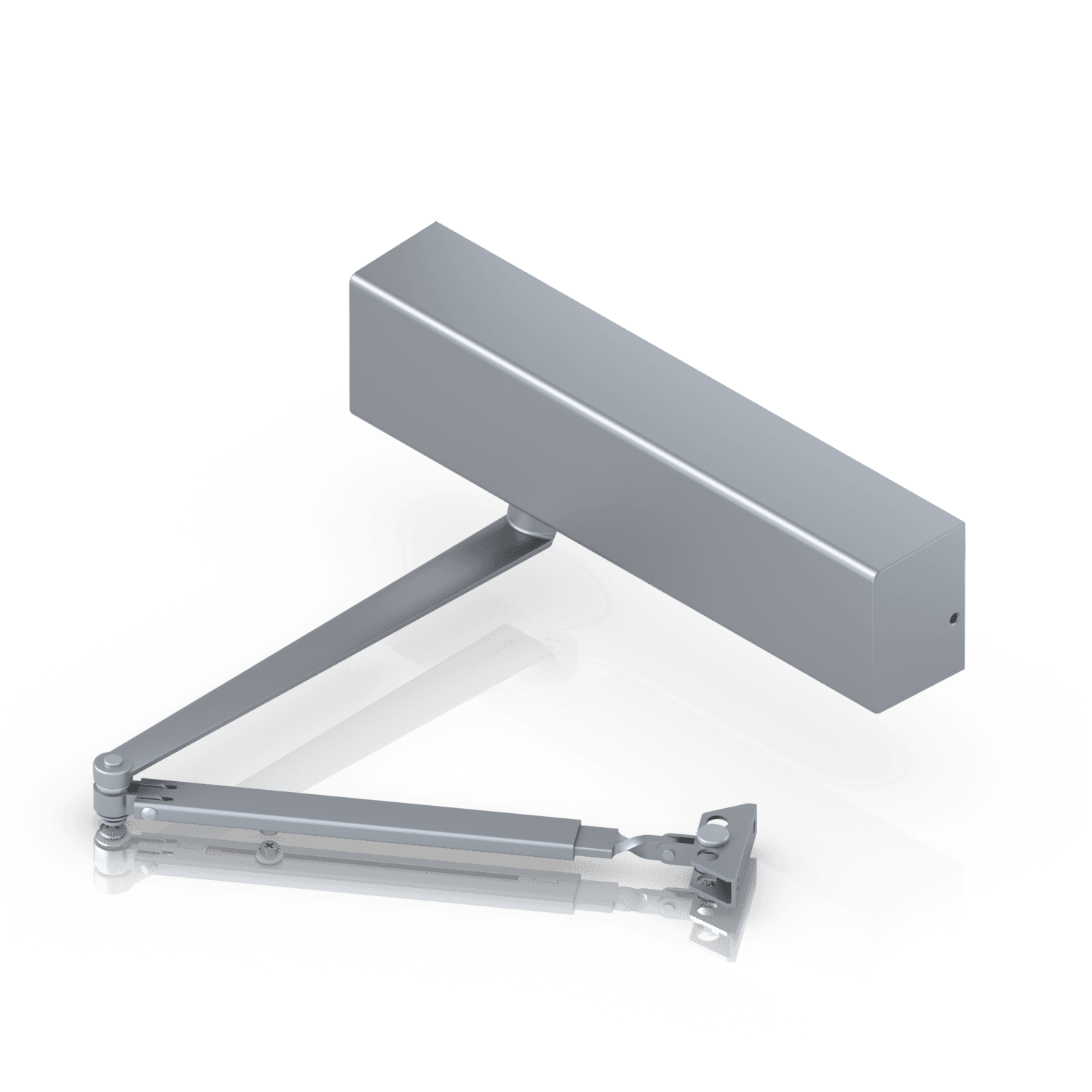
Allegion's closer guidance distinguishes the main closing movement, the final latching portion, opening backcheck, and spring force. These are different functions. Its guidance also explains that increasing spring force increases resistance when opening and that backcheck slows an opening door rather than serving as a door stop.
That distinction helps frame the service conversation without turning it into a do-it-yourself adjustment exercise. A problem during the last part of travel is not automatically solved by changing the main closing speed. Nor does a door opening too far establish that the latch speed needs attention.
Ask the technician to identify the exact closer model and installation arrangement before recommending adjustment or replacement. Hardware that looks similar can have different instructions and application limits. Keep any required accessibility, fire-door, and opening-force review with the qualified people responsible for the actual opening; a general article cannot approve a setting for every building.
Look for interference around the entire opening
A closer can be working while the door encounters resistance elsewhere. Ask the survey to include hinges or pivots, door and frame alignment, threshold conditions, weather seals, latch engagement, and any added hardware. The purpose is to find what prevents the intended motion, not simply to replace the most visible component.
Recent changes are especially useful clues. A new floor finish, replacement seal, frame repair, or added electrified hardware may coincide with the symptom. Share that history even if the work was performed by a different team. A technician who sees only the access-control equipment can miss the change that made the old closing cycle unreliable.
Use a focused observation list:
- Where the door stops, rubs, rebounds, or makes unusual contact.
- Whether the symptom changes with the adjacent door open or closed.
- Whether weather or building operation appears related.
- Any recent work to seals, flooring, hinges, locks, or the frame.
These observations help prioritize inspection. They do not establish a diagnosis by themselves, and staff should not remove seals or defeat hardware to see whether the problem disappears.
Separate release timing from reliable relatching
Access-control settings determine when the system commands a release, while the installed hardware and door movement determine how the opening behaves. A release period that does not fit ordinary passage can create confusion, but a longer software timer does not repair a door that cannot return to the frame correctly.
HES's electric-strike guidance emphasizes the actual lockset, frame, and operating conditions, including preload where relevant. If pressure at the latch affects release, the question is compatibility and the condition of the opening, not simply whether the credential database contains the right name.
Have the technician observe the complete sequence with the intended users and equipment. A staff entrance used while carrying boxes may behave differently from a demonstration with an empty-handed installer standing still. The approved solution should allow the intended operation while maintaining the opening's applicable safety requirements.
The door survey checklist helps gather the hardware and usage details before a service visit. It is particularly useful when facilities and IT have each received only half of the complaint.
Check the conditions that make the problem intermittent
Intermittent faults are easy to dismiss when the door works during a short visit. Ask staff for the conditions surrounding a failure: time of day, weather, adjacent openings, normal traffic, or an unusual delivery. A short factual log can be more useful than repeated unscheduled adjustments made without recording what changed.
A hypothetical exterior door might close normally in calm conditions but stop short during a particular wind direction. An interior entrance might behave differently when nearby building systems operate. These are reasons to investigate the environment and opening together, not evidence that one universal closer setting will solve every condition.
Arrange the service visit around a representative operating period where practical. If the condition cannot be reproduced, have the technician explain what was inspected, what remains uncertain, and what observation would help the next step. Replacing parts on the strength of an unreproduced symptom should be an explicit decision rather than the default conclusion.
Avoid asking staff to create unsafe pressure conditions, force a door, or interfere with building systems for testing. Their contribution is accurate reporting and normal-use observation; the qualified team controls the diagnostic work.
Accept the repair through normal use
A successful adjustment should produce the intended complete cycle, not merely a satisfying closing sound. Arrange a demonstration of authorized entry, ordinary passage, closing, and latching, with the applicable exit operation also checked. Include any monitoring that the access system uses so the displayed status agrees with the observed condition.
Test representative approaches and conditions within the agreed scope. A door that closes from fully open may behave differently after a shorter ordinary opening. A technician should determine the appropriate tests for the hardware, while the business explains how people actually use the entrance.
Ask what changed and what the result means. Was the closer adjusted, hardware repaired, alignment corrected, or a compatibility problem addressed? Keep the service details with the opening's records so the next technician does not repeat a rejected approach. The business door access guide can help connect the mechanical result with the wider system acceptance.
Keep a recurring fault from becoming normal
Employees adapt to unreliable doors. They may pull the door shut after every entry, stop using one entrance, or leave a note for the next shift. Those habits can hide a recurring problem from the people responsible for maintaining the opening. Give staff a simple route to report the symptom when it returns.
Do not let a successful service visit close the issue if the door still fails under the condition that generated the original complaint. Compare the result against that condition and schedule any necessary follow-up. Where weather or building operation is involved, a short review after the relevant period may be appropriate.
For nationwide facilities, standardize the observations and acceptance questions, while allowing the repair to match each opening. An identical reader at two sites does not mean the doors, seals, closers, or environmental conditions are interchangeable. A useful central record preserves those differences so repeat problems can be recognized.
The takeaway
A door that does not latch needs a complete opening review. The reader, release command, closer, frame, seals, and latch participate in different parts of the sequence, and changing one without understanding the failure can create another problem. Clear observations help qualified technicians focus their work.
Judge the repair through ordinary use and the conditions that caused the complaint. The goal is a door that performs its approved entry, closing, latching, and exit functions consistently, with monitoring that reflects what happened. A quieter alarm or a longer unlock timer alone does not establish that result.
Include door condition in the access-control scope
BlueHouse Telecom can help plan electronic door access control nationwide. Share the opening details and observed symptoms so hardware condition, system behavior, and any needed qualified review can be addressed in the proposed scope.
FAQ
Will a longer unlock timer fix a door that will not latch? It may address a timing mismatch in some arrangements, but it does not repair interference or a faulty closing cycle. Have the complete sequence evaluated before changing settings.
Should staff increase the closer force? Closer adjustment should follow the exact manufacturer's instructions and the opening's requirements. Increasing force can also increase opening resistance and may conceal another defect.
Does a closed status in the app prove the latch engaged? Not necessarily. Determine which sensor or system state produces that label and compare it with the physical result during acceptance testing.
Why does the door work during a service visit but fail later? Operating conditions may differ. Share factual observations about weather, adjacent doors, recent work, and normal traffic so the technician can investigate the intermittent condition.