
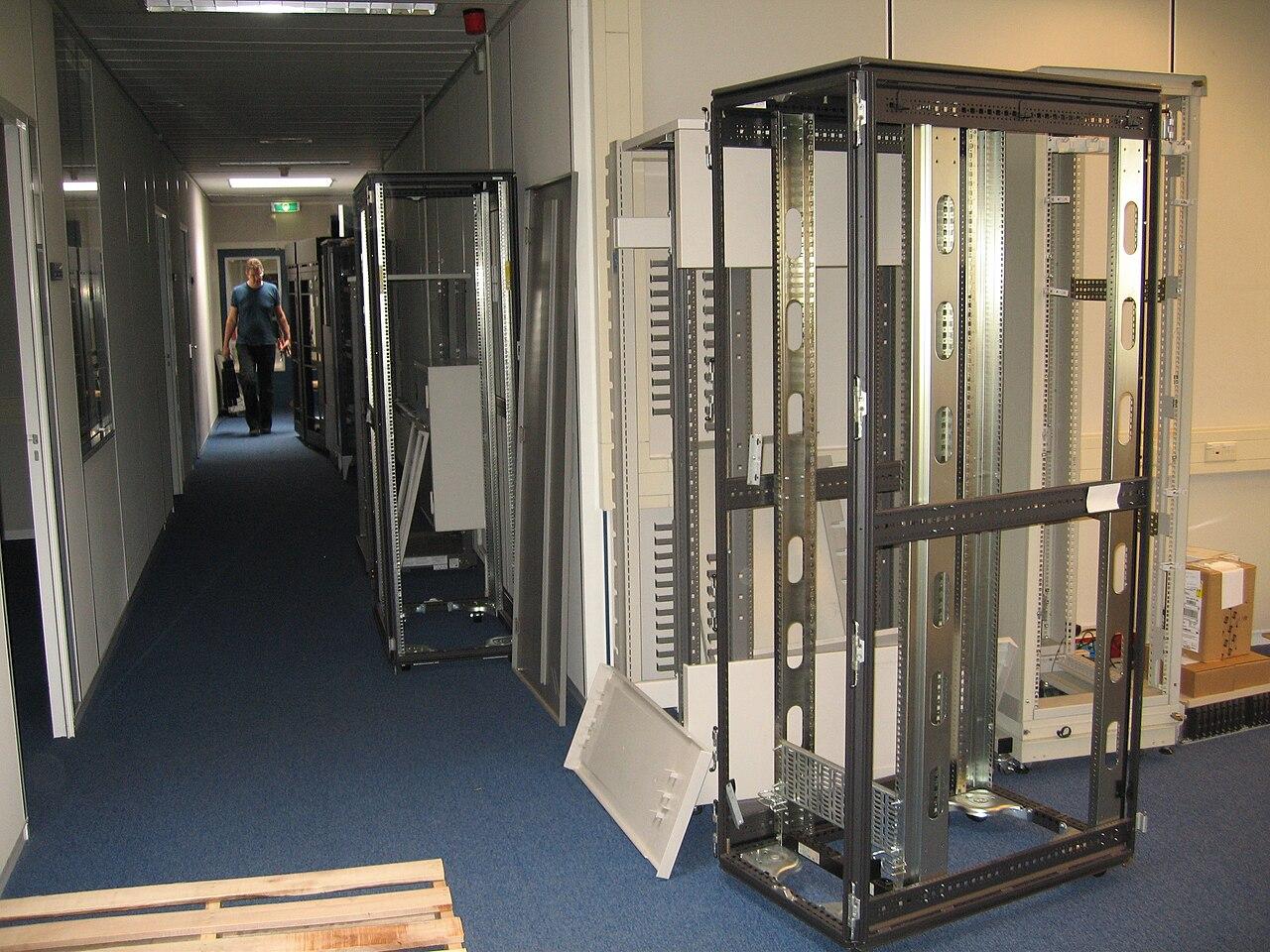
Move the Fiber Plan Ahead of the Office Move
Coordinate the new office's carrier handoff, internal fiber, equipment interfaces, and acceptance before desks and staff arrive.
Quick answer: Plan the new office's internal fiber and carrier service as connected projects with separate deliverables. Survey the actual handoff and equipment locations, verify any reused components, and test the completed links before the operational move. Keep the old site's equipment and connections available until the approved transition plan says they can be removed.
Desks can arrive at a new office before the network has a usable path through the building. A carrier may deliver service to one room while the planned equipment cabinet sits several floors away. If that gap is discovered during the furniture move, the business inherits a construction problem at the moment it expected a working workplace.
The fiber plan belongs in the relocation schedule early enough to influence room layout, pathways, equipment purchasing, and acceptance. It should explain what will exist at the new site before staff arrive, what moves during the transition, and what must remain at the old office. Treating all three as one moving-day task makes testing and recovery unnecessarily difficult.
Sketch the new office's actual connection chain
Start with the proposed carrier delivery point and follow the connection to the business equipment. Show intermediate rooms, panels, and distribution points. Then identify the areas served from each location. This drawing should describe the intended path rather than simply reproduce the furniture floor plan.
Confirm those locations through the property and service-order processes. A broker's description of a connected building is not a substitute for the service handoff in your order. Likewise, the previous tenant's cabinet location may not fit your layout or operating requirements.
The fiber installation versus fiber internet guide explains the distinction between physical cabling and carrier service. Use that distinction to assign tasks on the relocation schedule. The external service and internal route must meet at an agreed interface, but either can have unfinished work after the other is complete.
Decide which network equipment can move
Inventory the equipment that might be reused and identify what it currently supports. Check model, interface, licensing, management, and support requirements against the new design. A working switch at the old office is not automatically the appropriate device for the new distribution layout.
Ask whether moving it early would remove a service that the old site still needs. If the business plans an overlap period, some equipment may need to be available at both locations. Compare the actual transition options before making a purchasing decision based only on the final equipment count.
For carrier equipment, follow the provider's specific transfer instructions. Comcast Business's moving information tells customers to confirm compatibility at the new address and qualifies the possibility of retaining an IP address within the same regional market. Those conditions illustrate why equipment and addressing assumptions need confirmation; they are not universal rules for every carrier or service.
Survey pathways before closing construction surfaces
Walk the route while the project still has opportunities to coordinate with building work. Confirm access to shared spaces, equipment-room conditions, and the proposed locations of panels and cabinets. Have qualified designers and facilities personnel resolve installation methods and applicable building requirements.
The Fiber Optic Association's design guidance connects communication requirements with component choice, routes, installation, testing, and documentation. Applied to an office move, this means the route needs technical and practical review before a cable order becomes a fixed assumption.
Pay particular attention to design changes made by other teams. A relocated wall, cabinet, or ceiling feature can change how the fiber reaches its endpoint. Give the network team a current drawing and a defined way to receive revisions. Rework is easier to prevent when the route is reviewed before the affected area is finished.
Verify the whole optical connection
Have the technical team match the selected fiber with the supported interfaces at both ends. Include patch panels, connector types, patch cords, and transceivers in the review. Keep model-specific compatibility evidence with the design instead of relying on a generic description such as fiber uplink.
If existing building cable is proposed for reuse, establish permission and identify both endpoints before testing. Obtain available records, then determine whether the link meets the intended application's requirements. A label showing a fiber type does not establish current condition or the complete path.
For new material, specify what the quote includes and what others must provide. A useful purchasing check asks whether the complete link can be assembled from the approved list. Finding that two teams each expected the other to supply the optics is avoidable when the bill of materials names them explicitly.
Put acceptance ahead of the operational move
Choose the dates by which the physical links must be installed, labeled, tested, and reviewed. Allow time to resolve findings before the business relies on the new office. Testing on the same morning staff arrive leaves little room to investigate a failed or mismatched link.
Use a readiness sequence with concrete evidence:
- The route and endpoint locations are approved and accessible.
- The cable installation and agreed test reports are complete.
- The active equipment and carrier handoff are ready for integration.
- The business has accepted its required application workflows.
These checks may finish on different days. Show their dependencies in the schedule so a late carrier appointment does not obscure an unfinished internal link, or vice versa.
The fiber testing acceptance guide provides questions for the cable handover. Follow those with the appropriate network and application checks. A successful physical-link result is useful evidence, but it does not prove that every user account, printer, or cloud application is ready.
Build a transition that respects both offices
Identify which services must remain active at the old location while the new one is prepared. The finance team may still work there after other departments move, or equipment may need to remain connected until records are transferred. Make those dependencies visible to the people packing and removing hardware.
Create a specific list of items authorized to move during each stage. Distinguish spare equipment from equipment still carrying a live service. Attach the destination role and current configuration reference to reused devices so they arrive ready for the intended installation task.
I would also establish a decision point for delaying the operational move. If a required new-site test has failed, the business needs a known fallback or a consciously accepted restriction. A moving-truck booking should not silently become the technical approval to disconnect the old network.
Preserve enough detail to diagnose opening-week problems
During commissioning, capture the final physical link identifiers and the equipment interfaces they connect. Record the agreed test evidence and the configuration version used for acceptance. Include any temporary connections that remain in service, with their limits and planned removal.
Keep these records accessible to the support team in the form they actually use. A large construction document archive may contain the answer while still being difficult to navigate during an incident. Provide a concise route and endpoint reference that points to the full evidence.
If a problem appears after occupancy, compare it with the accepted setup before making changes. New equipment, moved patch cords, and altered workload are all relevant facts. The purpose is to establish what changed, not to assume that every opening-week symptom proves the fiber installation was defective.
Close the old site and temporary arrangements deliberately
Once the approved transition conditions are satisfied, reconcile what remains at the old location. Confirm which assets belong to the business, the property, or a provider, and follow the applicable removal and return arrangements. Do not cut or remove unidentified cabling as part of general cleanup.
At the new office, replace or formally approve temporary measures before they become invisible parts of the permanent design. Update the drawings and labels to match the installation people will actually support. A provisional patch route should not survive indefinitely because nobody owned the final cleanup.
Finish with a handover that covers both the new working network and the old site's closure evidence. The move is easier to audit when equipment inventory, physical connections, service transitions, and remaining obligations agree. Missing one of those records can create work long after the boxes have been unpacked.
The takeaway
The physical network should become a tested part of the new office before the business depends on it. Establish the carrier handoff, internal route, equipment interfaces, and acceptance sequence early enough to influence construction and purchasing.
Then manage the transition as two operating locations with a planned handover between them. Preserve what the old office still needs, test what the new office will use, and remove temporary arrangements through an explicit closeout. That produces a more defensible opening decision than assuming the furniture schedule will pull the network into place.
Coordinate your office fiber project
Discuss the new-site connections and move sequence with BlueHouse Telecom.
FAQ
Can the existing office fiber move with our equipment? Installed building cable and movable equipment are different assets. Determine ownership and removal requirements, then design the new site's route on its own merits. Reusing equipment still requires compatibility and transition planning.
Should the carrier installation happen before the internal fiber? The sequence depends on the handoff and access arrangements. Plan both tasks around their actual dependencies and leave time for integrated testing before the business relies on the new site.
Can we accept the fiber before internet service is active? The agreed physical-link tests can establish properties of the installed fiber without proving an active internet service. Complete carrier, network, and application acceptance separately when the required equipment and service are available.
What if the new office is ready but the old network equipment cannot leave yet? Review the overlap requirement and available equipment options before cutover. The business may need a staged transition or additional supported equipment; do not remove a device while an approved old-site workflow still depends on it.