
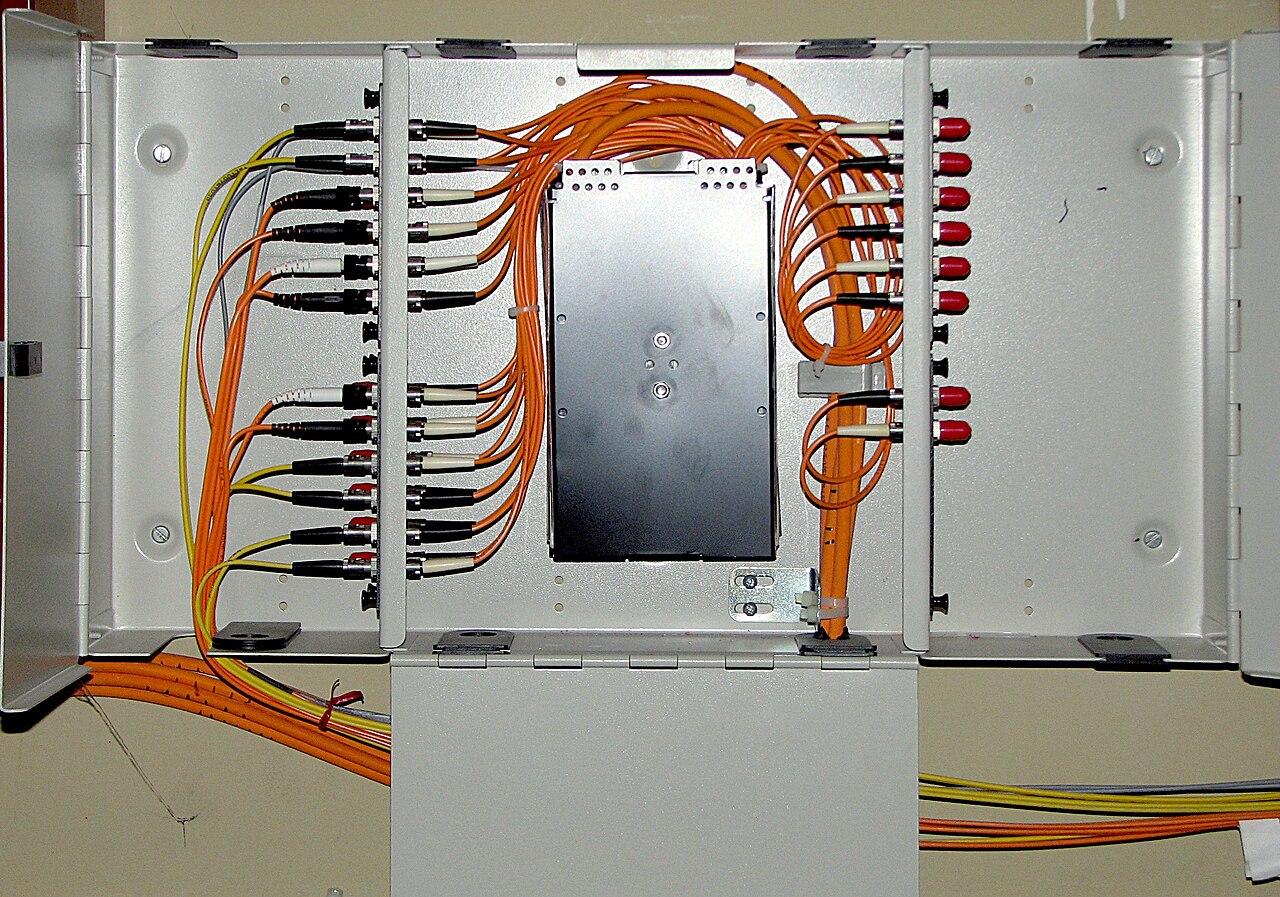
Who handles the fiber run beyond the carrier demarc?
Resolve the gap between the carrier handoff and your network equipment before it delays a business fiber installation.
Quick answer: Responsibility for a demarc extension depends on the service order, building arrangements, and agreed installation scope. Confirm where the carrier hands off service, where your equipment sits, and who provides the connection between them. Get the endpoint, work, testing, and ownership in writing before treating the site as ready.
A business can have an internet installation date without having a complete path to its network. The carrier may be preparing a connection in a shared telecom room while the customer's firewall is several floors away. Both teams can be doing their assigned work, yet the link between them can remain unassigned.
That gap is a planning problem worth solving early. Calling it a demarc extension is useful only if everyone agrees on the points being connected and the service being extended. This article focuses on that practical coordination, including the building access and handover details that often sit outside a simple internet order.
Locate the handoff before discussing the extension
Ask the provider to identify the demarcation for the particular service you are ordering. Record the building, room, cabinet or panel, and interface where service will be handed over. If the provider has not finalized that location, track the decision as pending rather than putting an assumed endpoint on the installation drawing.
Next, locate the customer equipment that will receive the service. That might be a firewall in the tenant's rack, equipment in a shared room, or another agreed termination point. Do not assume that the place where fiber enters the building is also the final service handoff. The service design determines what is presented to the customer.
Draw the complete connection between those two locations, including intermediate patching. Use ordinary labels that the facilities and network teams can both understand. A small diagram can reveal a missing floor-to-floor segment more effectively than a long email chain in which everyone uses “the telecom room” to mean a different room.
Read responsibility from the actual order
Lumen's readiness guidance explains that the contract specifies inside-wiring responsibilities and whether that work is provided as an additional service. It also tells customers to confirm the requested extension point. That is a useful model for reviewing any proposal: find the written responsibility, not an informal assumption about what carriers usually do.
Verizon's Internet Dedicated Services welcome kit similarly discusses readiness of extended demarcation facilities and the possibility of ordering an extension. The relevant takeaway is not that every provider has identical terms. It is that the extension needs an explicit answer for the particular service and location.
Ask the order contact to reconcile the service description with the cabling proposal. If one document includes wiring only to the building handoff and another begins at the tenant rack, there is a gap. If both include the same section, identify who actually owns it before paying for duplicate work or creating conflicting schedules.
Confirm permission to use the proposed path
A cable route may pass through space the tenant does not control. Discuss access with the building representative before promising that the extension can be installed through a riser, ceiling area, or shared equipment room. Record any approved work hours and access arrangements that affect the installation.
Check who owns existing pathways and cabling. A spare-looking fiber or open panel position is not evidence that your business is entitled to use it. Request identification and authorization from the responsible party. If the building offers an existing connection, obtain the relevant endpoint information and any available test records before relying on it.
In a hypothetical leased office, a property manager might approve the route while requiring a particular process for accessing the riser. The project schedule needs both decisions. Treat the access process as a dependency with an owner and completion date; otherwise a confirmed carrier appointment can arrive before anyone is allowed to reach the proposed pathway.
Specify the handoff medium instead of assuming fiber
The service may be delivered over fiber within the carrier network while the customer-facing interface uses a particular Ethernet connection. Ask for the actual interface, required equipment, and supported configuration at the handoff. The extension must match what is being presented, not merely the word “fiber” on the sales page.
Have the network designer check the complete link. Cable type, distance, termination, optics where applicable, and customer equipment must work together. If conversion equipment is proposed, include its power, mounting, management, and support responsibilities. Adding a box to solve an interface mismatch also adds something the business will have to maintain.
Our fiber installation and internet service guide separates the physical network work from the subscription. Use that distinction when asking for a quote. A passive extension, an active managed connection, and a carrier service are different scopes even when they all appear on the same project diagram.
Give the extension its own readiness checklist
The extension should have a short checklist that can be completed before activation. Keep it specific enough that a site contact can verify progress without making technical judgments outside their role. “Ready” should mean the agreed prerequisites are complete, not that materials have been ordered.
- Both endpoints and the required interface are confirmed.
- The route and necessary building access are approved.
- Required cable, termination hardware, equipment, and power are ready.
- Installation and agreed testing have been completed with identifiable records.
- The people responsible for final patching and activation are scheduled.
Keep open items visible. If the rack is not installed or the carrier has changed the handoff location, update the drawing and schedule rather than letting the old checklist remain green. The business owner needs to know whether the dependency affects physical installation, activation, or both.
This checklist also helps separate tasks that can run in parallel. Room preparation and equipment configuration may proceed while the route is being approved. The sequence should follow the real dependencies, with enough time to inspect completed work before the activation appointment.
Coordinate final patching and operational acceptance
A tested cable can remain disconnected from the service it was installed to carry. Ask who performs the final patch at each end and who has access to the necessary cabinet. Lumen's transport readiness guidance identifies final patching as a distinct requirement in some locations. That detail should not be left to whoever happens to be present last.
Plan acceptance in stages. First confirm that the extension meets its agreed cabling requirements. Then confirm the service handoff and customer equipment connection. Finally, test the business workflows within the project scope. A failure at one stage should not be described vaguely as “the fiber is down” when the evidence points to another part of the path.
For a hypothetical office move, the acceptance tasks could include approved internet access, business calls, and the applications used on opening day. Assign those checks to the relevant owners. If the carrier's service test passes but a customer firewall configuration is incomplete, record the boundary clearly so the right team can resolve it.
Keep the ownership record after installation
Retain the final endpoint labels, route drawing, cable records, test evidence, and service identifiers. Note who owns the extension and who is responsible for maintaining it. If access requires building coordination, preserve that contact and process with the technical record. An inaccessible but otherwise healthy connection can still delay troubleshooting.
Document what changes when the business moves, adds another carrier, or replaces its firewall. Do not assume that an extension for one service automatically satisfies a new service order. The interface, location, or contractual boundary may change, and those changes should be reviewed before someone disconnects the existing connection.
The fiber acceptance checklist can help organize the passive-cabling evidence. Add the carrier handoff and operating responsibilities alongside it. The resulting record should let the next person distinguish the carrier's service, the building pathway, the extension, and the customer's network without reconstructing the project from memory.
The takeaway
The demarc extension is the connection between two responsibilities, so it needs to be visible in both the technical plan and the commercial scope. Confirm the actual handoff, the customer endpoint, the interface, the approved route, and the party responsible for each remaining task.
Resolve those questions before committing the business to an opening date that depends on the connection. A complete order is not the same as a ready building, and a tested cable is not the same as an accepted operating service. Keeping those milestones separate makes the project easier to schedule and much easier to troubleshoot later.
Connect the service handoff to your equipment plan
BlueHouse Telecom can discuss commercial fiber installation and site-readiness needs for business locations nationwide.
FAQ
Does the carrier always install the demarc extension? No universal rule applies. Review the particular order and contract, then confirm whether the extension is included, available as additional work, or the customer's responsibility.
Can we use the building's existing fiber? Possibly, with the owner's authorization and suitable identification, condition, compatibility, and test evidence. An available-looking strand or panel port is not enough to establish that it can be used.
Is a demarc extension always made with fiber? The required medium depends on the service handoff and the designed connection to customer equipment. Confirm the interface rather than selecting cable from the service's marketing name.
Who should attend activation? Arrange access and participation from the people responsible for the carrier handoff, extension or final patching, customer network configuration, and agreed business tests. Assign their tasks before the appointment.