
Fusion splicing or preterminated fiber for your project?
Compare factory-terminated assemblies and field splicing against the actual route, installation window, repair plan, and acceptance tests.
Quick answer: Choose preterminated fiber when the route and endpoint locations can be measured accurately and the assembly can be installed without damaging its connectors. Choose field splicing when site conditions favor placing cable first and completing the ends on location. Compare the complete installed system, including protection, testing, maintenance access, and the consequence of a measurement error.
The cheaper cable assembly can produce the more expensive project. A factory-built trunk that cannot make a turn into the rack, or a field splice location without usable working space, can erase the apparent savings before the first link comes online.
This choice deserves attention before purchasing cable. Neither approach removes the need for a surveyed route, compatible components, or proof that the finished connection works. The useful comparison is how each method handles the uncertainties of your particular building.
Describe the termination approach precisely
A proposal that says fiber termination leaves too much room for interpretation. Ask whether the cable arrives with connectors, connects through factory-built cassettes, or receives pigtails spliced to its fibers on site. Each arrangement creates a different parts list and different work at the ends.
Fusion splicing and factory termination are not mutually exclusive categories. A factory can use fusion splices in an assembly, while a field installation can connect factory-terminated pigtails to the installed cable. For buying purposes, identify which work happens before shipment and which work happens at your location.
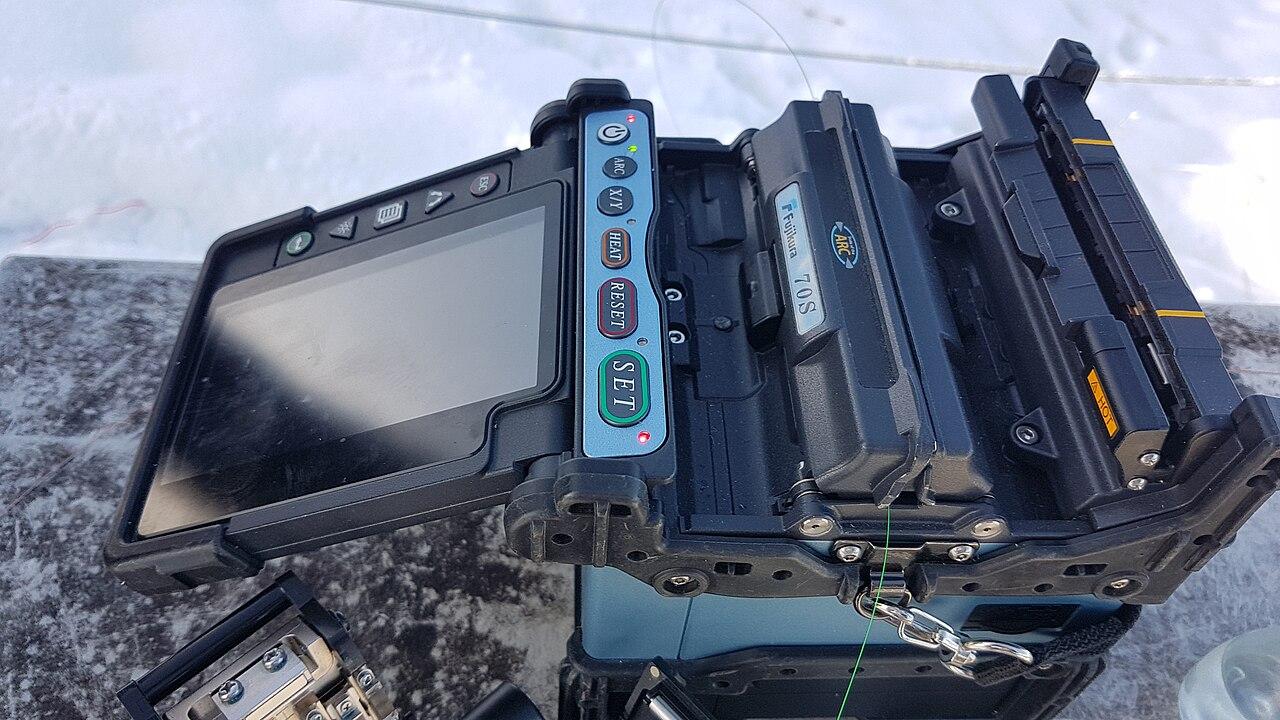
The Fiber Optic Association describes fusion splicing as joining prepared fibers using a splicing machine. Its guidance emphasizes compatible procedures, careful fiber preparation, and protection of the resulting splice. Those tasks belong in the scope; they are not merely the final click of a connector.
Draw the proposed link from patch-panel port to patch-panel port. Mark every connector, splice, cassette, and cable transition. That drawing makes two competing proposals comparable even when their product names sound unrelated. Use the fiber installation planning guide to keep the physical cabling project separate from an internet-service order.
Measure the route the assembly will actually travel
Preterminated cable shifts more decisions into the design and ordering stage. Corning's discussion of harsh-environment installations stresses precise measurements between connection points for factory-terminated solutions. A room-to-room distance measured on a floor plan does not establish the ordered assembly length.
Include the route into each enclosure, vertical transitions, approved service loops, and the way the cable enters the rack. Confirm the measurement reference: connector end, breakout point, or another defined point in the manufacturer's ordering drawing. A correct number with the wrong reference can still produce the wrong assembly.
The installation route must also accommodate the protected connector ends. Ask for the assembly's installation instructions, pulling arrangement, dimensions, and applicable cable limits. A pathway suitable for bare cable may not accommodate a protected connector bundle in the same way.
Consider a hypothetical office where the rack moves after the cable order. An extra few feet of routing may matter more than the distance between rooms suggests. Before approving manufacture, freeze the relevant endpoint positions or identify how much movement the selected design can accommodate.
Price the field work without hiding it
Field splicing can accommodate final termination at the installed location, but that flexibility has a cost and a physical footprint. The project needs appropriate equipment, preparation space, environmental control where required, fiber management, and time to finish and verify the work.
Ask where splicing will take place. A narrow closet full of live equipment may be a poor place to prepare and organize many fibers. The proposed method should explain how technicians can work without putting nearby connections under strain or blocking operations that must remain available.
Do not reduce the comparison to a per-splice labor number. Pigtails, trays, holders, protective sleeves, cable preparation, labeling, and testing affect the finished result. An assembly with a lower purchase price may simply move these tasks and materials into a separate invoice line.
A useful quote identifies the included fiber count, termination count, and tested endpoints. It also describes what happens if site access changes. That gives you something more defensible than assuming one method is always faster or always cheaper in every building.
Compare the uncertainties before comparing totals
List the site conditions that could change the decision. The strongest choice often comes from eliminating one serious uncertainty, rather than finding a modest difference in material cost. A stable, fully accessible route presents a different problem from an occupied site with concealed pathway restrictions.
Use this comparison during the survey:
- Are the final endpoint positions approved and accurately measured?
- Can the proposed assembly pass through the actual pathway using its approved installation method?
- Is there protected space for any field preparation and splicing?
- Where will surplus length or service slack be stored?
- What changes would require a replacement assembly or additional field work?
- Which party resolves a route discrepancy before installation continues?
Discuss the answers with the installer before selecting a product. An unresolved pathway restriction should remain an open design issue, not become a quiet assumption embedded in the lowest price. Likewise, an uncertain measurement should not be disguised by ordering arbitrary excess cable without a storage plan.
For a hypothetical tenant renovation, preterminated links between fixed racks may be reasonable while a separate building connection uses field splicing. A mixed design can be appropriate when the routes have different constraints. The purchasing decision does not need one method for every cable on the property.
Preserve maintenance access after installation
Think through a future change while the design is still easy to alter. Someone may need to add a connection, investigate a damaged end, or relocate equipment. Ask what can be serviced independently and what would require disturbing neighboring fibers.
A field splice should live in a compatible protective arrangement with organized fiber storage. A factory assembly still needs supported breakouts, protected connections, and suitable enclosure space. The fact that connectors were installed in a factory does not make the installed assembly immune to handling damage.
Ask how replacement parts would be identified. Record the assembly specification, fiber type, connector details, measured length basis, and enclosure components. For a splice arrangement, include the relationship between cable fibers, splice positions, pigtails, and front-panel labels.
There is no universal winner for repairability. A replaceable cassette may simplify one repair; an accessible splice enclosure may simplify another. Have the installer explain the likely repair sequence for the actual design, including whether other active links would need to be moved or disconnected.
Keep factory tests and installation acceptance separate
A factory test documents the assembly before transport and installation. It does not demonstrate that the installed route, final connections, and field handling left the completed link within the project's acceptance limits. Require an acceptance plan for either termination approach.
Likewise, a fusion splicer's displayed loss estimate is useful process information, but it is not a complete end-to-end test report. The FOA describes estimation methods used by splicers; an owner should still require the specified installed-link measurements and traceable identifiers.
Agree on the test boundary, method, wavelengths, limits, and required records before work starts. If troubleshooting traces are included, state how they complement the loss measurements. The fiber testing acceptance guide explains the distinctions that matter when reviewing those deliverables.
Include all contracted fibers, including designated spares, in the agreed testing scope. A quote that only verifies the first active connection leaves the condition of the rest uncertain. Acceptance should also include readable labels, protected cable entries, and confirmation that the physical installation matches the approved route.
Make the purchase decision from the whole sequence
Lay the two proposals beside the project schedule. Show design approval, material ordering, route preparation, installation, termination, testing, and operational cutover. The method that shortens one activity may require an earlier design freeze or a longer procurement commitment.
Ask for explicit exclusions and change conditions. If a preterminated assembly is too short because the approved route changed, how is the replacement handled? If field splicing needs an additional access window, who schedules it? Those are commercial planning questions that should be answered while alternatives remain available.
Keep brand comparisons grounded in the selected components. Corning, CommScope, Panduit, and other manufacturers offer different product families and configurations; the logo does not establish compatibility among every part in a proposed system. Require a coherent bill of materials and applicable installation instructions.
Approve the option that fits the surveyed route, practical work window, and maintenance expectations. If the evidence is incomplete, the next useful purchase may be a more detailed survey rather than cable. Resolving a route issue early is usually easier to manage than discovering it with a shipment already on site.
The takeaway
Preterminated fiber rewards accurate design and a suitable installation path. Field splicing provides a different way to complete the link, with its own workspace, protection, and testing requirements. Neither method should be selected from a cable price alone.
A sound decision explains what happens before shipment, what happens on site, and how the finished link will be accepted. When those steps are visible, you can compare proposals on the same basis and understand what a later change would involve.
Plan the fiber route and termination method
BlueHouse Telecom helps businesses scope fiber installation projects nationwide, including route review, termination requirements, and acceptance deliverables.
FAQ
Is preterminated fiber always less expensive? No. Compare the assembly, measurement work, installation access, enclosure components, testing, and the effect of route changes. A lower field-labor allowance does not by itself establish a lower project total.
Does fusion splicing eliminate connectors? Not necessarily. A common design splices the installed cable to connectorized pigtails at a panel. Ask for a link drawing showing both splices and connector interfaces.
Can a factory test replace on-site testing? It should not replace the agreed installed-link acceptance process. Factory results describe an earlier condition; the completed installation includes handling, routing, and final connections that also need verification.
Can one project use both approaches? Yes, when the design supports it. Different routes may justify different termination methods. Document the components, boundaries, labels, and test requirements for each link instead of assuming every route must use one method.