
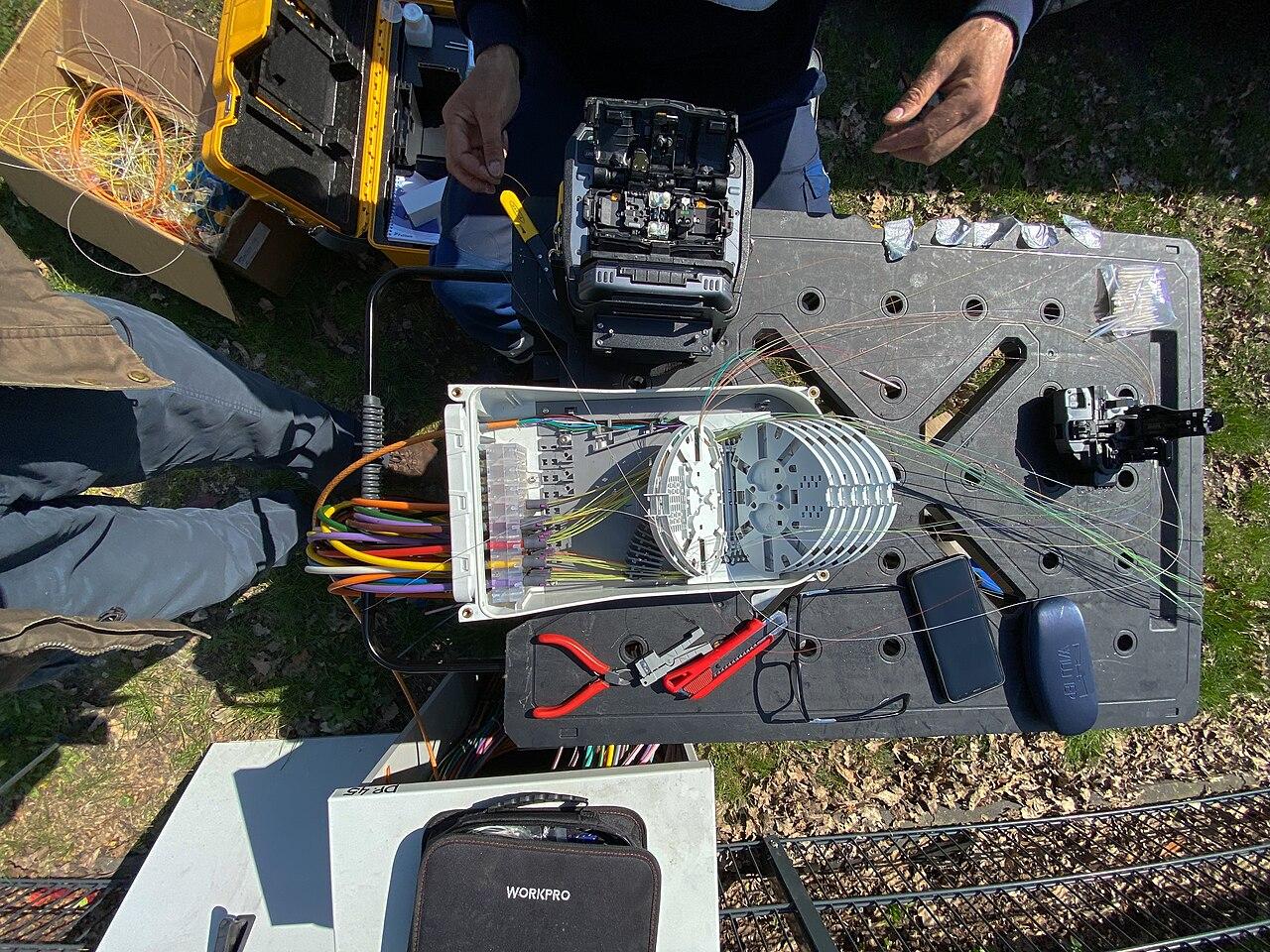
Write a fiber installation RFP vendors can price clearly
Define fiber endpoints, survey assumptions, component scope, testing, exclusions, and schedule dependencies so installation proposals can be compared.
Quick answer: A useful fiber installation RFP defines the endpoints, known route conditions, intended application, survey responsibilities, acceptance requirements, and handover deliverables. Ask bidders to identify assumptions, exclusions, and proposed substitutions in a consistent format. The objective is to compare the same work while leaving qualified designers room to explain a better approach.
Two fiber proposals can have similar totals and describe substantially different projects. One may include route preparation and complete test records; another may assume the pathway exists and provide only a summary. The difference becomes expensive when it is discovered after selection.
An RFP should make those differences visible before the contract is finalized. It does not need to pretend every field condition is already known. It needs to distinguish confirmed information from assumptions and explain how unresolved conditions will become priced, approved work.
State the business outcome and physical endpoints
Describe what the new link must connect and why the business needs it. Include the intended equipment or application where known, the planned operating role, and relevant timing constraints. A link serving a new building has different dependencies from a replacement link in an occupied network.
Identify the endpoints precisely enough for a site review. Building names, room identifiers, proposed rack positions, and available drawings help bidders understand the work. If the final termination position remains undecided, state who will decide it and when rather than allowing each bidder to select a convenient location silently.
The fiber installation versus internet guide is useful when defining the boundary. Installing private cabling, extending a carrier handoff, and purchasing internet service are related but separate scopes. State which of them the RFP includes so a cable installation quote is not mistaken for a complete service order.
Avoid unnecessary performance promises in the opening paragraph. Provide the actual application requirement and ask the designer to explain the proposed components and compatibility basis. A broad request for future-proof fiber leaves too much room for incompatible interpretations.
Describe what is known about the route
Provide the available route information with its evidence and limitations. Existing drawings may be useful without proving that every pathway remains clear. Mark which segments have been observed, which lengths are estimates, and which areas require additional access or investigation.
Ask bidders how they will verify the conditions that materially affect scope. Define whether the survey is included in the proposal, occurs before a final price, or forms a separately authorized phase. The appropriate arrangement depends on the project; the RFP should make the chosen process clear.
Include property access, work-hour restrictions, occupied areas, and known coordination requirements. Qualified project personnel must determine applicable installation, permitting, and building requirements. Do not ask a bidder to accept an unexplained universal allowance for unknown work simply to produce an attractive initial total.
A hypothetical campus project may have a confirmed indoor route and an unverified outdoor crossing. Separate those conditions in the pricing request. That gives the owner a way to compare the confirmed work while addressing the uncertain segment through an explicit survey or allowance process.
Request a complete proposed system
Ask for component descriptions and the interfaces between them, not just a cable brand and strand count. The response should identify the proposed fiber and cable construction, termination arrangement, housings, connectors or modules, and relevant patching. Equipment optics may be included or excluded, but the responsibility must be clear.
Require a compatibility explanation for the intended application and existing equipment. Ask which facts still need confirmation before procurement. A bidder should be able to distinguish a recommended design from a guarantee based on information the owner has not supplied.
For brand-specific projects, identify whether the manufacturer is required or preferred and explain how alternatives will be evaluated. A substitution request should show the effect on interfaces, test requirements, maintenance, and any proposed manufacturer program. A familiar brand name does not establish eligibility for a system warranty.
The CommScope project specification article illustrates why an unloaded housing and a populated, usable connection arrangement are different buying decisions. Apply that level of completeness to any proposed product family rather than comparing incomplete parts lists by their headline capacity.
Put acceptance requirements into the bid package
The Fiber Optic Association describes a scope of work as defining tasks, methods, timing, and design or performance requirements. It also treats documentation and test results as installation deliverables. Those are useful prompts when writing an RFP: ask for the evidence you expect to use at acceptance before the work is priced.
Have the qualified technical owner define the required test scope and applicable criteria. Identify the links or fibers covered, required result formats, and how records will be named. If the design is not complete enough to set final criteria, require the bidder to describe the proposed design-and-approval process rather than invent a number for the procurement form.
Separate passive cabling acceptance from equipment configuration and application validation. State which checks the installation scope includes and which depend on another scheduled activity. Otherwise, an installer can finish the quoted cable work while the business still assumes someone is responsible for bringing the application online.
Describe the review process for failed, missing, or ambiguous evidence. The RFP need not reproduce every future punch-list entry, but it should establish how unresolved work will be identified and closed.
Make assumptions and exclusions easy to compare
Use a common response schedule for the questions most likely to change the project. This is one place where a structured checklist is more useful than another page of promotional prose.
Ask each bidder to identify:
- Included endpoints, route segments, and estimated quantities.
- Survey work and the conditions requiring further investigation.
- Pathway preparation, restoration, and building work included or excluded.
- Proposed components and substitutions requiring approval.
- Test scope, result files, drawings, and labeling deliverables.
- Dependencies on access, power, equipment, or carrier service.
- The process for pricing and approving changed conditions.
Do not treat every exclusion as a weakness. A clearly stated exclusion can be more manageable than a vague claim that everything is included. The owner can then assign the work deliberately or ask for an additional priced option.
Require options to show what changes from the base proposal. An optional higher strand count may require different hardware or additional terminations, while an alternate route may affect access and restoration. Evaluate the complete option rather than only its incremental cable cost.
Ask for a schedule built around dependencies
Request the proposed sequence from survey through handover, including decisions the owner must make. Separate estimated equipment availability, property approvals, installation access, testing, and any production cutover. A single completion date can conceal a chain of unresolved prerequisites.
Have bidders explain what starts the scheduling commitment and what information they need before confirming installation. Avoid assuming that an accepted proposal instantly removes material lead times or building restrictions. The project team should assess the actual assumptions behind the promised window.
For an occupied site, ask how the installation will be coordinated with ongoing operations and who defines permitted interruptions. If a cutover is included, require the responsible parties to establish acceptance checks and a recovery approach. The RFP should not promise zero downtime without a verified design and execution plan.
Evaluate schedule credibility alongside price. A proposal that exposes an approval dependency early may be more useful than one that offers a faster date without explaining how the dependency will be resolved.
Evaluate the response as a decision package
Create an evaluation method before opening final proposals. Compare completeness, technical fit, assumptions, schedule dependencies, acceptance evidence, and commercial terms within the owner's procurement process. Price matters, but it is meaningful only when the proposed work is understood.
Resolve material differences through written clarification. If one bidder includes additional testing, determine whether it is required, optional, or a different interpretation of the scope. Do not quietly compare its total against a proposal that omits the same work and call the cheaper one equivalent.
Check proposed warranty claims with the applicable issuer and program documentation. Distinguish an installer's workmanship commitment from a manufacturer's product or system program. Ask for the eligibility conditions and the documents expected at closeout, without assuming every branded installation qualifies.
Before award, reconcile the accepted clarifications into the final scope. Keep the original RFP, response, and clarifications available, but make it clear which requirements govern the work. The project should begin with a shared description of the outcome rather than a collection of partially conflicting emails.
The takeaway
A fiber RFP earns its value by exposing differences that a headline price conceals. Define the endpoints and application, label uncertain route conditions, request a complete proposed system, and establish how installation and acceptance evidence will be reviewed.
Give bidders room to explain alternatives while requiring consistent assumptions and exclusions. The resulting decision should identify the work being purchased, the dependencies still open, and the evidence that will show the installation is complete.
Prepare a comparable fiber installation scope
BlueHouse Telecom can help review the scope for business fiber installation nationwide, including survey questions, component boundaries, and handover expectations.
FAQ
Do we need a complete engineering design before requesting proposals? Not always, but identify what is already designed and who will resolve the remaining decisions. A phased survey or design process may be more useful than asking for an unsupported final price.
Should the RFP require a specific fiber brand? State whether a brand is mandatory or preferred and why. If alternatives are allowed, require bidders to explain compatibility, component completeness, test requirements, and any warranty-program implications.
How can we compare bids with different exclusions? Put the exclusions into a common scope comparison, obtain written clarifications, and identify who will perform omitted work. Compare the cost and responsibility for the complete required outcome.
What test documentation belongs in the RFP? Define the required test scope with the technical owner, then request identifiable results, the agreed native and readable files, and records that match the installed labels. Final criteria should follow the approved design and project requirements.