
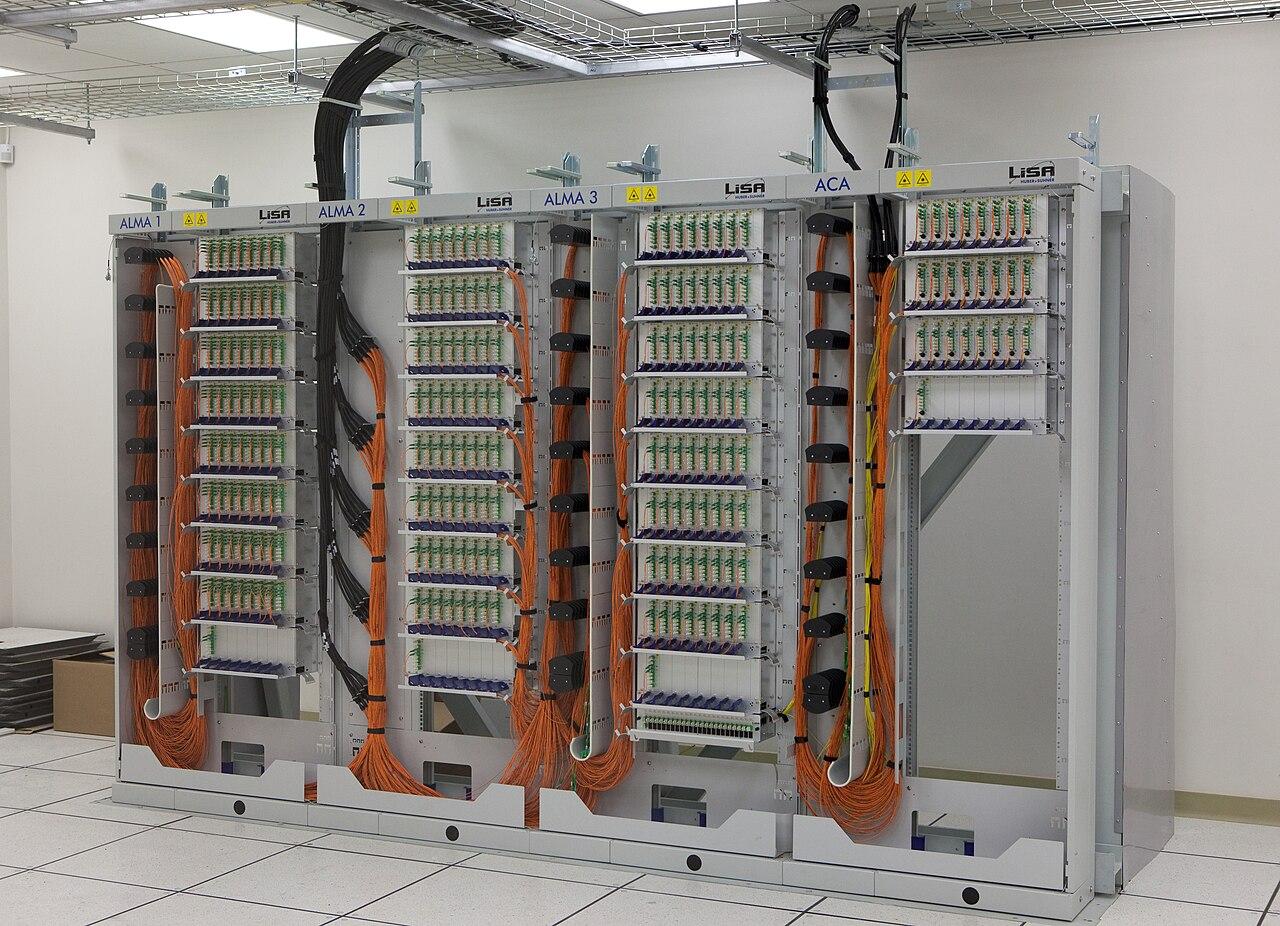
Dark fiber or a managed circuit: who operates the link?
Compare optical equipment, troubleshooting, maintenance, and acceptance responsibilities before choosing dark fiber or a managed connection.
Quick answer: Compare dark fiber and a managed circuit by who supplies, operates, and repairs each part of the connection. Dark fiber can give the buyer control of optical equipment, but that control brings equipment and operating decisions. A managed service moves defined responsibilities to the provider; the contract must show which ones.
A low monthly fiber price can leave a large amount of work outside the quote. Someone still needs to select the optics, provide endpoint power, detect faults, arrange access, and decide whether an outage belongs to the cable provider or the equipment team.
The useful comparison is therefore a complete operating arrangement. Start with the two locations and the business workload, then price how each option delivers and maintains that connection. This article focuses on that responsibility boundary rather than assuming one technology is always cheaper, faster, or easier to manage.
Begin with the service you need between locations
Describe the traffic before naming the product. Is the business connecting two private networks, reaching a data center, or buying access to public cloud applications over the internet? Those outcomes can lead to different services, even when every proposal contains the word fiber.
Record endpoint addresses, required interfaces, expected traffic, and any approved growth assumption. Ask the network architect whether the connection must preserve a particular network design or meet a specific application requirement. A purchasing team should not choose a transport service solely from a bandwidth headline and leave that compatibility question until installation.
A hypothetical business linking an office to its own nearby equipment room may value direct control of the optical connection. Another business may prefer a provider-supported Ethernet handoff between distant sites. Neither example establishes a universal distance threshold or price advantage; availability, design, and operating capacity determine the actual choice.
Make the dark-fiber responsibilities explicit
Lumen's current dark-fiber page describes an arrangement in which Lumen supplies the fiber and the customer installs and manages the optical equipment. It also lists optional managed optical and professional services. That combination illustrates why the product label alone cannot tell you everything included in a particular proposal. See Lumen's dark-fiber description for the current offering boundaries.
For a customer-operated optical link, establish who selects and approves the endpoint equipment, who owns spare parts, and who maintains the configuration. The equipment must suit the actual optical path and application. A module that fits the switch socket is not enough evidence that the complete link is supported.
Also ask what passive-fiber information the provider supplies: endpoints, identifiers, measured characteristics, acceptance limits, and repair responsibilities. Keep the optical design review with qualified personnel. Procurement's job is to make the required deliverables and responsible parties visible, not to substitute a generic distance chart for engineering.
Examine what managed actually includes
A managed circuit usually describes a defined service delivered at specified handoff points, but the word managed has no useful meaning without scope. The provider may monitor the transport while your team remains responsible for the firewall, local wiring, application, and power at the customer premises.
Comcast's Ethernet Network Services page, for example, describes private connectivity among sites, provider support, and service-level agreements. It specifically identifies a private network that bypasses the public internet. That example demonstrates a service category; it does not mean that every managed connection includes internet access or every Comcast order has the same terms. The product overview is the starting point, with the actual order controlling the purchased scope.
Ask where the provider tests the service and what evidence is needed to open a fault investigation. If the supported boundary ends at a handoff in a shared telecommunications room, the path to your own rack still needs an owner. Managed transport does not remove the need for a complete site design.
Price the equipment and the work around it
Create a comparison that includes the same useful lifetime and the same endpoints. Dark-fiber charges alone should not be compared with a managed-service price that includes active equipment, monitoring, and support. Equally, avoid charging the dark-fiber option for internal work that the managed option also requires.
Include these cost and responsibility questions in both proposals:
- Which optical equipment, interfaces, licenses, and replacement parts are included?
- Who provides rack space, power, cooling, and access at each endpoint?
- Who installs and tests the connection between the handoff and customer equipment?
- Which monitoring, fault isolation, and maintenance tasks belong to each party?
- What construction, activation, renewal, and exit charges require written confirmation?
- How will a capacity change affect equipment, service charges, and scheduling?
Use actual quotes and internal estimates rather than a generic industry savings percentage. Record uncertain items separately. If the endpoint equipment has not been selected, the cost comparison is preliminary, and the decision should acknowledge that uncertainty.
Walk an outage through the proposed boundaries
A short fault exercise often reveals more than a long feature list. Imagine the link stops carrying traffic while both endpoints remain powered. Who receives the alert? Who checks the equipment? Who can authorize a provider test, and who has access to the building where that test must occur?
For dark fiber, distinguish an optical equipment fault from a passive path problem. The organization needs an agreed method for making that distinction without random changes to a live connection. Provider repair obligations, response processes, and test access should be clear before the first outage.
For a managed service, ask how the provider will demonstrate the state of its service and how customer-side findings will be exchanged. A service-level credit is a contractual remedy, not a substitute for a workable restoration process. Keep escalation details available outside any system that depends entirely on the affected connection.
Do not overlook planned work. Optical upgrades, carrier maintenance, building access restrictions, and local equipment replacement can all require coordination. The preferred operating arrangement should fit the organization's ability to handle those events, not merely its ability to pay the initial invoice.
Define acceptance for the thing being purchased
A passive fiber delivery and a managed Ethernet service require different acceptance evidence. For the former, request the agreed fiber identifiers, test results, endpoints, and relevant path characteristics. For the latter, obtain the service handoff details and the agreed service activation results. The exact test methods and limits belong in the order or approved project specification.
Then test the customer's intended workload across the completed arrangement. A transport service can meet its own acceptance terms while a local firewall rule or application setting prevents productive use. Treat that finding as an integration issue with a named owner, rather than automatically calling the carrier service defective.
The fiber testing acceptance guide explains how to ask for usable installed-fiber records. Use those records where passive cabling is part of the scope, while keeping carrier-service acceptance and application verification distinct.
Plan for changes before committing to a term
The business may add a location, increase traffic, move a server, or change its preferred equipment platform. Ask how each option accommodates those changes. Dark fiber can offer equipment control, but a capacity increase still depends on the supported optical design and endpoint capabilities. It is not unlimited usable bandwidth without further investment.
A managed service may allow a commercial bandwidth change without customer-managed optical redesign, but availability, interfaces, terms, and scheduling still need confirmation. Get the change process in writing for the actual product. Do not assume a provider's general scalability statement guarantees an immediate upgrade at every address.
Finally, consider the exit. Document ownership of equipment, removal obligations, account access, return requirements, and the records that remain with the customer. A proposal is easier to evaluate when it explains both how the connection begins and how the business can safely replace it later.
The takeaway
Dark fiber and managed circuits distribute control and work differently. Compare them using the same endpoints, business requirement, and operating period, then identify who owns equipment selection, fault isolation, repair coordination, and future changes. A complete scope is more revealing than the recurring charge alone.
Choose the arrangement your organization can operate and support with confidence. Keep passive fiber, active transport, customer networking, and internet access separate in the decision record. The fiber installation versus internet guide helps establish those boundaries before proposals become contracts.
Clarify the connection scope
BlueHouse Telecom works with businesses nationwide on fiber installation planning, helping turn endpoint requirements and responsibility questions into a concrete project scope.
FAQ
Does dark fiber include the optical equipment? It depends on the proposal. A basic dark-fiber arrangement can leave that equipment with the customer, while additional managed or professional services may be available. Confirm the exact bill of materials and operating responsibilities.
Is a managed Ethernet circuit the same as internet access? No. A private connection between locations can transport business traffic without providing public internet access. Ask which destinations and services the order actually includes.
Will dark fiber always cost less as bandwidth grows? No universal comparison works. Equipment, endpoint facilities, maintenance, route availability, contract terms, and the supported optical design all affect cost. Compare actual alternatives over the same period.
Who should approve the final choice? Include the business owner, network architect, operations team, and procurement reviewer. Each should understand the handoff boundaries, acceptance evidence, support process, and future change obligations before approval.