
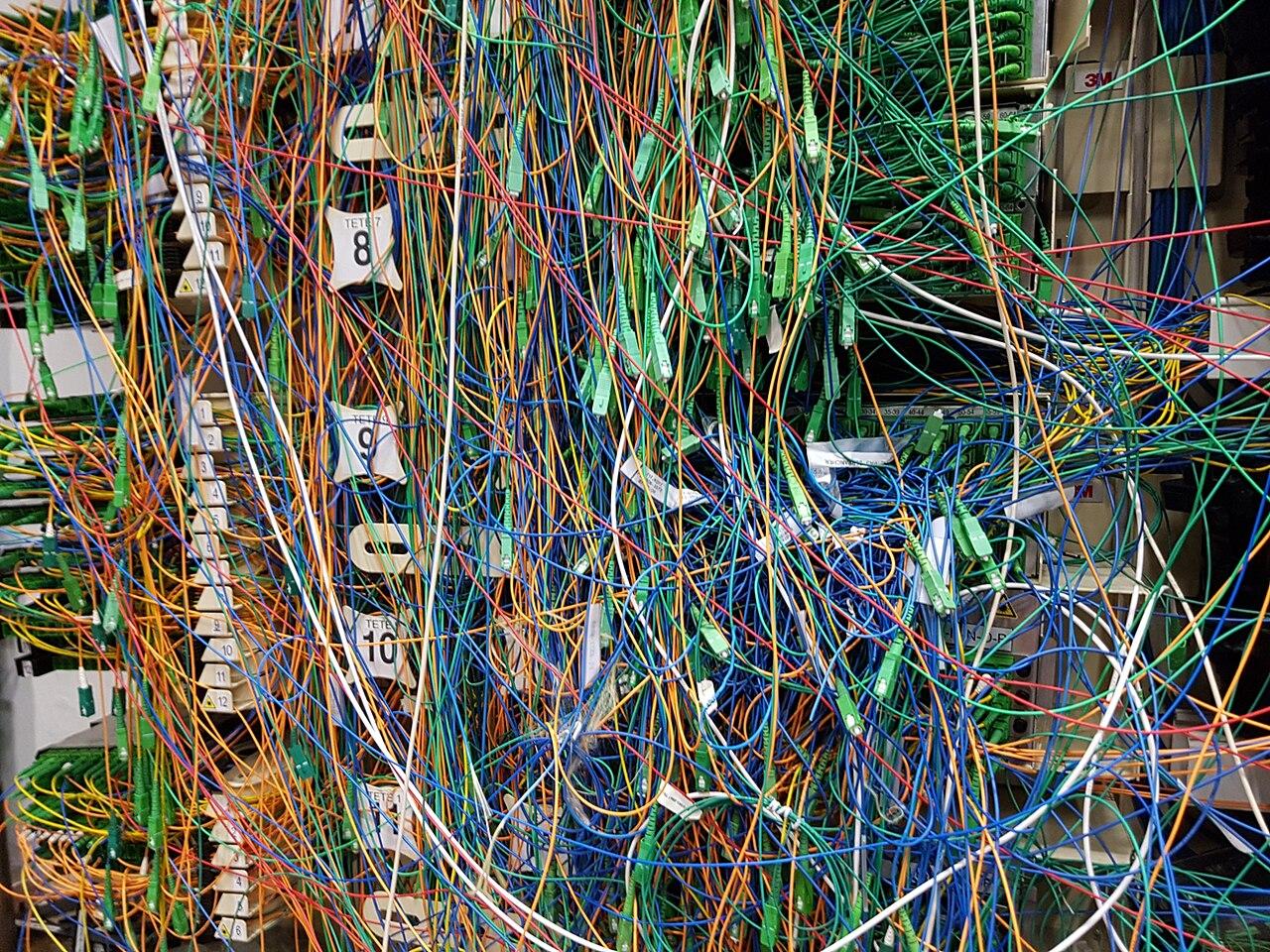
Investigate a damaged fiber link before replacing the cable
Use a controlled investigation to separate connector, equipment, and cable faults, then compare repair and replacement with clear acceptance evidence.
Quick answer: Confirm the affected link and preserve its history before approving a full cable replacement. Qualified testing should distinguish connection, patching, equipment, and cable-path problems using methods suited to the installation. Compare repair and replacement only after the evidence identifies what each option will resolve and how the result will be accepted.
A failed fiber connection can prompt an expensive replacement request before anyone has established where the problem is. That may be justified after visible construction damage, but the same response is much harder to defend when the only evidence is a link-down message.
The immediate objective is to restore the required business function safely and preserve enough evidence to choose a durable repair. Those goals can require separate steps. A temporary move to a verified spare may restore service while the original path still needs investigation and an explicit decision.
Establish the symptom and the affected boundary
Record when the problem began, which services are affected, and whether it is continuous or intermittent. Identify both endpoints and the exact ports or strand references. A report that the warehouse fiber is bad is too broad when several connections share the same equipment room.
Ask what changed before the failure: nearby construction, rack work, a module replacement, new patching, a power event, or an application change. Treat that timeline as evidence to investigate, not proof of blame. A coincident event may be relevant without being the cause.
Confirm whether the problem is limited to the optical link or could involve the active equipment or application. FOA's troubleshooting bulletin separates connection, cable-plant, and communications-equipment issues and emphasizes the value of installation records. The bulletin supports a structured investigation rather than a cable replacement based solely on symptoms.
Preserve the existing evidence before making changes
Collect the accepted test package, route drawing, recent change records, and relevant equipment observations. Keep a copy of the current state before the investigation alters patching or configuration. A sequence of undocumented substitutions can make the original failure difficult to reproduce or explain.
Photograph accessible labels and visible damage through the approved site process. Do not disturb restricted infrastructure or expose a live optical path simply to create a photograph. The investigation plan should identify who may access the hardware and which activities could interrupt other services.
If records are missing, state that limitation. The team may need to establish the path and component identities before interpreting new measurements. A historical pass result is useful only if it can be tied to the current cable and the relevant test arrangement.
Agree on a controlled diagnostic scope
Have qualified personnel define the inspection and testing sequence for the installation. The plan should cover service impact, suitable tools, access at both ends, and the conditions for stopping or escalating the work. Avoid treating a public article as a step-by-step procedure for an unknown live system.
Use a concise investigation brief:
- Identify the affected endpoints, services, and observed symptoms.
- List available installation records and recent changes.
- State the approved work window and any service restrictions.
- Define the inspection and test methods appropriate to the fiber and equipment.
- Record the evidence required before authorizing a repair or replacement.
- Name the person who approves restoration and the follow-up work.
The diagnostic scope should be proportionate to the evidence. A damaged patch cord and a suspected buried cable fault require different access and testing arrangements. Starting with a clear boundary helps avoid unnecessary disruption to healthy components while still investigating the actual failure.
Use loss measurements and event location for different purposes
An optical loss test set measures insertion loss across the defined test path. An optical time-domain reflectometer, or OTDR, helps characterize events along the fiber and supports fault investigation. Fluke Networks explains this distinction and notes that an OLTS remains necessary to measure total insertion loss after OTDR troubleshooting. Fluke's explanation is useful when reviewing a proposed test package.
Ask the tester to explain what each result establishes and what it cannot resolve. OTDR interpretation depends on the instrument, setup, path, and event spacing. A displayed distance is not automatically a precise digging location, and closely spaced events may not be individually resolved by the selected test arrangement.
Keep the raw results and the technician's interpretation together. A screenshot with a red marker can identify a concern, but the business needs the associated link identifier, setup, and reasoning before authorizing substantial work. The fiber testing acceptance guide outlines the documentation that makes those results reviewable.
Compare repair, rerouting, and replacement
Once the investigation identifies the supported findings, ask for options that address them. A connector or patching problem may have a different remedy from damage within a cable section. A route exposed to continuing damage may require more than repairing the immediate break.
Each proposal should identify the affected component, the work included, the expected service interruption, and the acceptance criteria. If an option leaves uncertainty unresolved, state that explicitly. A lower price may be reasonable for a limited repair, but it should not be presented as solving a wider problem that has not been investigated.
Consider access and future maintenance alongside the immediate restoration. A repair location must suit the cable design and installation environment. Qualified personnel should determine the acceptable method, enclosure, and optical implications. Procurement can compare those approved options without prescribing an improvised splice or enclosure arrangement.
For a hypothetical damaged campus link, the business might choose a temporary restoration followed by a planned route change. Keep those as two deliverables with separate completion criteria. Otherwise the temporary work can quietly become the permanent arrangement without the original hazard being addressed.
Accept the repaired path before declaring the job complete
Agree on the post-work tests before the repair begins. The results should demonstrate that the completed path meets the approved cabling and application requirements. A link that comes up is useful evidence, but it does not replace the specified loss, identification, or other required acceptance records.
Have the network owner verify the dependent business functions after the physical work. Existing sessions, routing, or application recovery may need separate attention. Keep those findings distinct from cable test results so remaining issues reach the correct owner.
If traffic moved to a spare, document which path is now in service and whether the original one has been repaired. FOA specifically calls for records to identify suspect fibers left unresolved after a move to spares. Do not mark every unused strand available simply because the visible outage ended.
Close the cause and the remaining exposure
Write a short conclusion that distinguishes observed evidence from inference. For example, the team may have verified a damaged connector without establishing who or what caused it. That is a valid finding. It should not become an unsupported accusation or a claim that every possible cause was eliminated.
Identify any preventive work supported by the investigation, such as improving physical protection, correcting the documented pathway, or updating access arrangements. Keep recommendations tied to the actual finding. A broad equipment replacement program is difficult to justify from one isolated fault unless further evidence supports it.
Update drawings, labels, test records, and spare capacity after the accepted change. If the route or optical arrangement changed, ensure the equipment and future upgrade records reflect that change as well. The next technician should not have to reconcile a new repair enclosure with an old drawing during another outage.
Finally, separate the incident closeout from any later improvement project. State what is restored, what is accepted, what remains temporary, and who owns the next decision. That lets the business resume normal work without losing the unresolved issue in a closed support ticket.
The takeaway
A damaged-link investigation should produce a defensible repair decision, not just a collection of test screenshots. Establish the affected boundary, preserve the history, and use qualified methods to distinguish equipment, connection, and cable problems. Then compare options against the evidence.
Restoration is complete when the approved physical and business checks pass and the records describe the new state. If a temporary workaround or suspect strand remains, keep it visible. The spare-fiber readiness article explains how to avoid turning an unresolved fault into someone else's future spare.
Scope an evidence-based repair
BlueHouse Telecom helps businesses nationwide plan fiber installation and repair scope, including diagnostic deliverables, practical options, and acceptance records for the completed work.
FAQ
Does a link-down alert prove the fiber cable is broken? No. The issue can involve patching, connectors, equipment, configuration, or the cable path. Establish the affected boundary and obtain appropriate diagnostic evidence before choosing a remedy.
Can an OTDR replace every other fiber test? No. It supports event characterization and troubleshooting, while insertion-loss measurement answers a different acceptance question. Select the test package for the actual installation and agreed requirements.
Should a working spare end the investigation? It may restore service, but the original path still needs an accurate status and a decision about repair. Record any suspect strands so they are not later treated as verified available capacity.
When is replacement preferable to repair? That depends on the verified damage, route conditions, approved repair method, optical requirements, access, and cost. Compare complete options with the same acceptance outcome rather than using a universal replacement rule.