
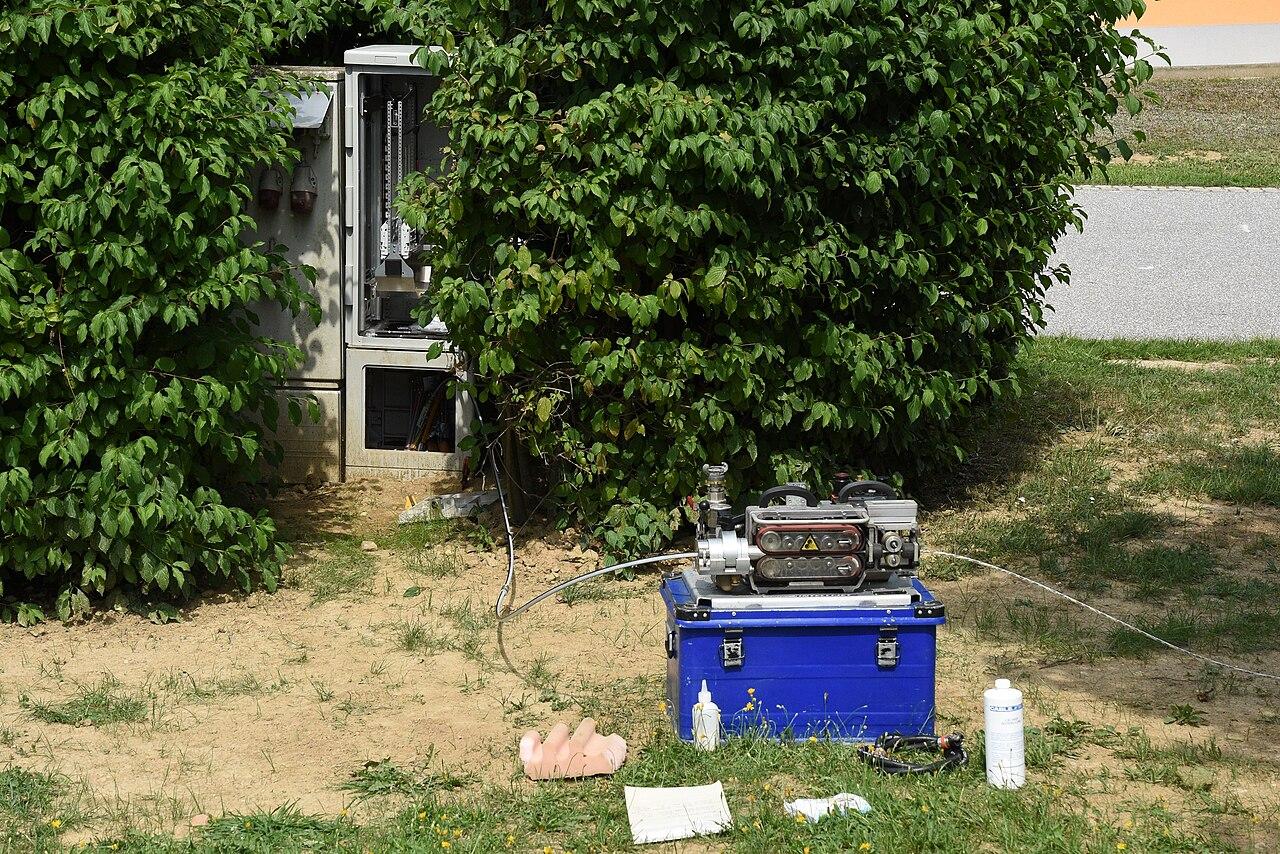
Fiber pulling limits need a product-specific work plan
Review cable-specific bend, tension, and handling requirements before installation, and make route changes part of a controlled work plan.
Quick answer: Require an installation plan based on the exact cable and assembly specifications. Confirm the permitted pulling method, tension limit, and bending requirements for both installation and the finished condition. Generic rules of thumb should not replace the manufacturer's requirements or a route review by the people performing the work.
A cable can look intact after handling that should never have occurred. A neat final rack does not tell the owner how tightly the cable was bent during placement, how it was pulled, or whether it was briefly trapped beneath other equipment.
The business owner does not need to operate the pulling equipment. It does need a scope that connects the selected product to the installation method and establishes what happens when the route changes or a limit may have been exceeded. That is a practical quality-control requirement, not a request for guesswork in the field.
Identify the exact cable before discussing limits
Use the manufacturer's part number and current specification for the cable being supplied. Include any factory assembly details that change handling, such as protected connectors, breakout legs, or an attached enclosure. A generic description of single-mode fiber does not identify the mechanical limits of the finished product.
The FOA's installation guidance emphasizes following the cable manufacturer's recommendations. It identifies pulling tension, minimum bend radius, and crush loads among the specifications installers must understand. Those requirements belong to the cable design and installation conditions, not simply to the type of glass inside it.
Ask the installer to reference the applicable documents in the work plan. The business should be able to see which product was reviewed and which instructions govern the method. If procurement substitutes another cable, the plan needs a compatibility check before that substitute is installed.
Avoid relying on a limit remembered from a previous job. Two cables with the same fiber count can have different constructions and handling requirements. Similar appearance is not a technical basis for transferring a pulling method or allowable load from one product to another.
Distinguish installation conditions from the finished route
Bending requirements can differ while a cable is under installation tension and after it has been placed. The FOA makes that distinction and also warns that some cable designs have different specifications from commonly cited examples. Review the actual requirements for both stages.
That distinction changes the route review. A turn that can accommodate the cable in its final resting position may not be suitable for the cable while it is being pulled around that turn. The installation plan must account for the temporary path through handling equipment as well as the finished cable supports.
Ask where the installer expects the most demanding transitions. These may include entries to pathways, changes in direction, and approaches to termination hardware. The installer should explain how the selected method respects the product requirements at those points.
The fiber installation planning guide provides the wider project context. Within that scope, make the handling plan part of route approval rather than an afterthought added once the cable is already on site.
Keep radius and diameter unambiguous
A bend radius and a bend diameter are different measurements. The diameter is twice the radius for a circle. The FOA explicitly cautions against confusing them when interpreting cable bending examples. A drawing that uses one word while a parts list assumes the other can create a substantial mismatch.
Have the installer state units and measurement references clearly. If a manufacturer specifies a minimum radius, the plan should preserve that term rather than casually relabeling the same number as a diameter. The same care applies when converting between units or comparing equipment dimensions.
Consider a hypothetical drawing that requires a 200-millimeter radius. A 200-millimeter diameter circle would have only a 100-millimeter radius. This example illustrates the terminology; it is not a recommended bend dimension for any real cable or installation.
Resolve ambiguous documentation before work begins. Ask the manufacturer or responsible designer for clarification where needed. The cost of a short clarification is easier to manage than a completed installation whose conformity depends on two people having interpreted the same number differently.
Review the complete pulling arrangement
The permitted pulling attachment depends on the cable and manufacturer's method. The FOA distinguishes use of appropriate strength members from jacket pulling that is specifically permitted by the cable design. The owner should ask for the approved method, not instruct the installer to grip whichever part seems convenient.
Review how the cable will enter the pathway, pass intermediate points, and reach its destination. Include the space for reels and handling equipment, communication between work positions, and the method for observing the pull. Details should be proportionate to the route and selected product.
Corning's procedure for a particular fiber distribution panel directs installers to the cable specification and warns about excess pulling, bending, crushing, and kinking. Its numerical instructions apply to that procedure and product arrangement. They should not be copied into a company-wide rule for unrelated cables.
For a hypothetical building run with several direction changes, ask the installer to explain the proposed sequence and where work would stop if unexpected resistance appears. Continuing until something gives is not an acceptable plan. The business needs an escalation point that protects both the cable and the schedule.
Make handling requirements visible in the readiness check
Before installation, confirm that the route, equipment, and product documents agree. A work plan can be technically sound and still fail if the available access is narrower than expected or if the wrong assembly arrives. Check those conditions while the team can still adjust the sequence deliberately.
Useful readiness questions include:
- Is the delivered cable or assembly the exact approved product?
- Are the applicable installation and finished-condition limits available?
- Is the pulling attachment and handling equipment suitable for that product?
- Does the actual route support the planned temporary and final cable paths?
- Are intermediate access points and working spaces available?
- Who can stop the work and approve a revised method if conditions differ?
- What installation observations and exceptions will be retained at closeout?
Do not turn the checklist into a substitute for qualified installation judgment. Its purpose is to make sure that judgment is based on the correct product and known route. The responsible installer still needs to select and carry out a suitable method.
If another activity changes the route before cable placement, reopen the affected check. A new obstruction or relocated enclosure can invalidate a previously workable approach. The schedule should allow that difference to be assessed rather than rewarding an improvised shortcut.
Treat suspected damage as an unresolved issue
Agree on what happens if cable is kinked, crushed, or handled beyond a stated limit. Record the event and involve the responsible technical parties before concealing the affected section. The appropriate disposition depends on the product, circumstances, and manufacturer's guidance.
A link that comes online does not by itself resolve a known installation exception. Operating connectivity is one observation. The project also needs an answer about whether the installed product remains acceptable under its requirements and the agreed scope.
Likewise, avoid declaring that every visible handling mark requires complete replacement without investigation. Have the qualified installer and manufacturer assess the relevant evidence. The owner's role is to require a documented decision rather than accept an unsupported assurance or an unnecessary conclusion.
Keep any remedial work connected to the final records. If a cable section, assembly, or termination changes, update identifiers and testing as required. The finished documentation should describe the accepted installation after the issue was resolved, not the original arrangement before the incident.
Combine installation evidence with optical acceptance
Optical measurements are part of acceptance, but they answer a different question from whether the work followed the approved handling method. Request the agreed test results alongside the route records and any installation exceptions. Neither category should be used to hide missing evidence in the other.
The fiber testing acceptance guide explains how to define test boundaries, methods, and traceable results. Use those requirements consistently for the installed fibers, including the spares specified in the contract. Do not infer the condition of an entire cable from one successful equipment connection.
Inspect the final cable management and accessible route with the installer. Confirm that stored slack, enclosure entries, and patching arrangements remain within the selected products' requirements. A careful pull can still be followed by unsuitable storage or handling during final cleanup.
Retain the product specification reference and the accepted route with the closeout package. Those records help future maintenance teams avoid applying a generic assumption when moving an enclosure or adding equipment. The installation's handling requirements remain relevant after the original project is complete.
The takeaway
Fiber handling limits belong to a particular cable, assembly, and installation condition. Make those limits explicit, preserve the difference between radius and diameter, and review the temporary pulling path as carefully as the finished route.
A useful work plan also explains when to stop, how to assess an exception, and which evidence accompanies acceptance. That gives the owner a defensible quality check without pretending a universal rule can replace the manufacturer's instructions and the installer's site assessment.
Put cable handling in the installation scope
BlueHouse Telecom helps businesses plan fiber installation projects nationwide, including product requirements, route coordination, and acceptance documentation.
FAQ
Is one bend-radius multiplier safe for every fiber cable? No. Use the selected cable or assembly's requirements and the applicable installation condition. General examples help explain the concept but should not replace the manufacturer's specification.
Are bend radius and bend diameter interchangeable? No. A circle's diameter is twice its radius. Keep the term, units, and measurement reference explicit when reviewing cable limits and handling equipment.
Does a working link prove no installation damage occurred? It proves a narrower operating result. A known handling exception still needs a qualified assessment and documented disposition alongside the agreed optical acceptance tests.
Who should decide how the cable is pulled? The qualified installer should select a method consistent with the exact product instructions and site conditions. The business should require a reviewable plan, clear stop conditions, and records of material deviations.