
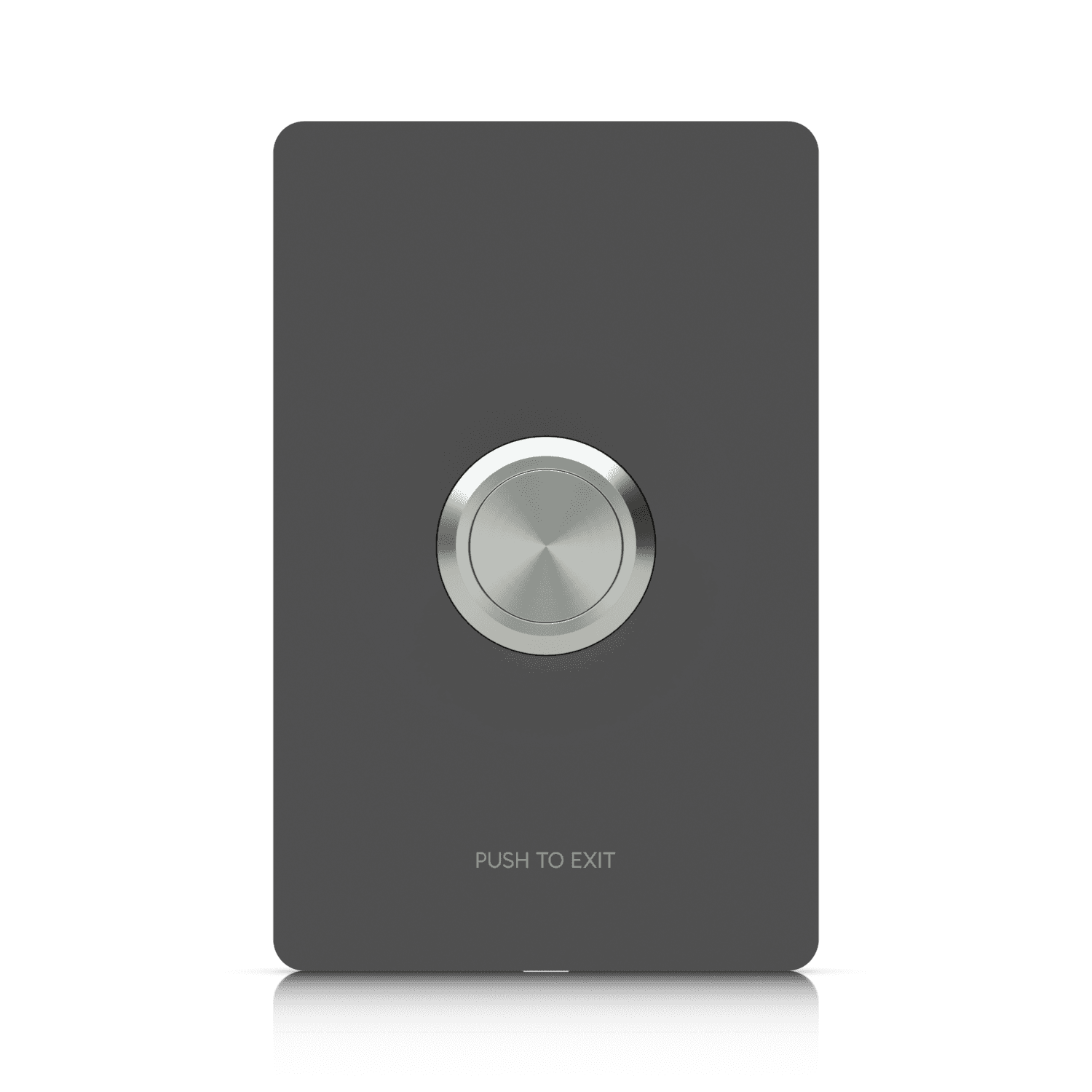
Request to exit: review the whole door sequence
Clarify exit hardware, request-to-exit signals, release behavior, and acceptance tests before adding electronic access control to a door.
Quick answer: Review request-to-exit as part of the complete door operation, including the installed locking hardware and required safe-exit behavior. A sensor signal, a release command, and a person being able to leave are different things. Have the qualified project team explain and test the approved sequence under normal use and relevant failure conditions.
A proposal that lists one REX sensor per door can appear complete while leaving the most important question unanswered: how does a person actually leave this particular opening? The answer depends on the installed hardware and its approved arrangement, not simply on whether the controller has an input labeled exit.
The term request to exit is often used loosely across products and conversations. A useful buyer review replaces that shorthand with observable actions. What does the person do, what releases or moves, what does the system record, and what happens when a supporting component is unavailable?
Begin with the person using the opening
Walk through the expected exit from the inside of the building with the qualified hardware team. Describe the ordinary users, traffic, carried items, and any operator or accessibility requirements that affect use. The person leaving should not need to understand the access-control platform to operate the approved exit arrangement.
A hypothetical office door with familiar mechanical exit hardware presents a different starting point from an opening with an electromagnetic lock. The project should identify the actual arrangement before selecting accessories. Reusing a sensor from the previous system does not establish that the complete new arrangement is suitable.
Keep the applicable life-safety and code evaluation with qualified professionals and the responsible authority for the project. The purpose of this buying review is to make that evaluation concrete, not to supply a universal wiring method or approve a locking arrangement across every jurisdiction. An equipment list alone cannot perform that review.
Distinguish movement, signaling, and release
Three events can occur close together without being identical: a person activates hardware or approaches the opening, an input signals the controller, and the locking arrangement permits passage. Ask the designer to explain each event separately and identify which parts are mechanical, electrical, or software-controlled in the proposed system.
Schlage's accessory overview describes different exit controls, including pushbuttons, touch bars, and sensor-based devices. It also directs selection toward the requirements of the actual opening. The presence of several device types is a reason to clarify the sequence, not to treat them as interchangeable accessories.
The event history is another separate layer. A request-to-exit record can establish that the system received an input; it does not necessarily identify the person or prove that someone completed passage. If management needs to review an incident, explain how exit inputs relate to door-position events and any other approved evidence.
Use those distinctions in staff training. Calling every exit input an unlock event can create confusion when the physical hardware and recorded sequence do not behave that way.
Identify the actual devices and their dependencies
The proposal should name the exit device, controller or hub, power arrangement, locking hardware, and any other components involved in the approved sequence. Avoid a description that leaves the installer to infer the intended function from a generic sensor line item.
Ubiquiti's exit-device documentation treats motion sensors, exit buttons, doorbell requests, and panic hardware as distinct arrangements and points to the relevant hub instructions. It also notes that the documented motion-sensor input is a dry contact and the sensor needs external power. An available input therefore does not mean every connected device receives power from it.
Use the manufacturer's instructions for the exact models and the approved project design. A diagram for one hub or lock combination should not be copied to another opening because the terminal names look familiar. Compatibility, power, and required independent functions need confirmation by the qualified team.
The access-control door survey checklist helps collect the current hardware and operating conditions before a quote is finalized. Include photographs of both sides of the opening and the existing control equipment where authorized.
Make the normal-use test representative
A demonstration should reflect how people approach and use the door. Observe normal passage from the relevant directions and with ordinary carried items. Ask whether the selected arrangement responds as intended without unwanted operation from nearby activity, while retaining the required exit behavior.
Agree on a short acceptance exercise:
- Show the intended inside operation with the complete installed hardware.
- Observe the physical release, passage, and return to the normal state.
- Compare the controller's events and door-status display with that sequence.
- Demonstrate the relevant notifications using the actual staff account.
This is a controlled test of an approved installation, not an invitation to defeat a sensor or obstruct an exit. The qualified team should choose safe methods and coordinate any work that could affect normal building operation.
Include more than one ordinary use cycle. A single successful movement by the installer may not reveal a timing mismatch, an unclear user action, or a door that does not relatch after passage. Those issues deserve resolution before the opening is handed over for everyday use.
Review failures without inventing a universal answer
Ask the designer to explain the approved behavior during relevant losses of power, network connectivity, controller availability, or component function. The exact answer depends on the whole arrangement. A statement that the system works offline is too broad unless it identifies which functions remain available and how people exit.
Keep the review physical as well as digital. A controller dashboard can report a release command while a mechanical problem prevents the opening from operating as intended. Likewise, a missing network connection may affect remote visibility differently from local door operation. The project should distinguish those outcomes in the test record.
Have qualified personnel plan and conduct any interruption tests, with the appropriate building coordination. Occupants should not discover an unannounced test during normal use, and staff should not disconnect devices themselves to explore failure behavior. The buyer needs a clear explanation and witnessed result, not an improvised experiment.
For a nationwide rollout, use common questions and documentation while allowing the approved answer to differ by opening and location. The same cloud platform can be installed with different physical hardware and requirements.
Keep exit requests separate from visitor entry
An interior request to leave and an exterior visitor asking to enter serve different purposes. A platform may use related accessories or configurable inputs for both, but the business should not let that similarity blur the intended operation. Name devices and events so staff can tell which side of the opening is involved.
A hypothetical reception team may receive an exterior doorbell request and decide whether to admit a delivery. That decision is different from a person using the approved interior exit hardware. Configure and test the visitor workflow separately, including what happens when reception is unavailable.
Avoid labels such as button one or motion two in the handover material. A description tied to the opening and function is easier for the operating team to understand and for a later technician to verify. The business door access guide puts these choices alongside credentials, schedules, and staff responsibilities.
If a proposed integration changes the exit or release sequence, have it reviewed as a functional change. Adding convenience should not quietly alter a previously approved opening without the appropriate evaluation.
Preserve the sequence when hardware or software changes
A replacement controller, changed sensor, new lock, or revised configuration can affect the relationship between input and physical operation. After a relevant change, repeat the applicable acceptance checks. A previous test proves the previous arrangement, not every future combination of equipment.
Keep the approved operational description available to both facilities and IT. Facilities staff may focus on the door hardware, while IT staff see the controller and event log. A shared description lets both teams recognize when the observed sequence has changed and route the problem without guessing which department owns it.
Recurring nuisance events should prompt investigation rather than automatic suppression. The cause may be ordinary activity the configuration did not anticipate, a physical problem, or a change in how the space is used. The correct response depends on that cause and the approved function of the opening.
Include temporary changes in the same discipline. A delivery period, renovation, or special event can alter normal traffic, but it should not become a reason for unreviewed modifications to exit hardware or required release functions.
The takeaway
Request-to-exit planning should describe the complete experience of leaving through the opening. Inputs, release commands, physical hardware, and event records each play a role, but none alone proves the whole sequence. A precise description makes both the proposal and the acceptance test more useful.
Ask the qualified team to demonstrate normal operation and the relevant failure behavior for the actual installed arrangement. Preserve that understanding when components or configurations change. Across nationwide projects, repeat the quality of the review while respecting the differences between individual openings.
Review exit operation with the access-control proposal
BlueHouse Telecom can help scope electronic door access control nationwide. Share the existing hardware and intended use so the proposed work can identify the complete opening sequence and the qualified reviews needed for the installation.
FAQ
Is a REX sensor the same thing as an exit device? No. A sensor can provide an input, while the actual exit function depends on the complete hardware arrangement. Ask the designer to explain each component's role.
Can every exit sensor connect directly to the controller for power? No. Inputs and power outputs are different. Check the exact device and controller instructions and have qualified personnel confirm the proposed connection and power arrangement.
Does a request-to-exit event identify who left? Usually the event describes an input or action, not an authenticated person. Interpret it with the system's other approved evidence and avoid claiming more than the event establishes.
Should the same exit arrangement be copied to every location? Use a consistent review process, but evaluate each opening's hardware, use, and applicable requirements. Matching platform brands do not make all doors physically or legally equivalent.