
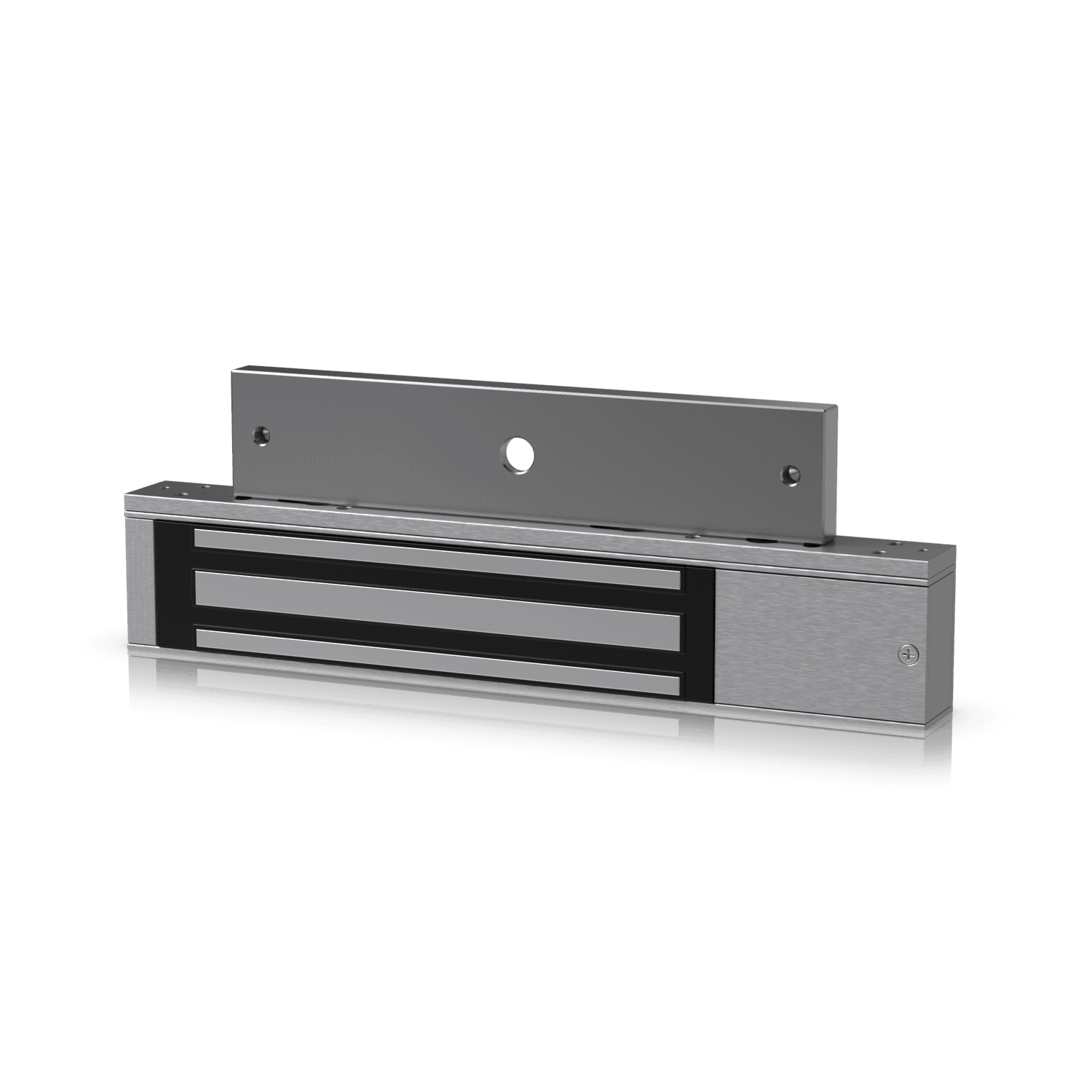
A magnetic lock quote needs a complete release strategy
Evaluate magnetic lock proposals by opening suitability, egress review, power behavior, status monitoring, and complete installation scope.
Quick answer: Evaluate a magnetic lock as part of a complete door opening, including its approved release method, power behavior, mounting, and monitoring. A card reader and a holding-force specification do not establish a suitable system. Before ordering, have qualified project reviewers confirm the application and require a coordinated test of normal entry, exit, and the specified failure responses.
A magnetic lock can look like a simple addition above a door. The visible hardware is compact, and a reader can make the entrance appear to be an ordinary access control project. The less visible decisions determine how someone leaves, what happens when power changes, and whether a software status actually describes the opening.
We would not compare magnetic lock proposals by holding force first. The better first question is whether this locking approach suits the opening and its required operation. A low hardware price is not useful if the release strategy and building-system coordination remain unpriced assumptions.
Establish why a magnetic lock is being proposed
Ask the designer to explain the choice in the context of the existing door. The opening may have a particular material, geometry, or retrofit constraint. Those conditions should be identified rather than allowing magnetic lock to become the default description for any electronically controlled entrance.
Compare the proposed approach with feasible alternatives through the qualified hardware team. An electric strike, electrified lockset, or electric latch retraction changes different parts of the opening. The comparison should consider normal use and necessary modifications, not imply that one category universally suits every door.
Describe the daily workflow before discussing features. Who enters, how do they leave, and when should the entrance remain available? A staff-only interior opening and a public entrance have different operational questions. The business door access guide helps connect those questions with credentials and administrative responsibilities.
Understand the basic power behavior
For a standard electromagnetic lock, power creates the magnetic bond that holds the armature. Removing that power releases the bond. Schlage's electromagnetic lock overview explains this behavior and emphasizes that the application and egress arrangement require appropriate review.
That basic description does not establish how the complete doorway behaves during every outage. A building power failure may leave a backup supply energized. A network outage may affect administration while the locking hardware still has power. A controller fault presents another condition. The project should distinguish those scenarios in its operating explanation.
Ask for plain language: which equipment loses power, which function continues, and what an occupant experiences. Avoid accepting one ambiguous statement that the door is fail-safe as a substitute for that explanation. The word describes an aspect of the hardware; it does not certify the full opening or answer every restoration question.
Review the release method before the product order
Leaving through the opening must be addressed as part of its design. The responsible qualified professionals should determine the appropriate release arrangement, applicable local requirements, and any required review by the authority having jurisdiction. This belongs before installation, while changes can still be made without disrupting an occupied entrance.
Do not treat a request-to-exit device as a generic accessory with no defined function. The proposal should explain what the selected device does within the approved arrangement and how that differs from simply recording an exit event in software. Those can be separate functions even when the user encounters one physical control.
For buyers managing sites nationwide, avoid copying one opening's design into another jurisdiction without review. Building use, existing hardware, and local requirements may differ. A corporate preference for one access control platform does not eliminate those differences.
- Identify the qualified party responsible for the opening's release and egress design.
- Include any required building-system interfaces and coordination in the scope.
- Confirm the review or approval steps that must precede installation and acceptance.
- Describe how occupants use the finished opening during ordinary operation.
This is a procurement checklist, not a wiring design. Detailed connections and tests should follow the approved project documentation and manufacturer instructions.
Inspect the mounting and door condition
A magnetic lock depends on an appropriate physical relationship between the lock and its armature. The installer should evaluate the door material, frame, available mounting space, and accessories needed for the actual opening. A catalog photograph rarely shows the concealed preparation or site conditions that determine the labor.
The door's existing movement also matters. Observe closing, alignment, and any interference from other hardware. A door that returns inconsistently to its intended position needs attention before the access control system can be judged. The quote should make that mechanical work visible rather than treating every adjustment as an installation-day surprise.
Ask how the completed installation will affect appearance, usable clearances, and other opening functions. Facilities staff should understand where equipment and cable routes will be located. If the entrance is architecturally sensitive, obtain agreement on the proposed hardware arrangement before materials are ordered.
Do not assume a higher holding-force figure solves poor mounting or an unsuitable application. Such a figure describes a product characteristic under defined conditions. The buyer still needs a properly selected and installed opening that behaves as intended.
Distinguish a closed door from a secured bond
Software labels can hide different sources of information. A door-position switch reports a physical open or closed condition. A magnetic bond sensor provides information about the bond between the lock and armature. The system may need both, depending on what the operator is expected to know.
Securitron's BondSTAT document makes that distinction: bond monitoring addresses a condition that an ordinary door-position indication does not establish. This is a specific product capability, not a claim that every magnetic lock includes the same sensor or that every platform displays it correctly.
Ask the supplier to map each displayed state to its actual input. What does closed mean? What does secured mean? Which conditions produce an alert, and can the operator tell them apart? An attractive dashboard is less useful if it shows a single green symbol for several different physical situations.
Test with the exact installed options and software configuration. If monitoring is not part of the project, say so plainly. The business can then decide whether a manual inspection process is adequate instead of relying on a status the system never measures.
Include power and building coordination in the price
A complete proposal should account for the power arrangement selected for the hardware, the route to the opening, and any required supporting equipment. Backup behavior should be described in the approved design rather than sold as a generic promise to keep the door secure through any outage.
When the opening interacts with other building systems, identify the work and testing responsibility. The access control installer, facilities team, and relevant specialists need an agreed sequence. Leaving the interface as a short note that says by others can obscure a real dependency in the schedule and price.
The business should also know when the opening will be unavailable or operated under a temporary arrangement during the work. A public entrance needs coordination with the people managing occupants and deliveries. That operational planning does not have to be elaborate, but it cannot be inferred from the hardware list.
Compare bids on the same complete scope. One price may include mechanical correction and coordinated testing while another includes only the lock and reader. Until those differences are resolved, the lowest total is not a reliable comparison.
Accept the full sequence and the recovery
Use an agreed test plan that protects occupants and coordinates affected systems. Normal credential entry, denied entry, ordinary exit, and the required release conditions should be demonstrated by the qualified team. Do not improvise a power interruption or alarm test in an occupied building to see what happens.
Restoration deserves its own observation. After an approved test, confirm the opening returns to its intended operating state and that the software reports the correct condition. A door that releases as expected but remains in an unexplained state afterward still needs attention.
- Check normal operation with the credentials and schedules the business will use.
- Verify the actual physical condition behind each configured status indication.
- Complete the coordinated release and recovery tests required by the approved design.
- Provide staff with the fault-reporting process and the installed hardware identification.
The door survey checklist is a useful starting record for those discussions. Keep the final operating information close to the opening's asset record so a future service visit can distinguish a new fault from an intentional configuration.
The takeaway
A magnetic lock purchase is a decision about the complete opening. Its release strategy, physical installation, power arrangement, and reported status need to work together. Neither a familiar brand nor a high holding-force number establishes that result on its own.
For a nationwide business, standardize the questions asked at every site and require local opening review where appropriate. The final test should demonstrate what occupants and operators will experience, including recovery after the approved failure scenarios. That is the evidence a buyer needs before accepting the installation.
Evaluate your controlled entrances
BlueHouse Telecom can help scope electronic access control projects nationwide. Share the opening types and intended entry workflow so hardware suitability and required professional coordination can be addressed early.
FAQ
Does a magnetic lock stay locked when its power is removed? A standard electromagnetic lock releases its magnetic bond when power to the lock is removed. The behavior during a building outage depends on the complete power and release design, including any backup supply.
Is a magnetic lock appropriate for every glass door? No. Door construction, mounting, use, egress requirements, and other conditions must be reviewed. The existence of glass-door accessories does not establish that a particular application is suitable or approved.
Does a closed-door indication prove the magnetic lock is holding? Not by itself. Door-position monitoring and magnetic bond monitoring report different conditions. Confirm which sensors are included and how the access control software presents their signals.
Can staff test the emergency release by unplugging equipment? Testing should follow a coordinated plan prepared by the qualified project team. Improvised disconnections can affect occupants and other systems and may not reproduce the conditions the approved design needs to demonstrate.