
Underground or Aerial Fiber: Compare the Whole Route
Compare aerial and underground fiber using route permissions, construction, repair access, and building entry requirements.
Quick answer: Compare complete, feasible routes before choosing aerial or underground fiber. Review permission to use the path, suitable cable construction, installation access, and how the link could be repaired later. The better choice depends on the property and operating requirements; neither method is automatically cheaper, faster, or more reliable everywhere.
The shortest line between two buildings may be the least useful route to price. It can cross property the business does not control, depend on unapproved pole access, or arrive at the wrong side of the receiving building. A route becomes a project only when those details have workable answers.
Start with the two endpoints and the business connection they need. The discussion below is for a hypothetical private campus or business property project. It helps an owner compare proposals while leaving structural, electrical, excavation, and cable installation decisions to the appropriate qualified specialists.
Compare paths that actually reach the equipment
Have the survey identify the equipment room at each end, not just the outside corner of each building. The complete path includes the outdoor segment, the building entrances, and the internal route to the termination locations. A cheap outdoor span can lose its advantage if it creates difficult interior work.
Draw each candidate route on the same site plan. Mark where it changes method, crosses an access road, enters a building, or uses existing infrastructure. The Fiber Optic Association notes that an outside plant link can combine aerial, conduit, and buried sections. A proposal does not need to fit neatly into one category.
Compare the candidates at an equivalent level of detail. A surveyed underground route and a rough aerial sketch are not competing prices for the same certainty. Ask what remains unverified in each estimate and what work would be needed to convert that estimate into a defined installation scope.
Establish permission before assuming usable infrastructure
An existing pole, duct, or access structure is not automatically available because it sits near the proposed route. Identify who owns it and who can authorize the intended use. Include the continuing right to reach the infrastructure for maintenance, not just permission to install once.
Have the responsible project professionals identify the applicable approvals and site requirements. These can differ with the property, infrastructure owner, and jurisdiction. Do not assume that a private business connection avoids every external review or that a familiar contractor's previous project establishes permission for this one.
I would rank an unresolved access right ahead of a small difference in cable price. The cable specification cannot rescue a route the business is not allowed to use. Bring the property and infrastructure decision makers into the comparison while alternatives are still available, rather than after materials have been ordered.
Match the cable to its placement method
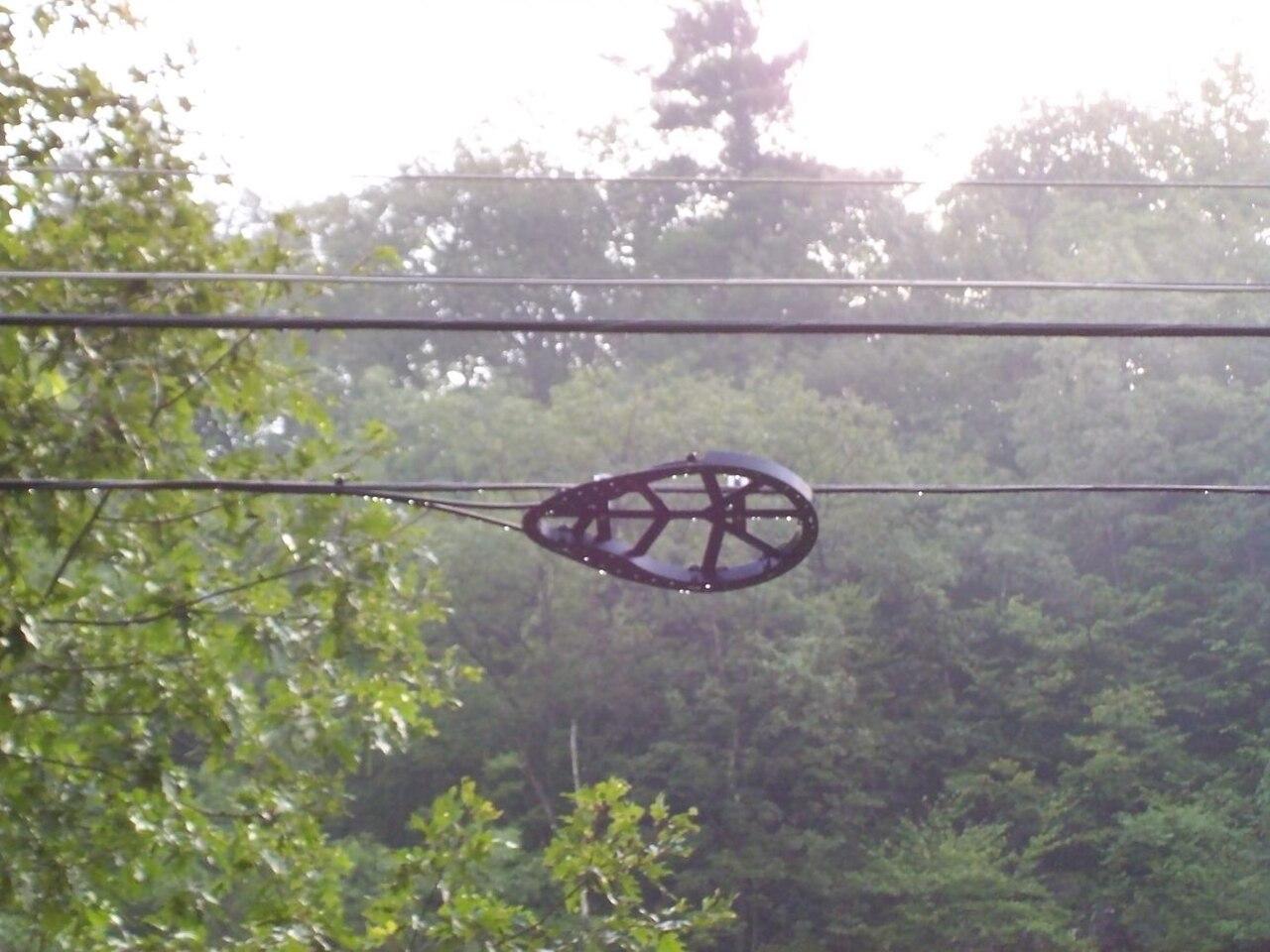
Corning distinguishes cable designs for aerial, duct, and direct-buried applications. Some aerial constructions are self-supporting, while others use a support arrangement. Duct installation and direct burial are also distinct choices. Those categories explain why outdoor fiber is not a complete purchase specification.
Ask the designer to identify the exact cable construction and required supporting components for the proposed method. The selected design must address its installation conditions and intended environment. A cable suitable for one segment does not automatically qualify for every other segment in a mixed route.
Include transitions in that discussion. The building entrance may require a different arrangement from the outdoor run, and the termination location needs compatible protection and cable management. The single-mode and multimode fiber guide addresses optical selection; the physical cable construction still needs its own route-specific review.
Examine the construction around the cable
For an underground candidate, ask how the route will be established and what existing infrastructure is known. The proposal should identify the investigation and authorization needed before excavation or other ground work. This article does not prescribe digging methods, clearances, or burial depth; those decisions require the project's qualified review.
For an aerial candidate, ask what assessment is needed for the supports, attachment arrangements, and installation access. Existing poles can appear convenient while their condition, ownership, or suitability remains unresolved. Require a defined assessment instead of assuming that a visible path through the air is already an approved design.
Compare the effect on ordinary business activity. One route may affect a loading area during construction; another may require access near occupied workspaces. Ask the operating team which interruptions can be scheduled and which would create a serious conflict. The relevant cost includes coordinating the work, not just measuring cable length.
Ask how a repair team would reach the failure
Maintenance access belongs in the route comparison. Identify where a team could inspect or repair the cable, where relevant closures would be located, and how equipment could reach those positions. An installation that was possible during an empty construction phase may be harder to service after the site fills with normal operations.
Discuss plausible site hazards without making universal reliability claims. An underground path can face excavation activity; an aerial path can face events affecting its supports or exposed route. The useful question is which conditions apply here and how the proposed design and operating procedures address them.
Do not turn those observations into unsupported failure probabilities. Without site evidence, a statement that one method is twice as reliable is just an invented number. Ask instead what recovery would involve, which resources would be needed, and whether the business has an acceptable alternative while the connection is unavailable.
Compare the proposals using the same boundaries
A useful comparison includes the entire accepted route and the work needed to make it usable. Ask each proposal to explain the following:
- The endpoints, route segments, and assumptions about existing infrastructure.
- Required access approvals, investigations, and unresolved design decisions.
- Cable, closures, termination work, and the defined optical test scope.
- Construction restoration, maintenance access, and the records delivered afterward.
Keep exclusions visible beside the price. A proposal may legitimately exclude a building pathway or property approval, but the buyer still needs to arrange and budget that work. A lower number based on a narrower boundary does not establish that the route costs less overall.
Where the two candidates have different uncertainty, request separate allowances or further survey rather than hiding the difference in a single total. The comparison should show what the business is accepting today and which later finding could change the cost or schedule. That is a more useful decision than a winner selected from incomplete prices.
Consider expansion without inventing a future project
Ask what a likely additional connection would require under each route. The answer could involve spare fibers, another approved cable path, or a more substantial infrastructure change. Keep these possibilities separate: unused fibers inside the current cable are not the same asset as space for a new cable.
Use a labeled hypothetical to test the proposal. Suppose a warehouse may add a second office building, but its location is unsettled. The designer can explain which parts of today's investment might help and which would depend on the final layout. Avoid paying for a precise future route that nobody has approved.
Also consider whether a future backup connection would share the same physical exposure. Two cables following the same support or underground route may remain vulnerable to one local event. The business internet failover guide explains the broader continuity discussion; physical diversity must be verified for the actual design.
Approve a route with an evidence package
Before authorizing construction, ask for the agreed route, approved design documents, outstanding conditions, and the expected handover records. Those materials let the owner distinguish an installation-ready project from an estimate still awaiting important decisions. The project schedule should reflect that distinction.
At completion, reconcile the installed route with the plan. Keep the applicable access information, cable identifiers, closure and termination locations, and test records through the site's documentation process. If the route changed, the final record should explain the accepted result rather than preserving a drawing everyone knows is obsolete.
For multiple locations, compare each property on its own evidence while keeping the procurement questions consistent. A successful aerial project at one site does not settle the next site's permissions or physical conditions. Nationwide coordination is useful when it brings the same disciplined questions to different circumstances, not when it forces one construction method everywhere.
The takeaway
Choose between feasible complete routes, not labels. Aerial, underground duct, and direct burial describe placement methods whose suitability depends on infrastructure, permission, cable construction, and the surrounding work. The cheapest cable item can sit inside the most expensive unresolved route.
Ask how the connection will be installed, accepted, maintained, and expanded before selecting the proposal. A clear answer may favor different methods in different sections of the same project. That is a reasonable design outcome when it follows the site evidence and the business requirement.
Compare your site route options
Request a BlueHouse Telecom fiber installation review with the building endpoints, available site plans, and known infrastructure ownership.
FAQ
Is underground fiber always more reliable than aerial fiber? No universal ranking applies to every site. Review the actual route exposures, design, maintenance access, and recovery options. Neither placement method removes every potential cause of a service interruption.
Can one fiber link use both aerial and underground sections? Yes, outside plant routes can combine placement methods. The design must specify suitable cable and transition arrangements for the actual sections, with the appropriate approvals and installation procedures.
Does an existing pole or conduit mean the route is available? No. Confirm ownership, permission, condition, and suitability for the proposed use. An infrastructure feature visible during the survey is a candidate to investigate, not automatic authorization to install.
Should the quote include the cable inside both buildings? The complete project needs that work assigned somewhere. Confirm whether each proposal reaches the intended equipment locations or stops at an outdoor or building-entry boundary, then account for the remaining scope before comparing totals.