
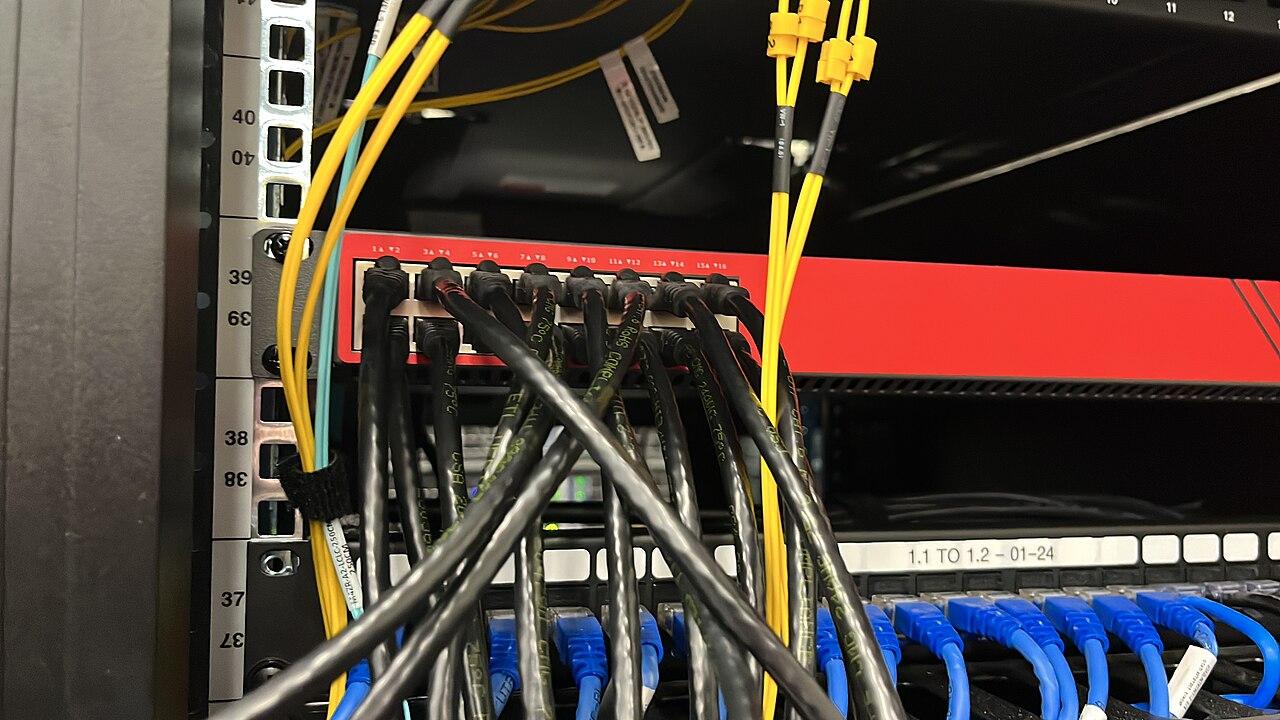
Check the actual link before upgrading multimode speeds
Match the installed multimode category, complete path length, connectors, and exact optical interface before approving a faster link.
Quick answer: A multimode speed upgrade needs a match among the installed fiber category, complete optical path, exact transceiver, and supported endpoint configuration. Verify those facts before treating a distance table as approval. Then test the cabling and the intended application using the agreed acceptance criteria.
The existing link can work well at its current speed and still be unsuitable for the proposed upgrade. Its length may exceed the selected optic's reach, its actual fiber category may be unknown, or the endpoint may not support a required setting. None of those questions is answered by the current link light.
The practical task is to qualify the path you own. That may support reuse, a different supported interface, or a cable replacement. Start with the evidence so the project does not buy new optics and discover the unresolved cabling question during the maintenance window.
Identify the exact upgrade, not just the new speed
Record the proposed endpoint models, port types, software versions, and optical module part numbers. Ask the network owner to confirm the supported configuration at both ends. A speed label such as 25G describes only part of the connection.
Manufacturer requirements may distinguish modules that have the same nominal speed but use different media, reach, or host settings. The equipment review must therefore precede a final cabling decision. Do not assume that a module fitting the physical socket establishes platform support or interoperability with the far end.
Also state the application goal. Increasing a backbone rate may support a planned workload, but it will not automatically improve a slow internet circuit or an overloaded application server. Tie the upgrade to the constraint it is intended to remove so the acceptance test measures the right result.
Establish the installed fiber category from evidence
Use the original specification, cable markings, product records, and installation documentation to identify the fiber. If those disagree, arrange a qualified investigation. Jacket color alone is not a sufficient basis for deciding that an installed path is OM3, OM4, or another category.
Trace the whole path, including patch cords and any intermediate cross-connects. An upgraded backbone segment does not automatically change the category or condition of every component connected to it. A legacy patch cord can remain in place long after the main cable was replaced.
Keep unknown sections visible in the review. The useful conclusion may initially be that the project cannot yet establish the path's category. That is a survey finding with a specific next action, not a reason to assign the most optimistic category and continue ordering parts.
Measure the path the optics will actually use
The distance between rooms on a floor plan is not necessarily the optical path length. Cable routes can include vertical travel, service slack, intermediate rooms, and patching. Identify the installed route and the relevant length evidence rather than estimating from straight-line building dimensions.
Confirm whether the available test record describes a permanent cable segment or the complete channel intended for the application. The designer must account for the arrangement the optics will use. A short segment result should not be presented as the length or loss of a longer assembled path.
A hypothetical building has a measured backbone segment near the selected application's limit. Adding patching at both ends may change the assessment. The correct response is to evaluate the complete supported arrangement, not round the cable length downward because the rooms appear close together.
Read the module's reach and host conditions together
Cisco's current 25G data sheet provides a useful specific example. The SFP-25G-SR-S is listed for 70 meters on OM3 and 100 meters on OM4, and it requires RS-FEC on the host ports. Those values belong to that module and its stated conditions. They are not universal limits for every 25G multimode product. Cisco's data sheet lists other modules with different reach and configuration requirements.
That distinction matters when someone says the building is too long for 25G or that OM4 always supports a particular distance. Ask which interface, which endpoint support, and which documented conditions produced the conclusion. A generic chart can help frame a discussion but cannot replace the selected manufacturer's requirements.
Have the technical owner confirm required settings and the supported software release. Do not enable or change a feature on live equipment merely because it appears in a data sheet. The single-mode versus multimode guide helps organize the broader design comparison if the current path cannot support the intended arrangement.
Check loss and connection condition as separate questions
A path can be within a listed distance and still fail its optical requirements. Review the complete connection arrangement, accepted loss limits, and condition of the interfaces. Distance is one part of the application assessment, not a substitute for installed-link evidence.
Have qualified personnel define the appropriate inspection and testing work. The test equipment, method, wavelengths, reference arrangement, and pass criteria must suit the fiber and project specification. A report marked pass under an unrelated limit does not establish suitability for the new application.
Ask for a concise qualification packet:
- Verified fiber category and the evidence supporting that identification.
- Endpoint models, software, module part numbers, and support references.
- The complete intended path, including intermediate connections and patching.
- Length and agreed loss results with matching link identifiers.
- Required host settings and any unresolved compatibility conditions.
- A clear decision on reuse, further investigation, or replacement.
Do not disturb a working link casually to collect missing data. Plan access, service impact, and restoration with the network owner. The investigation should reduce uncertainty without creating an avoidable production interruption.
Compare reuse with a supported alternative
If the current path does not meet the proposed requirements, ask what practical alternatives exist. A different supported optical arrangement, a shorter approved route, or new cabling may each be worth evaluating. Any alternative must satisfy the complete equipment and optical design, not merely appear to reach farther in a catalog.
Compare installed cost, operating complexity, availability, and future maintenance. Reusing cable can avoid construction, but a specialized equipment choice may introduce other costs or support considerations. New cable can simplify a future standard, but its access and transition work may be substantial.
Document why the selected option is suitable for this site. A nationwide organization can use a common qualification form while reaching different answers for different buildings. The standard should preserve the evidence and approval process rather than force every legacy path into the same conclusion.
Verify the upgrade under representative use
Before changing production traffic, agree on the cable acceptance and equipment checks. After the approved transition, exercise the applications that justified the upgrade and observe relevant interface and application behavior. An increased negotiated rate is useful evidence, but it is not the entire business outcome.
Preserve a feasible recovery plan for the maintenance window. Identify what equipment, patching, and configuration would be needed to return to the previous arrangement and how long that can reasonably take. If the old path is being removed, the project needs a different recovery strategy rather than an assumed instant reversal.
The fiber testing acceptance guide explains the records to request for installed cabling. Add the new module and configuration details to those records so a future upgrade review starts with an accurate picture of the current link.
Keep the rejected assumptions in the decision notes when they explain the final design. For example, record that a particular cable category could not be verified or that an endpoint did not support the proposed module. This prevents the same unsupported option from returning in the next budget cycle as though it were never evaluated.
The takeaway
Multimode upgrade reach depends on the actual optical interface and the complete installed path. Confirm the fiber category, length, connection condition, and endpoint support together. A current working link and a generic distance chart cannot establish all of those facts.
Use the qualification results to choose a supported reuse or replacement option, then verify the intended workload after the change. The final records should explain why the link is suitable, not merely show that new optics were purchased.
Qualify the path before upgrading
BlueHouse Telecom helps organizations nationwide scope fiber installation and upgrade projects, including the survey and acceptance information needed to evaluate existing cabling.
FAQ
Can an OM3 link always be upgraded to 25G? No. The exact optic, path length, loss, endpoint support, and configuration matter. Cisco's SFP-25G-SR-S example has specific reach and RS-FEC requirements that should not be generalized to all products.
Does a passing older cable test prove the new application will work? It provides useful historical evidence, but review its scope, method, limits, and the current path. The new application's requirements may differ from those used for the original test.
Can jacket color identify the installed category? It can provide a clue, but verify the category through reliable product and installation evidence. Mixed components or changed patching can make a color-only conclusion misleading.
Should we replace the cable if one proposed optic is unsuitable? Compare the supported alternatives first. The decision may involve another approved interface, endpoint changes, or new cabling, with the complete cost and operating implications documented.