
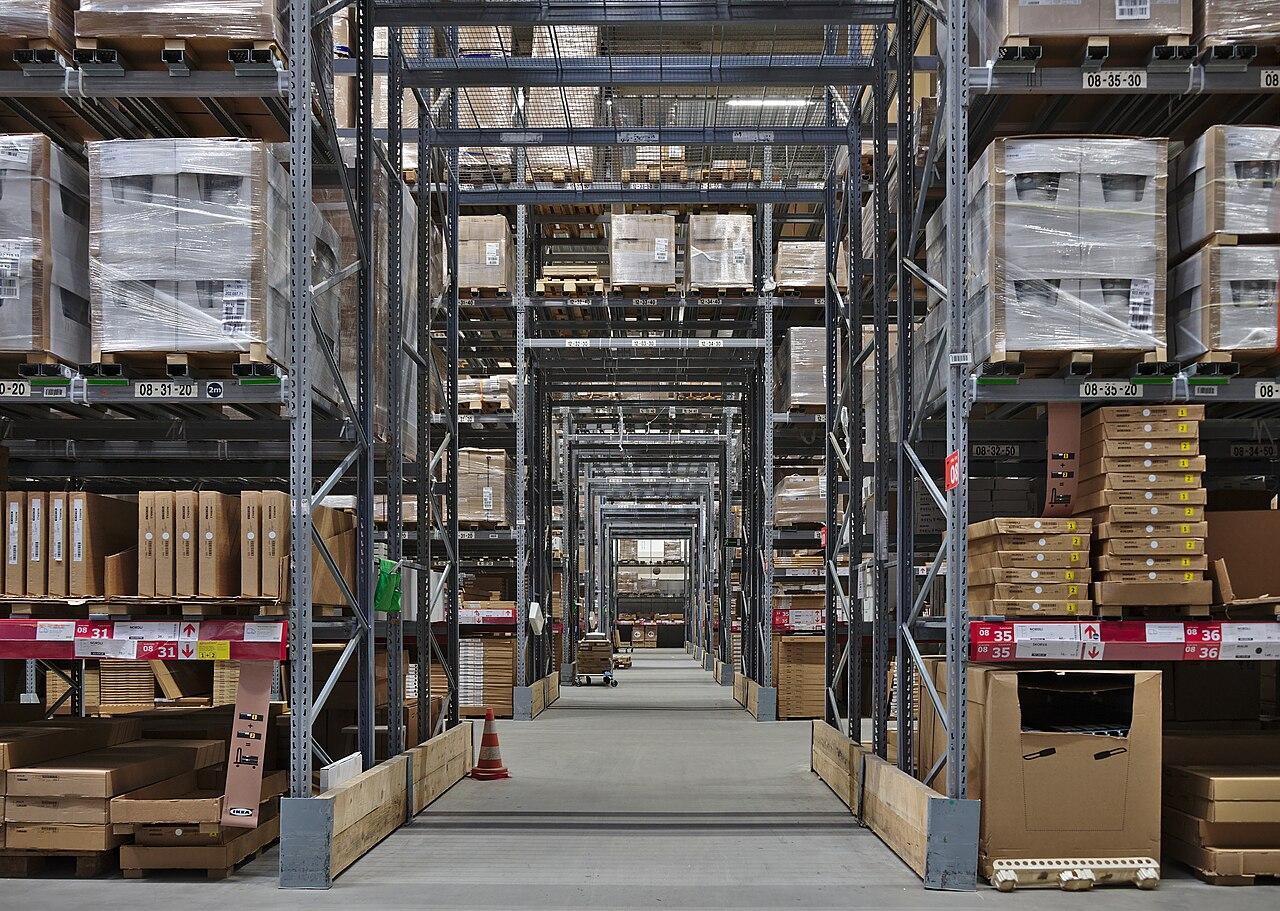
Warehouse aisle cameras need a test with stocked racks
Evaluate warehouse aisle camera coverage with stocked racks, typical loads, cross aisles, and the recorded detail needed for an investigation.
Quick answer: Evaluate warehouse aisle cameras after the racks contain representative stock. Test the required action at the near end, far end, and cross aisles while typical loads move through the scene. Corridor format can make a narrow view more efficient, but it cannot see through pallets, correct a blocked angle, or guarantee useful detail at the far end.
An aisle photographed before stocking can look completely covered. Once pallets fill the bays, the same camera may see only a strip of floor and the front faces of a few loads. The drawing has not changed, but the line of sight has.
For warehouse buyers, that is a reason to separate installation progress from image acceptance. A camera can be mounted, connected, and recording before the site is ready to prove its intended job. The acceptance plan should make room for a representative stocked condition instead of treating the empty building as the final test.
Give the aisle a specific camera task
A long aisle can serve several investigations. One might need the direction a pallet traveled, another the activity at a particular pick face, and another the timing of a vehicle entering a cross aisle. A single view can sometimes contribute to more than one question, but each question needs its own test.
Avoid defining the job as seeing every rack. Racks have depth, shelves block views, and a visible pallet face does not reveal its hidden contents. If the business needs to read a small label at a particular point, that is a detail task that deserves a trial at the actual distance and orientation. An aisle overview is a different purchase.
Axis makes the broader distinction in Quality with a purpose: useful video depends on the task and scene, not simply a resolution label. In a warehouse, that means a clear view of vehicle movement can be successful even when it cannot read carton labels. The failure would be selling the former as evidence of the latter.
Survey the racks as they will be used
Ask operations what the highest typical load looks like, which bays hold overhanging stock, and where temporary staging occurs. A neatly arranged sample aisle may not represent the condition during replenishment or the busiest receiving period. Include those changes in the survey without assuming that every operational obstruction can be eliminated.
Check the proposed camera position against rack uprights, building columns, lighting fixtures, and sprinkler or other building infrastructure. Camera mounting and cable routing must respect the facility's approved installation requirements. A convenient attachment point on a rack should not be assumed acceptable without the relevant structural and facilities review.
The warehouse connectivity guide connects physical layout with the devices used on the floor. Use the same current rack plan for camera planning and network discussions. Different versions of the layout can produce a functioning network that serves camera locations no longer useful to operations.
Use narrow image formats where they help
A conventional landscape image may spend much of its width on two rack faces while the useful floor path occupies a small central area. On compatible equipment, a portrait-oriented view can make better use of the image for a long, narrow scene. That is an option to evaluate, not a reason to select a particular camera without a trial.
The Axis M1055-L documentation describes corridor format for long and narrow areas. Its setup instructions are device-dependent. Confirm support in the proposed camera and recording platform, then check how operators view and export the resulting image. A useful portrait recording can become awkward if the monitoring layout reduces it to a tiny thumbnail.
Compare the two formats with the same task. Does the chosen orientation preserve the target at both ends? Does it crop a cross aisle that matters? Has the installation improved useful detail or merely produced a taller picture? Retain the format that answers the operational question, even when it differs from the convention used elsewhere in the building.
Test the far end before accepting the near end
The nearest portion of an aisle usually makes a persuasive demonstration. The far end is where the purchase claim needs scrutiny. Place authorized test participants or harmless sample items at representative locations, and examine the recorded result at the distance where the business actually expects to use it.
If the task is movement, follow a normal approved route. If it is a visible identifier, use the actual label size and orientation rather than a large test sign aimed at the camera. Nobody should enter a vehicle operating area merely to satisfy a camera test; coordinate the exercise with the site's safety procedures and personnel.
- Compare near, middle, and far positions under normal aisle lighting.
- Include an occupied rack bay and a load tall enough to represent ordinary obstructions.
- Check the approach to the cross aisle from both directions where those movements matter.
- Review playback and an exported sample at the operator's normal screen size.
A failed far-end test may justify another view, a different lens, or a narrower promise. Increasing digital zoom after installation is not a dependable substitute for the image detail the original position failed to capture.
Separate visibility from collision prevention
A camera used to review an event after the fact does not automatically become a protective system for people working around equipment. Avoid describing ordinary recording coverage as a substitute for traffic controls, approved operating procedures, or other measures selected by the facility's safety team.
If a supplier proposes analytics for a specific warehouse use, evaluate that as a separate function. Define the object or movement to detect, the expected notification, and the response. The trial should include normal obstructions and lighting conditions, along with the events that must not trigger an alert. A working live picture does not establish reliable detection.
Keep the project language precise. Footage may help review a vehicle's route through a cross aisle. That is different from claiming it measures speed accurately, detects every person, or prevents a collision. Those claims require their own supported technology and validation. Narrow language gives the buyer a result that can actually be checked.
Follow the investigation across aisle boundaries
An item may leave one aisle and become visible in another camera several seconds later. The usefulness of that transition depends on the layout, timing, and camera names. A reviewer should be able to follow the route without guessing which identical-looking aisle is on screen.
Use names that match stable physical references, such as an aisle designation and viewing direction. Check those references against the warehouse management system only where the relationship is useful and authorized. Avoid putting changing customer names or sensitive inventory descriptions into broad camera labels.
Try a small hypothetical investigation with an operations user: find the movement of a sample load from the aisle exit to a staging lane. Begin with the same information a real inquiry would contain. The exercise may reveal that a cross-aisle overview is more valuable than increasing the detail in every existing aisle camera.
When exporting related views, preserve the time context and enough surrounding activity to explain the movement. A disconnected series of still images may conceal the very transition the buyer wanted the cameras to clarify.
Plan maintenance around access to the view
A camera mounted high above an active aisle may be difficult to inspect or adjust. Include safe access and an appropriate work window in the installation discussion. The cost of returning to a hard-to-reach position can matter as much as a modest difference in camera price.
Warehouses also change without a construction project. A new product can create taller loads; a temporary staging area can become permanent; a hanging sign can move into the image. Choose a practical trigger for reviewing coverage when rack use changes. Do not make every routine stock movement a formal security event.
- Save one accepted image from each distinct aisle layout with the tested task described.
- Check the affected views after rack reconfiguration or a change in maximum working load height.
- Include lens cleanliness and mounting condition in the facility's planned equipment inspection.
- Retest recorded detail after adjustments that change the lens, orientation, or recording quality.
For a large site, start with representative aisle types and inspect exceptions. Repeating an identical empty-aisle test hundreds of times adds less value than finding the few stocked layouts that obstruct the intended evidence.
The takeaway
Warehouse aisle cameras should be judged against the stocked building and the specific action they must show. A narrow image format, a suitable lens, and a sensible mounting position can improve a view, but none can remove the physical limits imposed by racks and freight. Make those limits visible during acceptance.
The strongest multi-site standard describes the task and test rather than prescribing one camera position for every aisle. A short pick aisle and a deep pallet aisle may need different views. When footage can answer a representative operational question without guesswork, the camera has a defensible purpose in the project.
Review your warehouse camera layout
BlueHouse Telecom offers security camera project scoping for warehouse facilities nationwide. Bring the current rack layout, typical load dimensions, and the aisle events your team needs to review.
FAQ
Can a camera at the end of an aisle see every rack location? No. Racks, pallets, and equipment can hide locations from that angle. Evaluate the actual evidence task with representative stock and identify any positions that require a separate view or another business record.
Does corridor format increase camera resolution? It changes how the image is oriented to suit a narrow scene; it does not guarantee more usable detail at every distance. Confirm the exact device capability and compare recorded results for the task you need.
Should warehouse cameras be accepted before stock arrives? Installation checks can occur earlier, but final image acceptance should include representative stocked conditions when the task depends on them. Otherwise the project may accept a view that normal inventory later blocks.
Can aisle surveillance replace warehouse safety controls? Ordinary recording should not be presented as a replacement for the facility's selected safety measures. Any proposed detection or alert function needs a separate scope, supported technology, and an appropriate operational trial.