
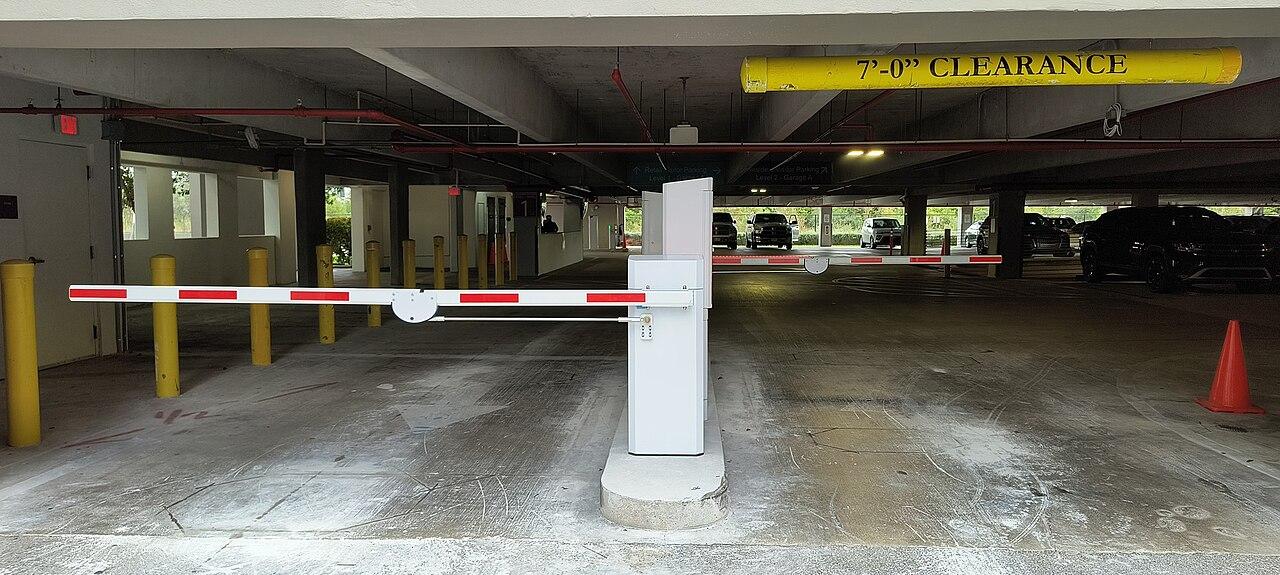
Parking-gate access: scope the interface and the moving equipment
Separate credential decisions from gate operation, confirm the supported interface, and coordinate safety and acceptance with the gate specialist.
Quick answer: Define a parking-gate project as both an access decision and an approved interface to moving equipment. Have the gate specialist confirm the operator, protective systems, control behavior, and required approvals before the access platform is configured. Test the complete vehicle-entry workflow while keeping safety functions and emergency arrangements under the responsible specialists' control.
A valid credential can trigger the intended access output while the vehicle still cannot enter. The gate may not be ready, the driver may be at the wrong reader, or the operator may be following a condition the access dashboard does not describe.
That is why a gate quote needs more than a reader and a controller. The buyer should understand where the access system's responsibility ends, how the existing moving equipment is assessed, and which participants must be present when the complete installation is accepted.
Describe the vehicle journey through the site
Start with the way authorized vehicles arrive, wait, authenticate, pass through, and leave. Identify the lanes and gate equipment involved. Include the operating hours and any differences between employees, deliveries, visitors, and service vehicles that affect the approved workflow.
Consider the practical credential interaction. The proposed reader location must fit the vehicles and the site's approved traffic arrangement. Have the responsible site professionals assess placement and accessibility rather than selecting a pedestal position solely because a cable is already nearby.
Separate the vehicle path from pedestrian access. A person on foot may need a different approved entrance and procedure. Do not make the vehicle gate the assumed pedestrian route merely because the selected controller can also manage another opening.
For a hypothetical distribution property, employee parking and delivery check-in may share an approach but require different decisions. Capture those tasks before choosing credentials. The right design should make the intended process understandable to a first-time visitor as well as a familiar employee.
Identify the gate operator and its condition
Have the gate specialist identify the actual operator, control board, gate arrangement, and supported external-access interface. Confirm the condition of the moving equipment and protective devices. A model name in an old drawing is insufficient if equipment has been changed or repaired.
Ask which work belongs to the gate system and which belongs to the access installation. Existing faults should be documented and resolved through the appropriate scope. Adding a credential reader should not conceal an unresolved mechanical or protective-system problem under a new software interface.
Keep the assessment specific to the site. Sliding, swinging, barrier, and other arrangements have different physical characteristics and may require different controls. A platform supporting a broad category does not establish that the particular operator and installation are ready to connect.
I would pause the final interface decision when the operator's identity or supported input remains uncertain. Clarifying that detail before purchase is usually more productive than discovering during commissioning that the access controller was selected around an assumed connection.
Separate authorization from gate movement
The access platform decides whether a credential or request should be accepted under its configured rules. The operator controls the moving equipment through its supported behavior. Describe that division explicitly so staff do not assume that one dashboard represents every part of the gate system.
Ubiquiti's Gate Hub introduction illustrates the distinction: its discussion of automatic closing depends on the gate operator's timer arrangement. It also identifies correctly installed entrapment protection as necessary for License Plate Unlock. Those dependencies belong in the integration review.
Have the specialists explain the proposed sequence in plain language. What happens after authorization? Which device determines the movement and closing behavior? What condition prevents operation? The buyer needs an understandable sequence without receiving a do-it-yourself wiring recipe.
Keep safety conclusions separate from product compatibility. An interface that can produce the intended signal does not establish that the completed gate installation meets every applicable requirement. Required design, installation, inspection, and approval remain with the qualified parties responsible for that project.
Confirm the scope of each credential method
Choose the approved entry methods according to the users and vehicles involved. A physical credential, mobile method, intercom process, or plate-based method can create different operating tasks. Confirm support for the exact hardware, software, and configuration proposed at the site.
If plate-based entry is included, define the enrollment and removal process and the conditions under which a plate may authorize entry. Do not assume that a vehicle identifier establishes the identity or authority of every occupant. Keep the business's permission decision separate from the recognition function.
Provide an approved alternative when the usual method cannot be used. The response should fit the property's operating policy and be communicated to the people handling requests. Avoid leaving a guard or receptionist to invent a remote-release procedure during a queue.
The credential comparison guide can help frame user-management questions. For a gate, add the actual arrival workflow and equipment dependencies before deciding that a credential method is convenient enough to adopt.
Protect safety and emergency functions throughout integration
Have the gate specialist identify the protective devices and required operating conditions for the actual installation. The access scope must preserve those functions. Never bypass a protective input to make a credential demonstration appear successful or to work around an unresolved equipment fault.
Coordinate any emergency-access and site-response arrangements with the responsible professionals and authorities where applicable. The appropriate behavior cannot be inferred from an ordinary office-door configuration. Keep the approved requirements available to the participants commissioning the system.
Agree on safe testing methods and who may perform them. A purchasing checklist should identify the required specialist evidence without instructing unqualified staff to simulate hazardous conditions around moving equipment. Establish stop conditions and keep unauthorized people outside the controlled test activity.
Clarify how a failure is reported and what operation is permitted while it remains unresolved. The organization may need a supervised or restricted process approved by its responsible owners. A temporary operating decision should not quietly become the permanent substitute for correcting a fault.
Include the outdoor infrastructure and support boundary
Survey the power, communication route, mounting position, and environment for each proposed access component. Confirm the exact equipment's installation requirements and protection. A device suitable for one enclosure or location should not be assumed suitable for every exposed gate pedestal.
Identify any network converters, remote cabinets, or additional power equipment. Include them in the drawing and commercial scope. The access path may depend on equipment far from the main building, and that dependency should remain visible when support responsibilities are assigned.
A practical interface brief should list:
- The gate operator and approved access-interface description.
- The access devices, credential methods, and communication path.
- The gate, electrical, network, and access responsibilities.
- The required tests, participants, approvals, and unresolved conditions.
Use the door-access planning guide for the broader permission process, while treating moving-gate assessment as its own specialist scope. A national deployment can share a requirements format without pretending every property's operator and approvals are identical.
Accept the complete entry workflow
Use approved test credentials representing the intended roles. Demonstrate a permitted entry and a denied request through the actual arrival arrangement. Verify the system behavior at the gate and the corresponding access information without assuming that an event label proves a vehicle crossed the boundary.
Include the relevant scheduled and temporary access cases. A delivery permission that works during a quiet demonstration may not reflect the approved time window or visitor process. Keep test identities and permissions controlled, then remove temporary setup access when the work is complete.
Have the gate specialist perform and document the required gate-system checks through approved procedures. Access testing and gate safety acceptance are related but distinct. The final package should show which participant verified each part and what remains outside the tested scope.
Test the agreed interruption and recovery scenarios only under the specialists' approved plan. Clarify the expected behavior when communication or supporting power is unavailable. Avoid promising universal continued operation based solely on a controller's cached credentials or battery specification.
Prepare the people who handle exceptions
Train the authorized operators on the actual request and release process. Explain the difference between a credential denial, a communication problem, and an equipment condition that requires the gate specialist. Staff should know whom to contact without being expected to diagnose a control board.
Keep support references usable at the entry point and within the organization's approved records. Include the site, gate identifier, and responsible contacts. Do not display passwords, unrestricted release instructions, or sensitive system details on a public-facing sign.
Review credential lists and temporary permissions when users or site arrangements change. A gate serving a project phase may later serve a different traffic pattern. Reassess the workflow before reusing its permissions for a new operational purpose.
Schedule maintenance responsibilities explicitly in the service arrangement. Access software administration and inspection of moving equipment may involve different providers and intervals. The owner should know which responsibilities are included and which require a separate approved service scope.
The takeaway
A parking-gate installation succeeds when authorization, vehicle flow, operator behavior, and protective systems work together under an approved design. The access controller is one part of that result, with responsibilities that must be coordinated clearly.
Evaluate the actual operator and arrival process before committing to hardware. Then accept the complete workflow with the appropriate specialists, preserve the limits of the test evidence, and give staff a usable process for exceptions and faults.
Define your vehicle-access project
Discuss gate-interface coordination and access requirements with BlueHouse Telecom.
FAQ
Does a compatible access controller make an existing gate ready to use? No. The gate specialist must assess the actual operator, condition, protective systems, and supported interface. Compatibility is one part of the completed installation's required design and acceptance.
Can gate closing be assumed from the access software? Confirm the sequence with the operator and access specialists. Closing behavior can depend on the gate equipment and its configuration; a successful credential decision does not describe every movement condition.
Is license-plate recognition the same as identifying the driver? No. Define what the enrolled vehicle identifier is allowed to authorize and how exceptions are handled. Confirm exact product support and preserve the site's approved safety and operating arrangements.
Who should perform protective-system tests? Qualified gate professionals should use the approved procedures for the actual installation. The buyer should request the relevant evidence and participants, not improvise tests or bypass protective devices to complete a demonstration.