
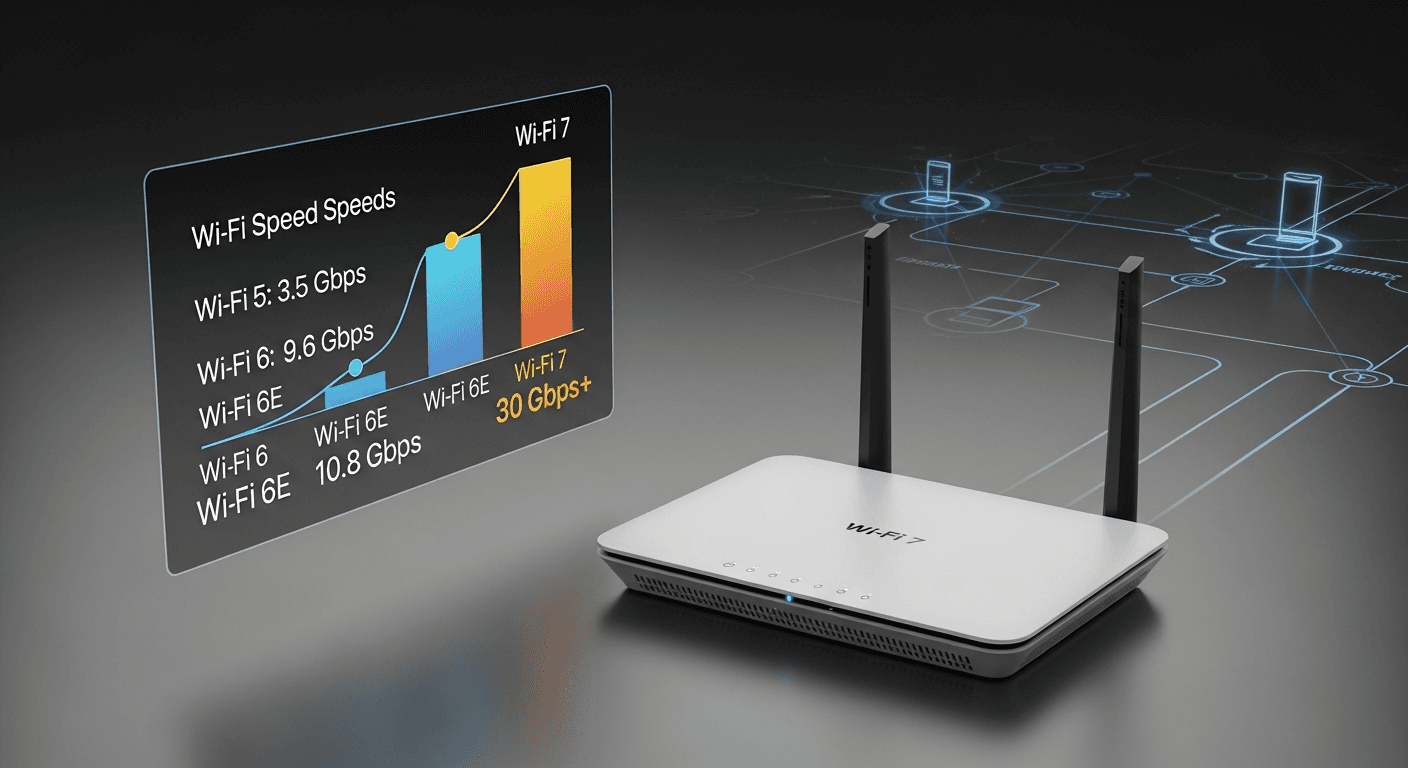
WiFi 7 for Business: Is It Time to Upgrade Your Wireless Infrastructure?
WiFi 7 delivers multi-gigabit speeds and dramatically reduced latency. For Southern California businesses with bandwidth-intensive applications, the upgrade delivers immediate productivity gains.
Sloane Vance
February 11, 2026
WiFi 7, based on the IEEE 802.11be standard, represents the most significant wireless performance leap in a decade. With peak throughput exceeding 40 Gbps, support for 320 MHz channels, and multi-link operation that uses multiple frequency bands simultaneously, WiFi 7 eliminates many of the wireless performance limitations that have pushed businesses toward wired connections for demanding applications.
For Southern California businesses evaluating whether the upgrade is worthwhile, the answer depends on your specific workload requirements. Offices with high device density, such as coworking spaces in downtown Los Angeles or agency offices in Santa Monica where 50 or more devices compete for wireless bandwidth, will see immediate benefits. Similarly, businesses running real-time applications like video production, 3D rendering, or augmented reality will benefit from WiFi 7's reduced latency and jitter.
What WiFi 7 Changes for Business
Multi-link operation is WiFi 7's most impactful feature for business environments. Instead of connecting to a single frequency band, WiFi 7 devices can simultaneously transmit and receive on 2.4 GHz, 5 GHz, and 6 GHz bands. This eliminates the congestion-driven performance drops that occur in busy offices when too many devices compete for the same channel. The access point dynamically distributes traffic across all available bands, maintaining consistent performance even as device counts increase.
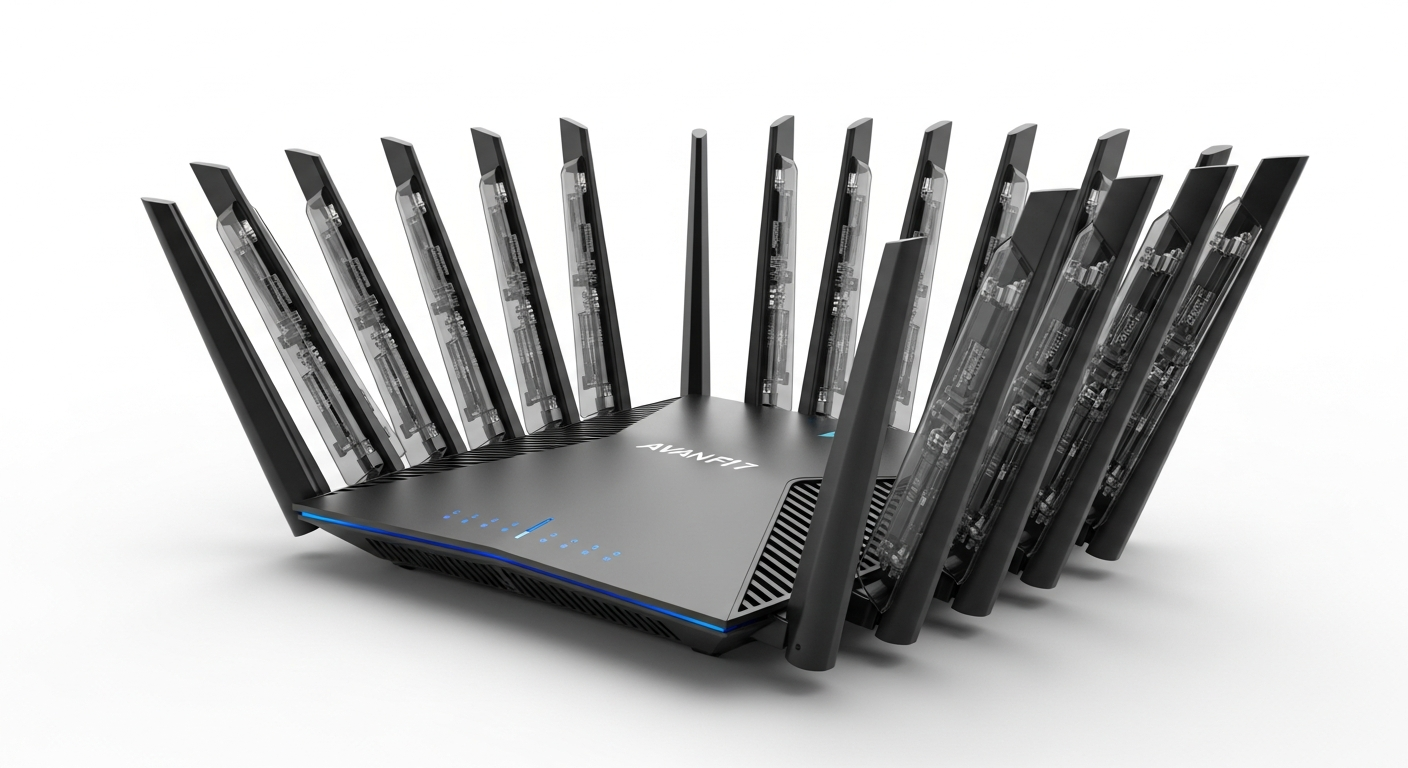
The 320 MHz channel width available on the 6 GHz band doubles the throughput available per channel compared to WiFi 6E. For businesses that have already deployed WiFi 6E, upgrading to WiFi 7 provides an evolutionary improvement. For businesses still running WiFi 5 or earlier, the jump to WiFi 7 is transformational, delivering 10x or greater throughput improvements that fundamentally change what wireless networks can support.
We upgraded from WiFi 5 to WiFi 7 at our Irvine Spectrum office and the difference was extraordinary. Our wireless conference rooms now handle four simultaneous video calls without any degradation. The IT help desk tickets for wireless issues dropped to zero within the first month.
— IT Manager, Irvine technology company
WiFi 7 Deployment from BlueHouse
BlueHouse Telecom designs and deploys enterprise WiFi 7 networks for Southern California businesses. We conduct site surveys, plan access point placement, and configure networks for optimal performance with your specific device mix and application requirements. Contact us for a wireless assessment.
Build the Right Network for Your Business
From dedicated fiber and fixed wireless to SD-WAN and redundant failover, we design connectivity solutions that match your location, budget, and performance requirements.