
What Is SASE and Does Your Business Need It
SASE gets pitched as the future of network security, but the acronym hides a simple idea. Here is what it actually does and when it is worth the switch.
Sloane Vance
June 23, 2026
SASE is one of those terms that sounds like it was invented to sell something. It rhymes with sassy, it stands for Secure Access Service Edge, and vendors throw it at every security problem you have. Underneath the noise is a genuinely useful shift in how companies connect and protect people who no longer sit in one building. If your team works from offices, homes, coffee shops, and the occasional airport lounge, the idea is worth understanding before you let anyone quote you on it.
The Problem SASE Was Built To Solve
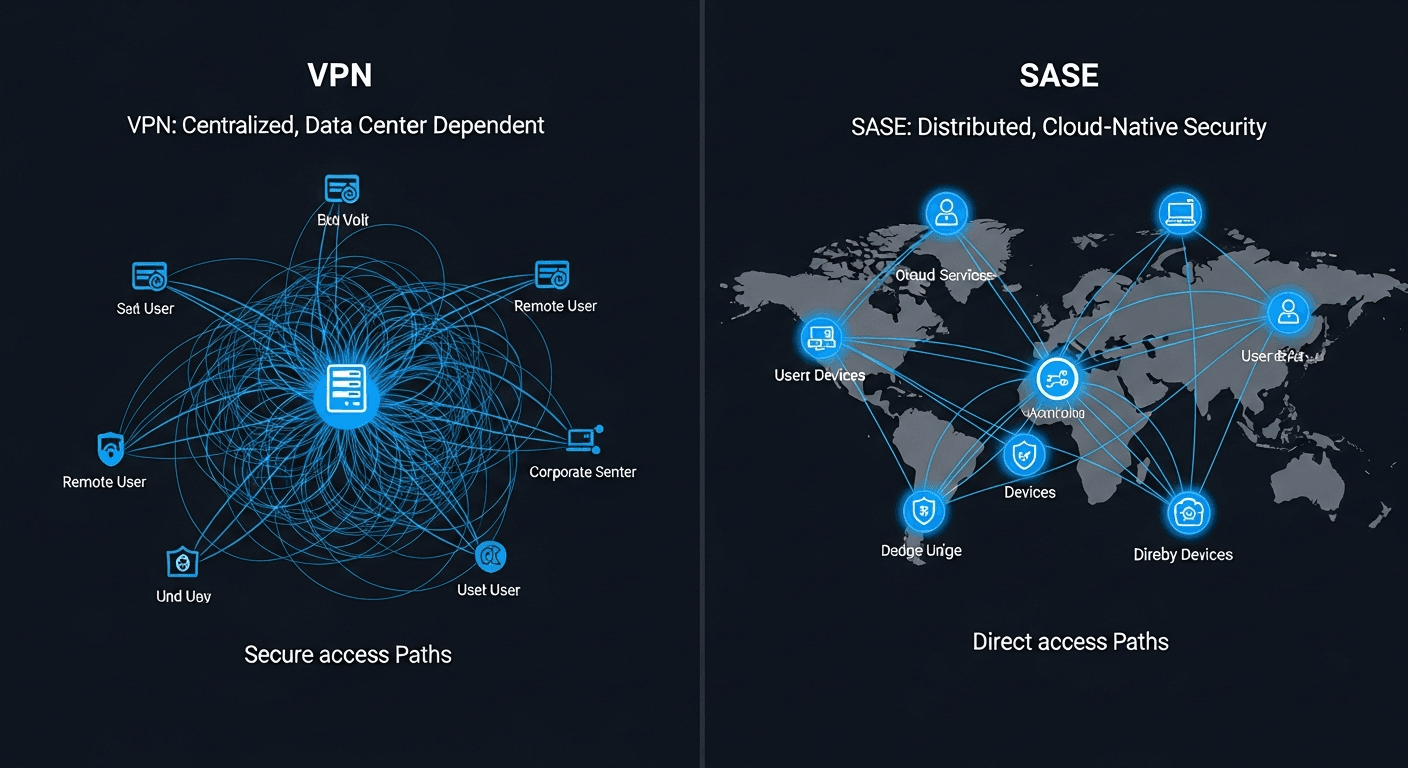
For decades the security model looked like a castle. You had a headquarters, a firewall at the edge, and everyone inside the walls was trusted. Remote workers tunneled back in through a VPN, which routed their traffic all the way to the office before sending it out to the internet. That worked when remote was the exception and most of your applications lived in a server room down the hall.
Then the applications moved to the cloud and the people scattered. Now a salesperson at home opening a cloud CRM is sending traffic to the office firewall, back out to the internet, to a data center two states away, and back again. It is slow, it is expensive, and it makes no sense. The castle has no walls left because there is barely a castle. SASE accepts that reality and rebuilds security around the user and the application instead of the building.
What Is Actually In The Box
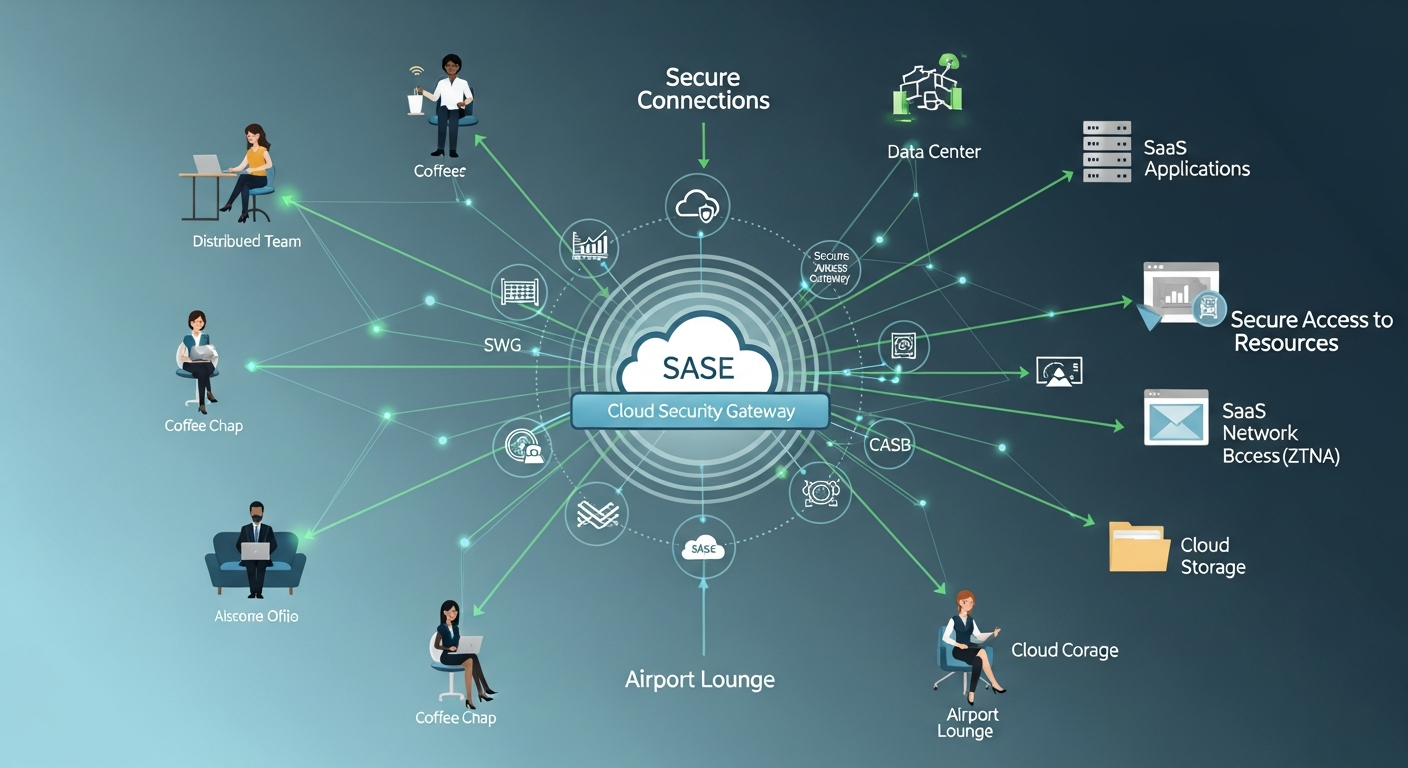
SASE is not one product. It is a bundle of networking and security functions delivered together from the cloud. On the networking side you get SD-WAN, which intelligently steers traffic across whatever connections a site has. On the security side you typically get a secure web gateway that filters web traffic, a cloud access security broker that watches how people use cloud apps, firewall as a service, and zero trust network access, which is the modern replacement for the old VPN.
Zero trust is the piece that changes the most. Instead of granting someone access to your whole network once they log in, it gives them access to one specific application and checks them continuously. A contractor who needs your project tool does not also get a path to your accounting server. If a laptop is compromised, the blast radius is one app, not everything. That containment is the real prize, and it is hard to bolt onto a traditional VPN after the fact.
The honest pitch is not that SASE is magic. It is that you stop managing six security boxes from five vendors and start managing one policy that follows the user wherever they connect from.
— Network Security Consultant, managed services firm
Signs You Are Actually Ready
You do not need SASE because a vendor says it is the future. You need it when specific pains show up. If a real share of your workforce is remote or hybrid and your VPN is slow or constantly complained about, that is a flag. If most of your applications already live in the cloud, routing through an office firewall is pure waste. If you run several sites and each one has its own firewall and its own rules that nobody fully remembers, the management burden alone can justify a move.
Compliance is another trigger. Industries handling health records, payment data, or client financial information increasingly need to prove who accessed what and when. SASE platforms log that centrally instead of forcing you to stitch reports together from separate tools. A 15 person company with one office and an on premise setup probably does not need it yet. A 120 person company across four locations with a cloud first stack almost certainly should be running the numbers.
How To Approach The Decision
Treat SASE as a multi year direction, not a weekend project. Most companies phase in, often starting by replacing the VPN with zero trust access, then folding in web filtering and SD-WAN as contracts on the old equipment expire. Pricing is usually per user per month, which makes it predictable but also means a careless rollout to your whole headcount can sting. Map which functions you already pay for somewhere else, because SASE often consolidates three or four line items you have stopped noticing.
Because the market is crowded and the acronyms blur together, this is a place where a neutral advisor earns their keep. The right platform depends on your application mix, your locations, and how much you want to manage yourself versus hand off. Get someone to map your current spend and your actual traffic before you sign, and the decision usually makes itself. The goal is not to chase a trend. It is to make secure access faster and simpler for the way your people already work.
Protect Your Business Today
Cyber threats are evolving faster than most businesses can keep up. Schedule a free security assessment with our team to identify vulnerabilities and build a defense strategy tailored to your organization.