
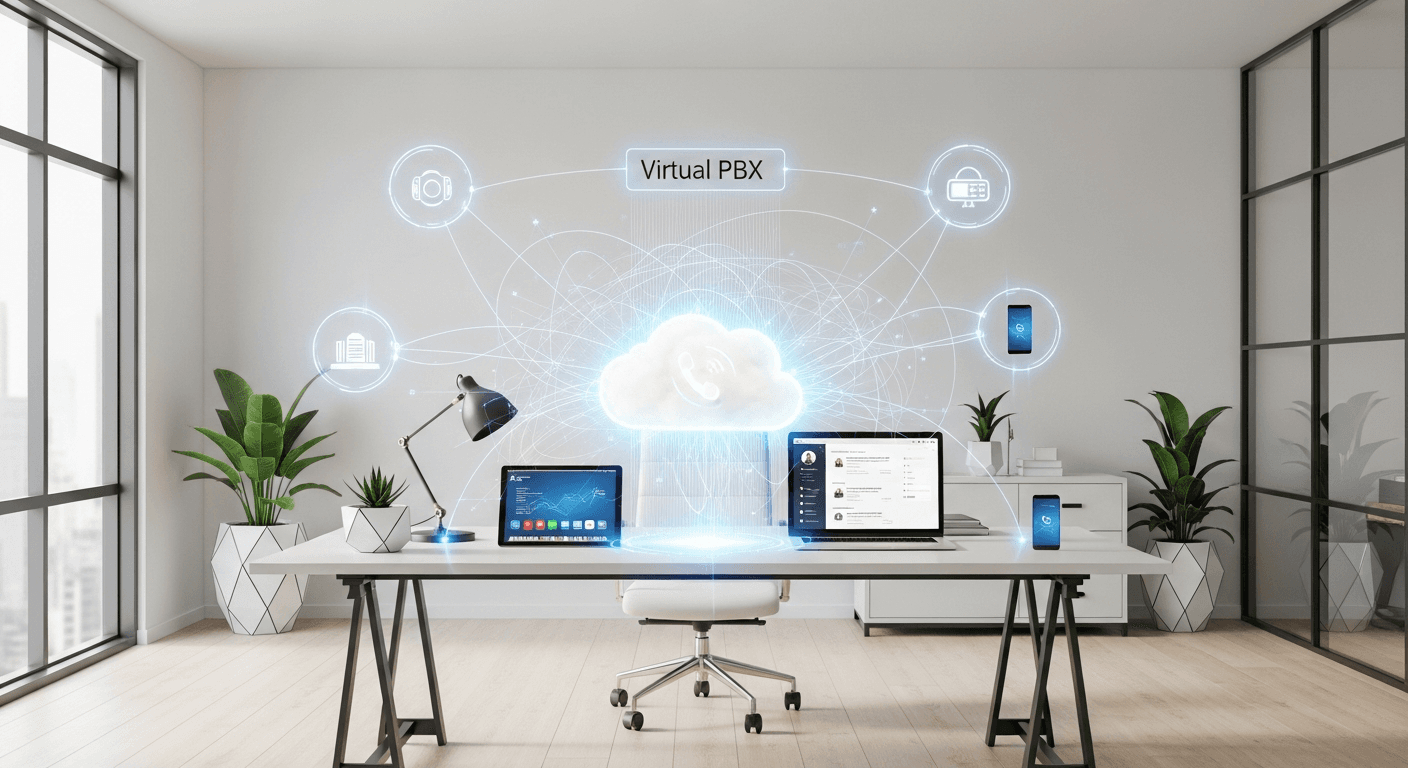
Why Startups Should Consider a Virtual PBX Before Investing in Phone Hardware
Southern California startups often default to buying desk phones and a PBX system during office setup. A virtual PBX eliminates hardware investment, scales instantly, and gives distributed teams enterprise-grade call handling.
Sloane Vance
October 12, 2025
The checklist for a new Southern California startup typically includes office space, internet connectivity, and a phone system. For the phone system, many founders default to what they have seen in previous workplaces: desk phones, a PBX server or hosted PBX service, and a bundle of phone lines from a traditional telecom provider. This approach works, but it front-loads significant capital expense into a phase of the business when capital is scarce and flexibility is essential.
A virtual PBX is a cloud-based phone system that provides all the call handling features of a traditional PBX, including auto attendants, call routing, voicemail, call recording, and extension dialing, without any on-premises hardware. Employees use softphone applications on their laptops, tablets, or smartphones to make and receive calls using the company's business phone numbers. The system runs entirely in the cloud, scales up or down with a few clicks, and costs a fraction of a traditional phone system.
Cost and Flexibility Advantages
The cost difference between a virtual PBX and a traditional phone system is substantial for early-stage companies. A traditional deployment for a 15-person startup requires desk phones at $150 to $400 each, a hosted PBX or on-premises server, installation and configuration services, and monthly line charges. Total first-year cost typically ranges from $8,000 to $15,000. A virtual PBX for the same 15 users runs $15 to $30 per user per month with no hardware purchase, no installation, and no long-term contract. First-year cost: $2,700 to $5,400.
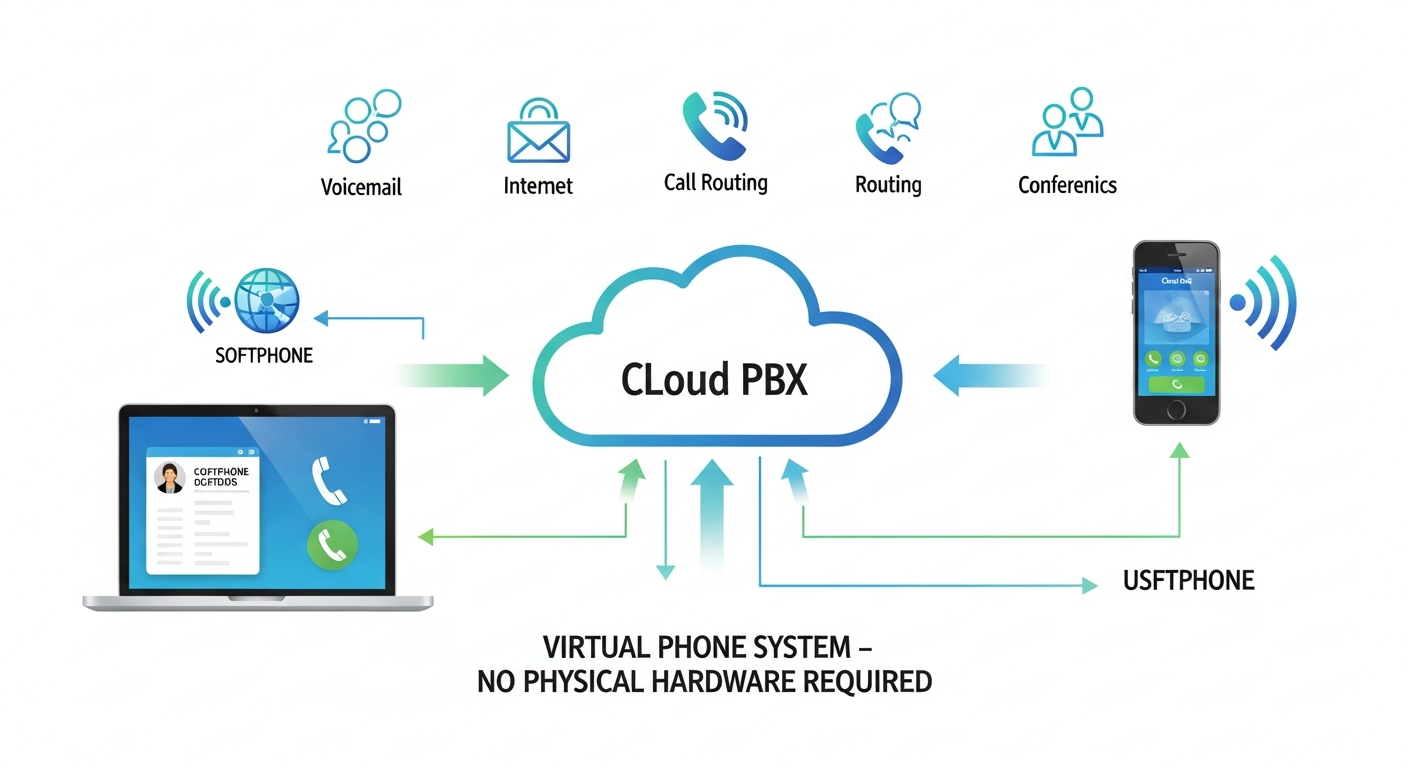
The flexibility advantage is equally important. Startups grow unpredictably. A virtual PBX scales from 5 users to 50 users without hardware procurement or installation delays. If the startup opens a second location in San Diego, Orange County, or Los Angeles, adding users at the new office is identical to adding them at the headquarters: create an account, download the softphone app, and start making calls. If the startup contracts, removing users is equally frictionless with no stranded hardware investment.
We launched our San Diego startup with a virtual PBX for $20 per user per month. When we grew from 8 to 35 employees in six months, we added users in minutes. Our phone system never once became a bottleneck or a distraction from building the business.
— Founder, San Diego SaaS startup
Getting Started
BlueHouse Telecom deploys virtual PBX solutions for startups and growing businesses across Southern California. We handle number provisioning, auto attendant configuration, call routing design, and user onboarding. Contact us for a demonstration of how a virtual PBX can provide your startup with enterprise-grade communications at a fraction of the cost of traditional phone hardware.
Upgrade Your Team's Connectivity
Whether your team works from the office, home, or on the road, the right communications setup makes all the difference. Let us design a solution that keeps everyone connected and productive.