
How to Read a Telecom Bill and Find Hidden Charges
Telecom bills are confusing on purpose. Once you know how they are structured, the padding and the genuine charges separate out fast.
Elias Thorne
April 15, 2026
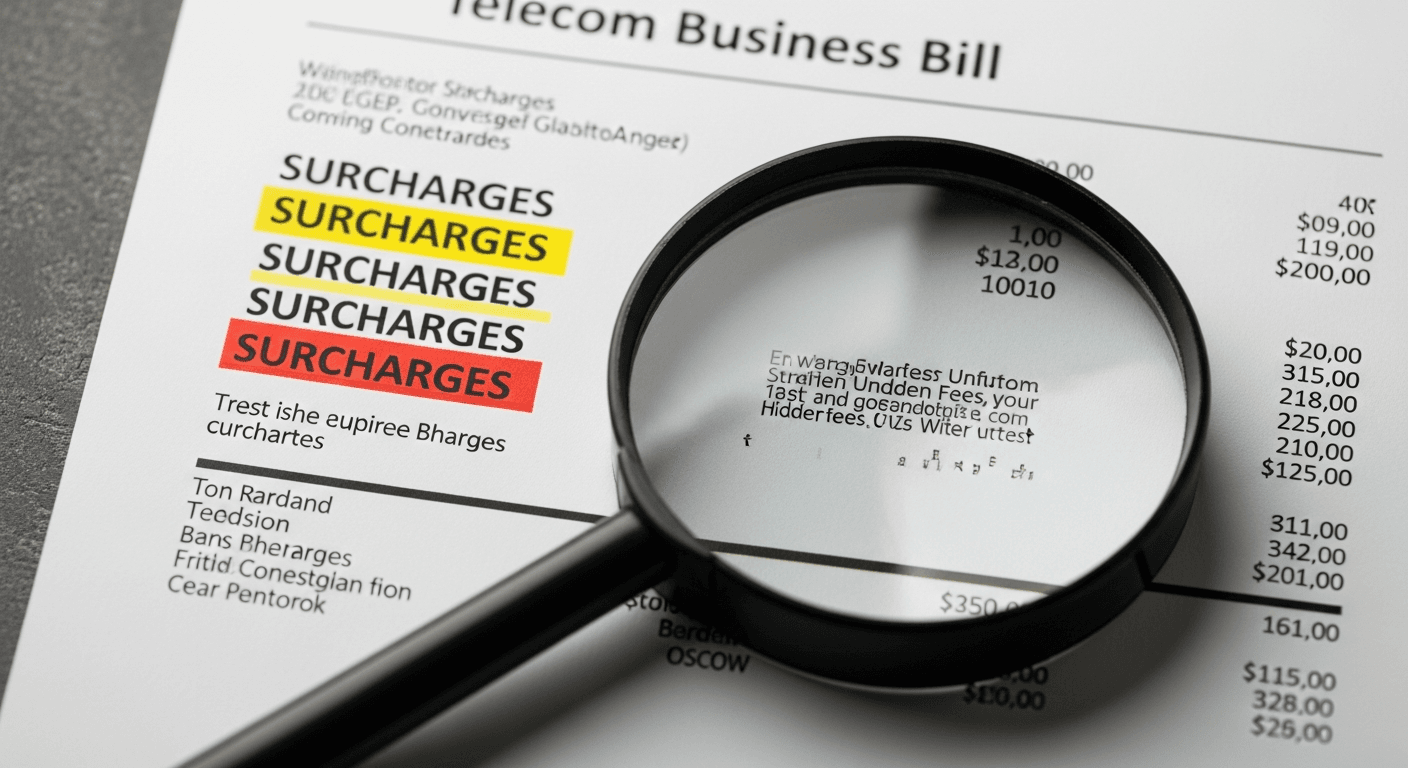
There is a reason telecom bills are hard to read, and it is not an accident. A confusing invoice is a profitable invoice. When line items have vague names and the total is split across taxes, surcharges, and fees that sound official, most businesses just pay it and move on. The ones who actually read the bill, line by line, routinely find ten to thirty percent of the total going to things they do not need, no longer use, or are not legally required to pay. Here is how to read yours like the person who wrote it.
The Three Buckets Every Bill Falls Into
Strip away the formatting and every telecom bill has three kinds of charges. The first is the actual service, the part you agreed to in your contract. Your circuit, your phone lines, your seats, your data plan. The second is genuine government mandated taxes and fees, things like state and local taxes and the federal Universal Service Fund contribution. The third bucket is where the trouble lives. These are carrier imposed fees with official sounding names that are really just margin the carrier decided to break out instead of folding into the base rate.
Knowing which bucket a charge falls into is the whole game. The first bucket you negotiate. The second you mostly cannot avoid, though the amounts should match the rules. The third is where the recoverable money hides, because those fees are set by the carrier, not the government, and a surprising number of them are negotiable or removable if you push.
The Fees That Are Really Just Margin
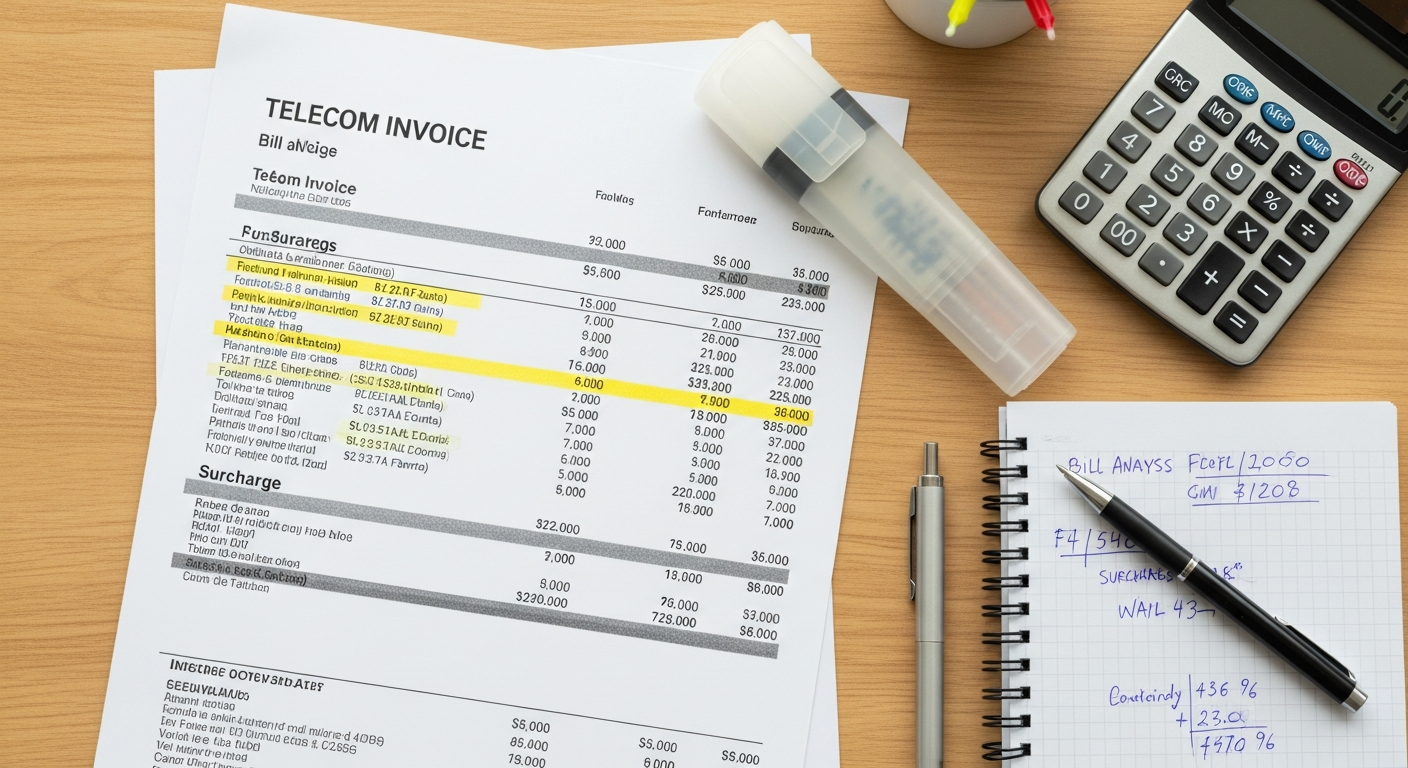
Watch for line items with names like Administrative Fee, Cost Recovery Fee, Network Access Charge, Regulatory Recovery Fee, or Carrier Cost Recovery. These sound like taxes. They are not. They are charges the carrier invented, and the language is chosen to make you assume they are mandatory. On a business account with multiple lines or circuits, these can add up to a meaningful sum every month that no government ever required.
You cannot always get them removed, but you can almost always get them reduced at contract renewal, and sometimes mid term if you make noise. The key is separating them from the real taxes so you know what you are actually arguing about. When a rep tells you a fee is required, ask which agency requires it and what the statute is. The genuine ones have an answer. The padding gets a vague reply and, often, a quiet credit.
We pulled twelve months of invoices for a client with sixty locations and found four recurring charges for circuits that were disconnected over a year earlier. Nobody had ever stopped the billing. That alone was thousands of dollars a month walking out the door.
— Billing Analyst, telecom expense practice
Charges for Things You Stopped Using
The most common and most expensive mistake is paying for services you no longer use. Telecom billing does not stop just because you stopped using something. When a location closes, when you migrate a circuit, when you cut over from old copper lines to a new system, the old charges have a way of surviving on the bill for months or years. Carriers are not in a hurry to flag this for you. The disconnect order has to come from your side, and if it never gets filed, the meter keeps running.
Go through your bill and match every single line item to something you can point to in the real world. A circuit ID you can locate. A phone number someone answers. A service someone uses. Anything you cannot match is a candidate for cancellation, and possibly a refund. Pull at least three months of bills side by side so you can spot charges that drift or duplicate. This audit is tedious and it is also where most of the money is.
Making the Audit a Habit
Reading the bill once and fixing what you find is good. Doing it on a schedule is better, because carriers add line items, contracts auto renew at higher rates, and disconnected services creep back. Put a recurring reminder on the calendar to review invoices every quarter and reconcile them against what you are actually using. Keep a simple inventory of your circuits, lines, and contracts so you have something to check the bill against. If the work is more than your team has time for, a carrier neutral broker or a telecom expense management partner does this auditing for a living and usually works on a share of the savings, which means they only win when you do. Either way, the bill is readable once you know it was designed not to be.
Find Out How Much You Could Save
Most businesses overpay on telecom by 20 to 40 percent. Our free cost analysis identifies exactly where your money is going and how to reduce your spend without sacrificing performance.