
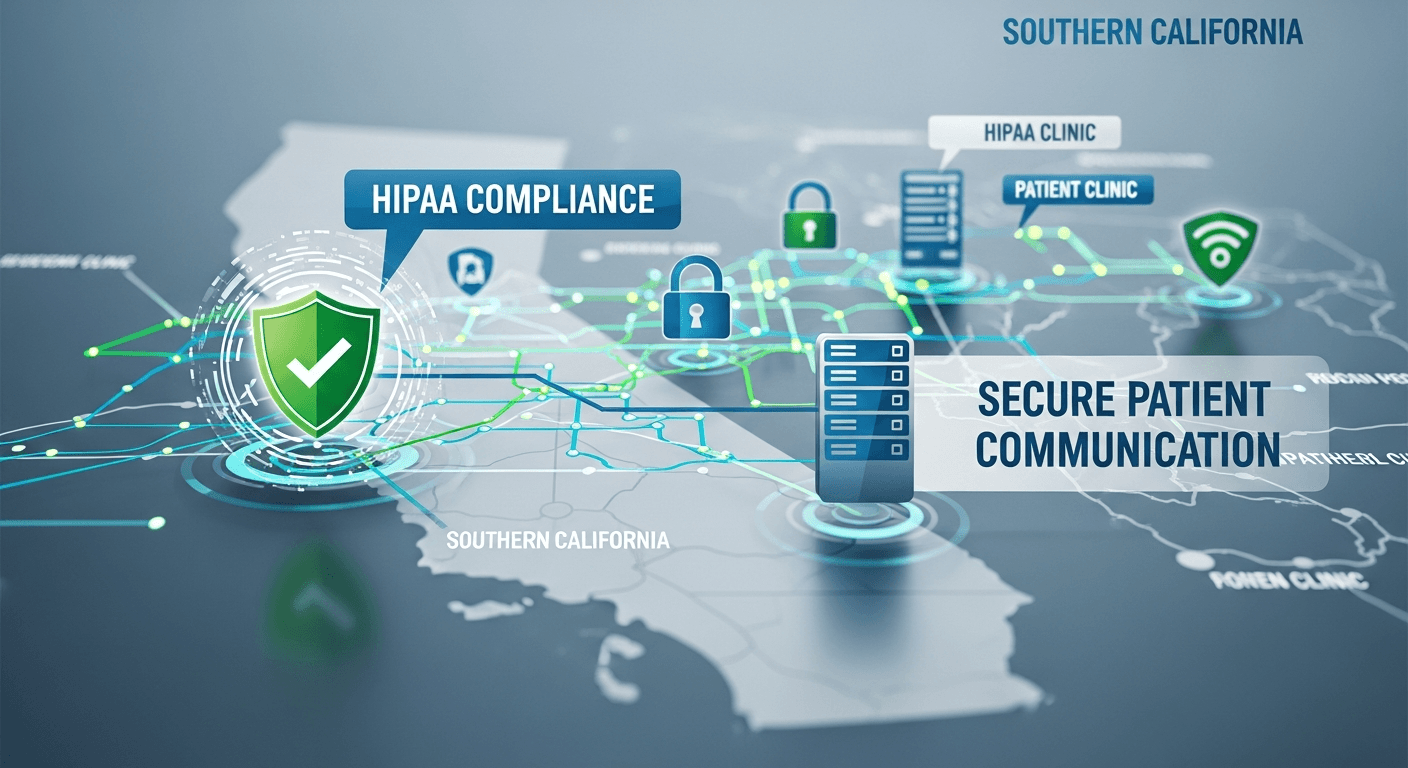
HIPAA Compliance for Southern California Clinics: A Connectivity Checklist
Southern California medical clinics face unique HIPAA compliance challenges when it comes to their network infrastructure. This checklist covers the connectivity requirements that auditors look for.
Marcus Sterling
October 2, 2025
Medical clinics across San Diego, La Jolla, Carlsbad, and the broader Southern California region are under increasing pressure to demonstrate HIPAA compliance in every aspect of their operations, including their network infrastructure. The Office for Civil Rights has stepped up enforcement actions against small and mid-sized healthcare providers, and the penalties for non-compliance can be devastating. A single breach involving unsecured electronic protected health information, or ePHI, can result in fines ranging from $100 to $50,000 per violation, with an annual maximum of $1.5 million per violation category.
Most clinic administrators understand that patient records must be protected, but many do not realize that their network infrastructure, including their internet connection, Wi-Fi network, VoIP phone system, and connected medical devices, all fall within the scope of HIPAA's technical safeguards. An unencrypted VoIP call discussing patient information is a violation. An unsecured Wi-Fi network that allows unauthorized access to systems containing ePHI is a violation. The connectivity infrastructure is not separate from compliance; it is central to it.
The Connectivity Compliance Checklist
Start with your internet connection. HIPAA requires that any network transmitting ePHI use encryption in transit. Dedicated internet circuits with built-in encryption provide a more secure foundation than shared broadband connections. Your VoIP phone system must support TLS and SRTP encryption for all voice traffic, especially if clinical staff discuss patient information over the phone. Guest Wi-Fi must be fully segmented from clinical networks, with no possibility of cross-traffic between the two. All connected medical devices must be inventoried, patched, and monitored for anomalous behavior.
We thought our internet provider handled HIPAA compliance. We learned during an audit that compliance is our responsibility, and our network had three significant gaps. BlueHouse helped us close them within two weeks.
— Practice Manager, La Jolla medical group
Business Associate Agreements and Vendor Responsibility
Every vendor that touches your ePHI, including your internet provider, VoIP provider, cloud services provider, and managed IT partner, must sign a Business Associate Agreement. This legal document establishes the vendor's obligations under HIPAA and creates accountability for how they handle your protected data. BlueHouse signs BAAs with every healthcare client and maintains the security controls necessary to uphold our obligations under those agreements.
If your Southern California medical practice has not conducted a connectivity-focused HIPAA risk assessment in the past 12 months, now is the time. BlueHouse offers complimentary HIPAA network assessments for clinics in San Diego County, Orange County, and the Inland Empire. We identify gaps, prioritize remediation, and implement solutions that bring your network infrastructure into full compliance.
Protect Your Business Today
Cyber threats are evolving faster than most businesses can keep up. Schedule a free security assessment with our team to identify vulnerabilities and build a defense strategy tailored to your organization.