
Fullerton Families and the Hybrid Learning Connectivity Challenge
Fullerton families juggling remote work and hybrid learning discovered that residential internet was never designed for five simultaneous video calls. Upgrading requires more than a faster plan.
Elias Thorne
January 28, 2026
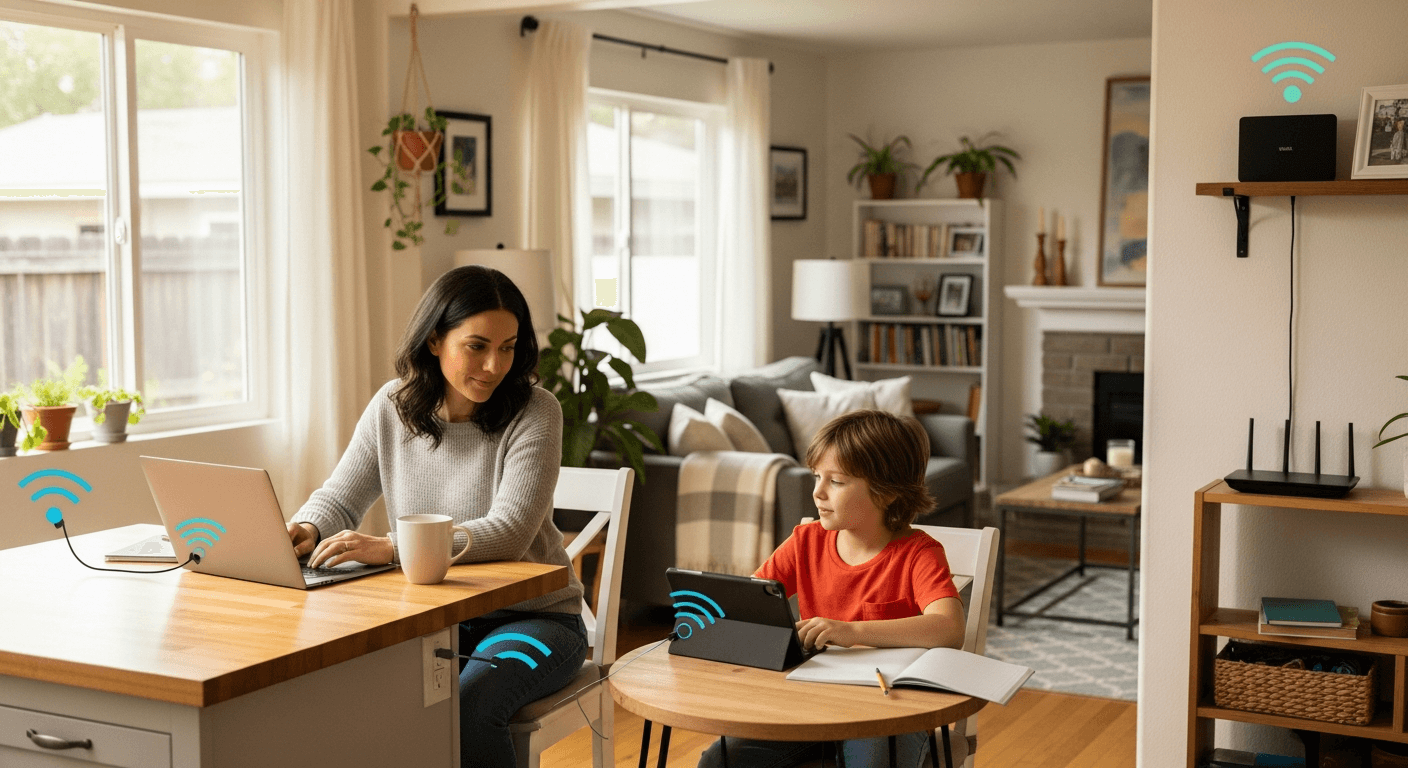
The scene is familiar in homes across Fullerton, Brea, and Placentia: two parents working remotely from separate rooms, two children attending virtual classes or submitting assignments online, and a home network that was never designed to support four or five simultaneous high-bandwidth connections. The router sits in the living room, valiantly attempting to serve devices spread across 2,000 square feet of house, and failing at least once per day in a way that interrupts someone's meeting or drops someone's class connection at the worst possible moment.
The hybrid learning model that Orange County school districts adopted during the pandemic has persisted in various forms. Many families have at least one child who participates in some virtual learning, whether through a fully online program, supplemental virtual classes, or enrichment programs that operate remotely. Combined with one or two parents working from home at least part of the week, the connectivity demands on a single residential internet connection have increased dramatically compared to pre-pandemic levels.
Why a Faster Plan Is Not Enough
The instinctive response to home connectivity problems is to call the ISP and upgrade to a faster plan. But in many cases, the internet connection itself is not the bottleneck. The bottleneck is the home network: the router, the Wi-Fi coverage, and the way traffic is managed between devices. A 200 Mbps connection routed through a consumer router that cannot handle more than 20 simultaneous connections will perform worse than a 100 Mbps connection paired with a properly configured enterprise access point and a router that supports Quality of Service settings to prioritize video traffic.

Our kids' virtual classes kept dropping even though our speed test showed 150 Mbps. BlueHouse installed a mesh Wi-Fi system and configured QoS to prioritize video traffic. We have not had a dropped class since.
— Parent, Fullerton family with three school-age children
Home Network Optimization
Effective home network optimization for hybrid learning and remote work households involves three components: adequate internet bandwidth from the ISP, enterprise-grade Wi-Fi coverage throughout the home, and traffic management that prioritizes real-time applications like video calls and virtual classrooms over background traffic like software updates and streaming. BlueHouse provides home network optimization services for families across Fullerton, Brea, Placentia, and greater North Orange County that address all three components.
If your family is struggling with connectivity issues that disrupt remote work or hybrid learning, the solution is likely more nuanced than a faster internet plan. BlueHouse offers residential network assessments that identify the actual bottleneck and recommend targeted improvements. Contact us for a complimentary home connectivity assessment.
Get a Solution Built for Your Industry
Every industry has unique connectivity and compliance requirements. Our team specializes in building telecom solutions that meet your specific operational needs and regulatory standards.