
Debunking Fixed Wireless Speed Myths: What Real-World Performance Looks Like
Fixed wireless technology has evolved dramatically, but outdated perceptions about speed and reliability persist. Real-world performance data from Southern California deployments tells a very different story than most business owners expect.
Marcus Sterling
November 9, 2025
Fixed wireless internet carries a reputation that was earned a decade ago and no longer reflects reality. Business owners across Southern California frequently dismiss fixed wireless as a viable connectivity option based on experiences with early-generation equipment that delivered inconsistent speeds, suffered from weather-related degradation, and could not support the bandwidth demands of modern business applications. These concerns were valid in 2015. They are not valid in 2025.
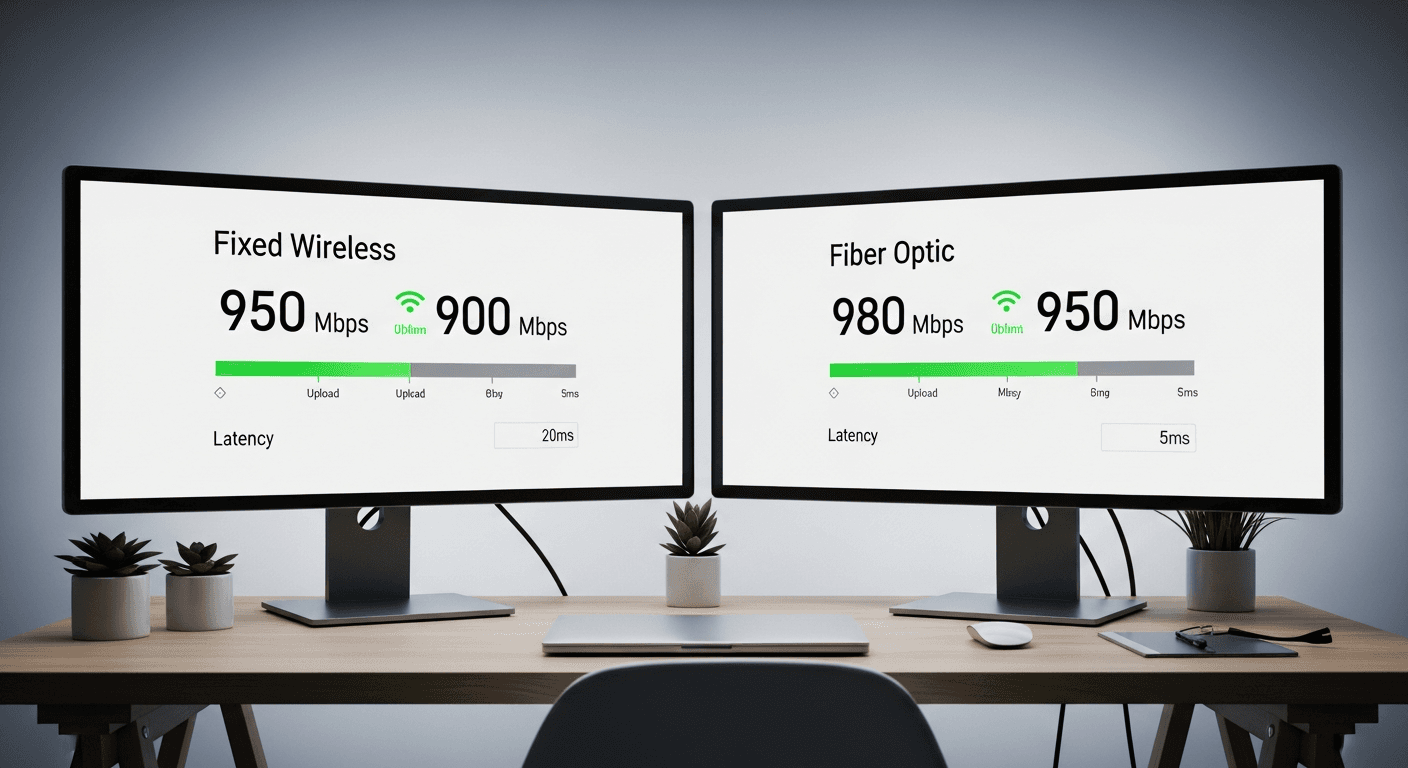
Modern fixed wireless equipment operating on licensed and lightly licensed spectrum delivers performance that is, for all practical purposes, indistinguishable from fiber optic connections. Symmetrical speeds from 200 Mbps to 1 Gbps are standard. Latency under 5 milliseconds is typical for well-engineered links. Availability exceeding 99.99 percent is achievable with proper radio planning and redundant path configurations. These are not theoretical specifications. They are the real-world performance numbers from hundreds of fixed wireless deployments across San Diego, Orange County, Los Angeles, and the Inland Empire.
Myth: Fixed Wireless Is Slow
The association between fixed wireless and slow speeds comes from confusion between two very different technologies: consumer-grade wireless ISP services and enterprise-grade fixed wireless links. Consumer WISP services often use unlicensed spectrum in the 2.4 GHz or 5 GHz bands, share bandwidth among multiple subscribers on the same tower sector, and deliver best-effort speeds that can degrade during peak usage. Enterprise fixed wireless uses licensed spectrum with dedicated point-to-point links that provide guaranteed bandwidth not shared with any other subscriber.
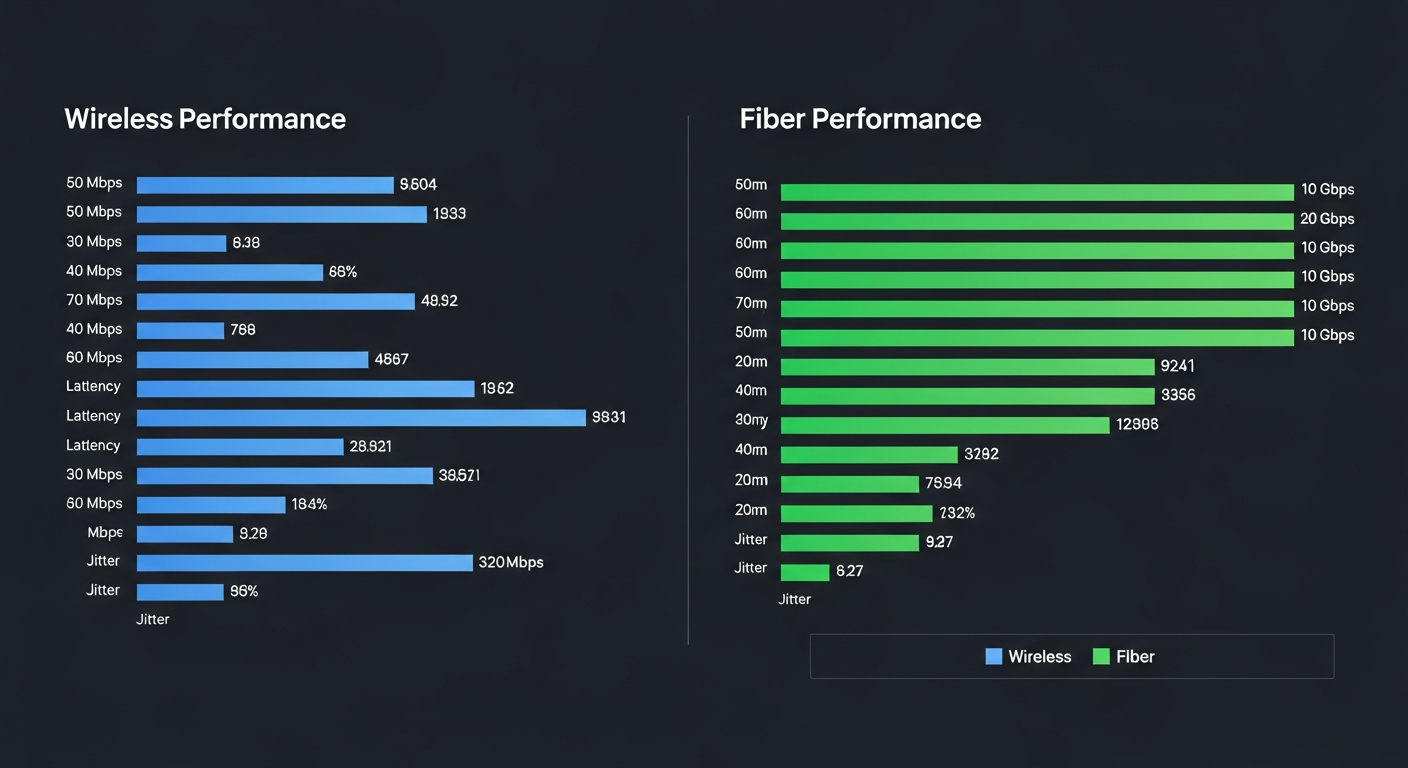
The weather degradation myth is similarly outdated. Early fixed wireless systems operating at lower frequencies were susceptible to rain fade and atmospheric interference. Modern systems operating at millimeter-wave frequencies are engineered with fade margins that account for the worst weather conditions in their deployment area. In Southern California, where heavy precipitation is infrequent and brief, properly engineered fixed wireless links maintain their rated performance through virtually all weather conditions experienced in the region.
We ran a 90-day side-by-side comparison between our fixed wireless circuit and a fiber circuit at the same location. The fixed wireless averaged 2 milliseconds higher latency and delivered identical throughput. Our VoIP quality scores were the same on both circuits.
— Network Administrator, San Diego financial services firm
See the Performance for Yourself
BlueHouse Telecom provides enterprise-grade fixed wireless internet across Southern California with performance guarantees backed by service level agreements. We offer free 30-day performance trials that let you evaluate fixed wireless alongside your existing connectivity. Contact us to schedule a trial at your San Diego, Orange County, or Inland Empire location.
Build the Right Network for Your Business
From dedicated fiber and fixed wireless to SD-WAN and redundant failover, we design connectivity solutions that match your location, budget, and performance requirements.