
Fixed Wireless Internet: When It Beats Fiber for Business
Fiber is the default answer for business internet, and usually the right one. But there are real situations where fixed wireless is the smarter call.
Marcus Sterling
March 18, 2026
Ask most people about business internet and they will tell you to get fiber. They are usually right. Fiber gives you symmetrical speed, low latency, and bandwidth you can grow into for years. But the advice falls apart in two situations that come up more often than you would think. The first is when fiber is not available at your building, or the quote to bring it in runs into five figures. The second is when you need a connection up and running in days, not the two to four months a fiber build can take. In both cases, fixed wireless deserves a serious look.
What Fixed Wireless Actually Is
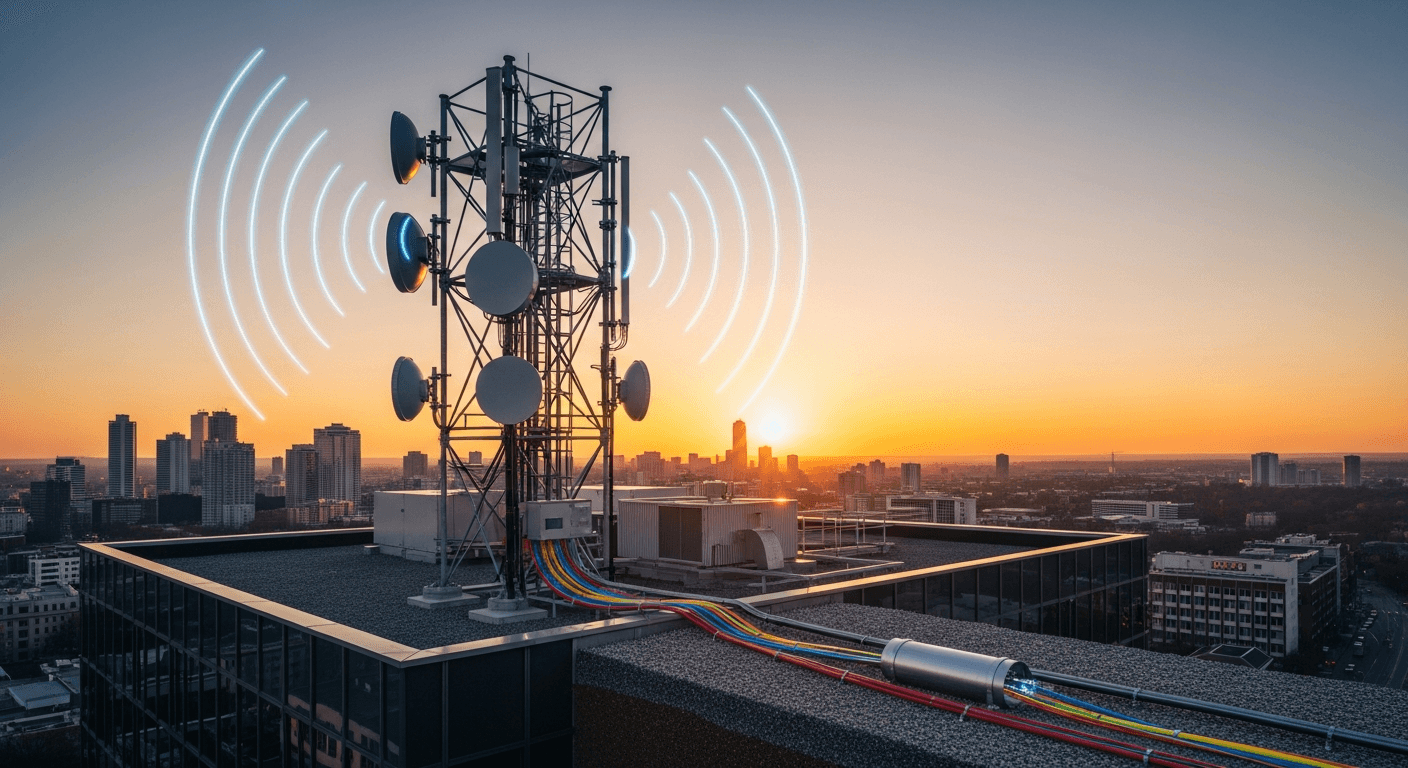
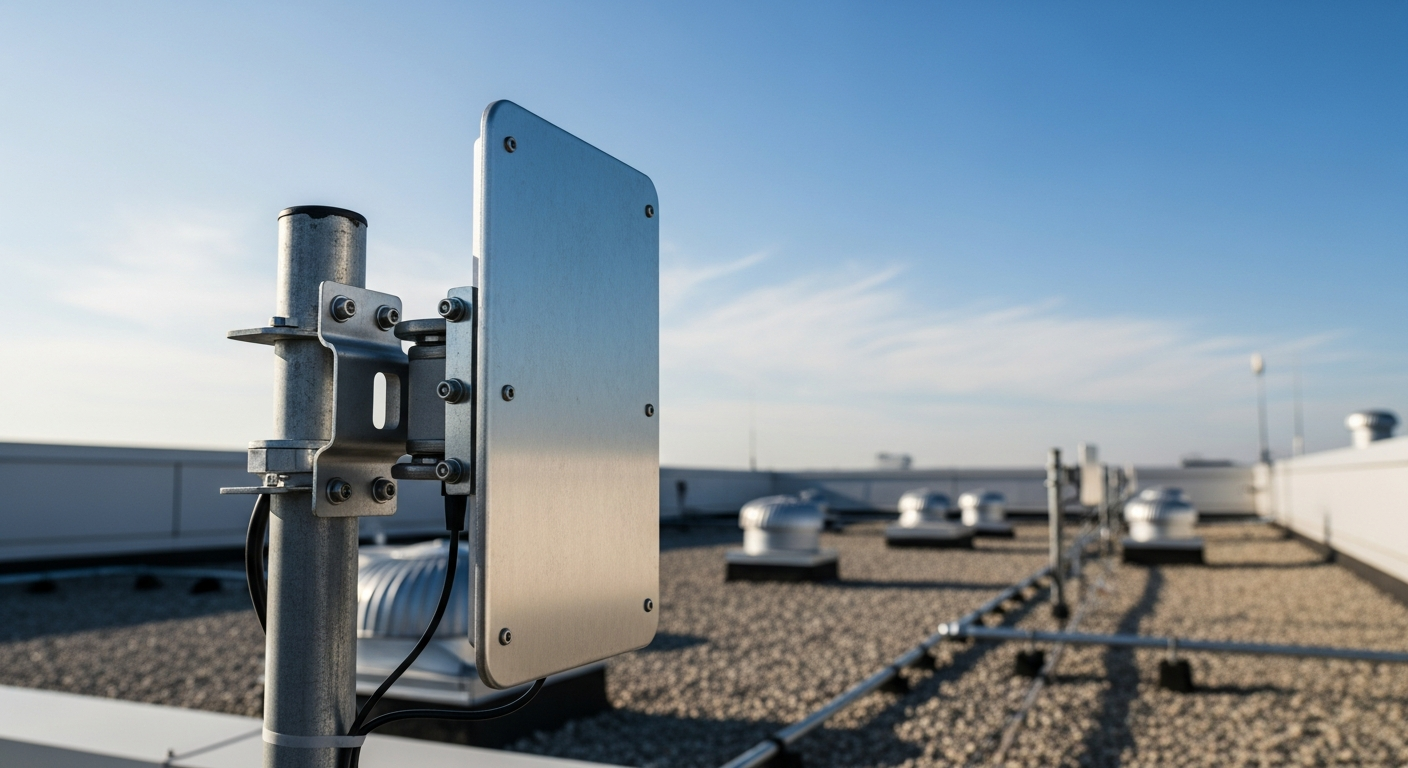
Fixed wireless delivers internet over radio signals between an antenna on your roof and a tower operated by the provider, sometimes a few miles away. There is no cable trenched to your building, which is exactly why it can be installed fast. A licensed provider mounts the antenna, aims it at the tower, confirms the signal, and you are online. Modern systems on licensed spectrum routinely deliver speeds from 100 megabits to over a gigabit, with latency low enough for voice calls, video meetings, and cloud applications to feel normal.
This is not the satellite internet people remember complaining about, and it is not the same as the cellular hotspot in your bag. Business grade fixed wireless on licensed spectrum runs on dedicated radio channels the provider controls, which keeps performance steady instead of degrading every time the neighborhood gets busy. The good providers will give you a service level agreement with real uptime guarantees, the same as they would for fiber.
The Locations Fiber Forgot
Fiber economics are brutal for buildings off the beaten path. If your office sits in an older industrial park, a rural commercial strip, or a multi tenant building no carrier has lit, the response to a fiber order is often a construction quote rather than an install date. Bringing fiber the last few hundred feet can cost anywhere from a few thousand dollars to tens of thousands, and the carrier may ask you to cover it. For a lot of businesses that number kills the project on the spot.
Fixed wireless skips the trench entirely. As long as the antenna has a clear line of sight to a tower, the cost to deliver service does not change much whether you are downtown or out by the highway. That makes it the practical choice for warehouses, construction sites, agricultural operations, and any location the fiber maps quietly skipped. For a pop up retail space or a temporary office, the speed of setup alone makes it the only realistic option.
Our new branch needed to be live in two weeks and the fiber install was quoted at three months plus a build fee. We put up fixed wireless in four days, ran the whole office on it, and kept it as the backup once fiber finally landed.
— IT Manager, multi location retailer
The Backup Circuit Nobody Regrets
Even when fiber is the right primary connection, fixed wireless makes an excellent second circuit. The reason is path diversity. Your fiber and your fixed wireless take physically different routes to the internet, one through the ground and one through the air. When a backhoe cuts the fiber down the street, an event that happens more than carriers like to admit, your fixed wireless link keeps the business running because it does not share that cable. A backup that rides the same infrastructure as your primary is barely a backup at all.
Pairing a fiber primary with a fixed wireless backup, tied together by an SD-WAN appliance that fails over automatically, gives you the kind of resilience that used to require two expensive wired circuits. For a clinic, a financial office, or any operation where an hour of downtime costs real money, that combination is often cheaper and more reliable than buying a second fiber line from a different carrier on the same poles.
The Tradeoffs to Weigh First
Fixed wireless is not magic. It needs line of sight to a tower, so heavy tree cover, tall buildings in the path, or a bad roof angle can rule it out before you start, which is why providers do a site survey first. Weather can nibble at performance on the cheaper unlicensed systems, though licensed spectrum holds up well. And at the very top end of bandwidth, a mature fiber build still wins on raw capacity and price per megabit. So choose deliberately. If fiber is available, affordable, and you can wait for the install, take the fiber. If it is not there, not affordable, or not fast enough to deploy, fixed wireless is not a compromise. It is the right tool. The smart move is to get both priced for your address and let the real numbers decide.
Upgrade Your Team's Connectivity
Whether your team works from the office, home, or on the road, the right communications setup makes all the difference. Let us design a solution that keeps everyone connected and productive.