
End-to-End Encryption: Separating Myths from Reality for Business Communication
Many business communication platforms claim end-to-end encryption, but the implementation details matter enormously. Understanding what encryption actually protects helps Southern California businesses make informed decisions.
Sloane Vance
December 14, 2025
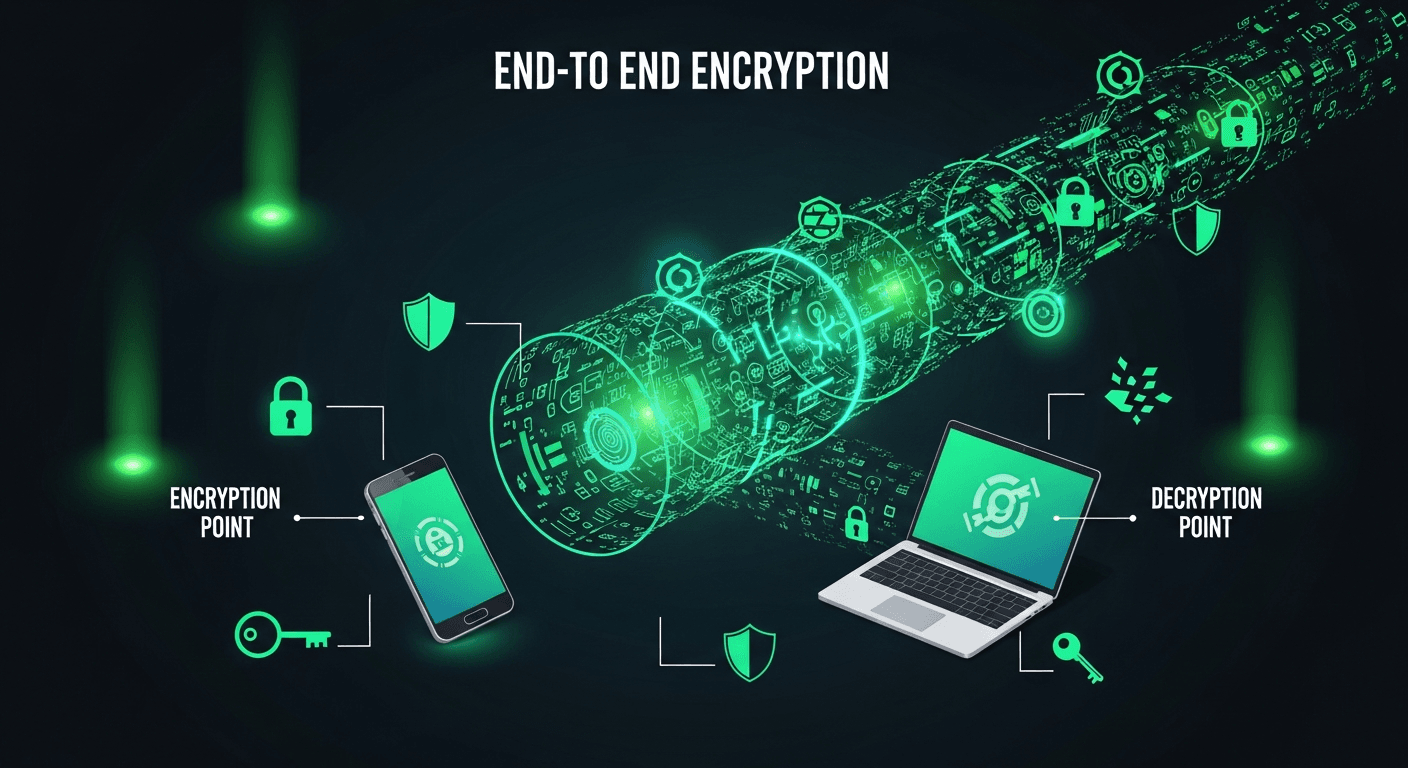
End-to-end encryption has become a marketing buzzword in business communications, with vendors across the industry claiming their platforms offer complete protection for voice calls, video conferences, and messaging. The reality is more nuanced than the marketing suggests. True end-to-end encryption means that data is encrypted on the sender's device and can only be decrypted on the recipient's device, with no intermediary, including the service provider, able to access the plaintext content.
For Southern California businesses evaluating VoIP and unified communications platforms, understanding the distinction between transport encryption and true end-to-end encryption is critical. Transport encryption, commonly implemented using TLS, protects data while it travels between your device and the service provider's servers. However, the provider can access and process the data on their servers before forwarding it to the recipient. This is a fundamentally different security model than end-to-end encryption.
Where Encryption Gaps Exist
Conference calls present one of the most significant encryption challenges. When multiple participants join a call, true end-to-end encryption requires each participant to establish encrypted channels with every other participant, creating exponential complexity. Most platforms handle this by decrypting audio and video at a central server for mixing and then re-encrypting for delivery. This means your call content is briefly available in plaintext on the provider's infrastructure.

Voicemail, call recording, and transcription features also create encryption gaps. If your platform offers automatic transcription of voicemail to text, the audio must be decrypted and processed by the provider's servers. Similarly, compliance recording features require server-side access to call content. These are legitimate business needs that conflict with strict end-to-end encryption implementations.
We assumed our VoIP platform encrypted everything because the vendor said so. When we audited the system, we discovered that voicemails, call recordings, and meeting transcripts were stored unencrypted on the vendor's servers. That was a compliance issue for our Irvine healthcare practice.
— Compliance Officer, Irvine medical group
Choosing the Right Encryption Model
BlueHouse Telecom helps Southern California businesses select and configure communication platforms with encryption models appropriate for their compliance requirements and operational needs. We assess your regulatory obligations, communication patterns, and security requirements to recommend the right balance of encryption strength and feature availability. Contact us for a communication security assessment.
Protect Your Business Today
Cyber threats are evolving faster than most businesses can keep up. Schedule a free security assessment with our team to identify vulnerabilities and build a defense strategy tailored to your organization.