

Disaster-Proofing Your Servers: Lessons from SoCal Wildfire Season
Southern California wildfire season has taught businesses hard lessons about disaster preparedness. The companies that survive are the ones that planned for the worst before it happened.
Marcus Sterling
November 19, 2025
Every fall, Southern California enters wildfire season. The Santa Ana winds push dry, hot air from the inland deserts toward the coast, creating conditions that can turn a small brush fire into a catastrophic blaze within hours. Businesses in fire-prone areas including Temecula, Escondido, Fallbrook, Poway, and the hills east of San Diego face the very real possibility that their physical office and everything in it could be destroyed with little or no warning.
The businesses that recover from disasters are not the ones with the best firefighting luck. They are the ones that planned ahead. Disaster recovery planning for server infrastructure is not optional for any business that stores critical data, runs essential applications, or depends on technology for daily operations. Yet in our experience working with businesses across Southern California, fewer than 30 percent have a tested, documented disaster recovery plan for their IT infrastructure.
The 3-2-1 Backup Rule
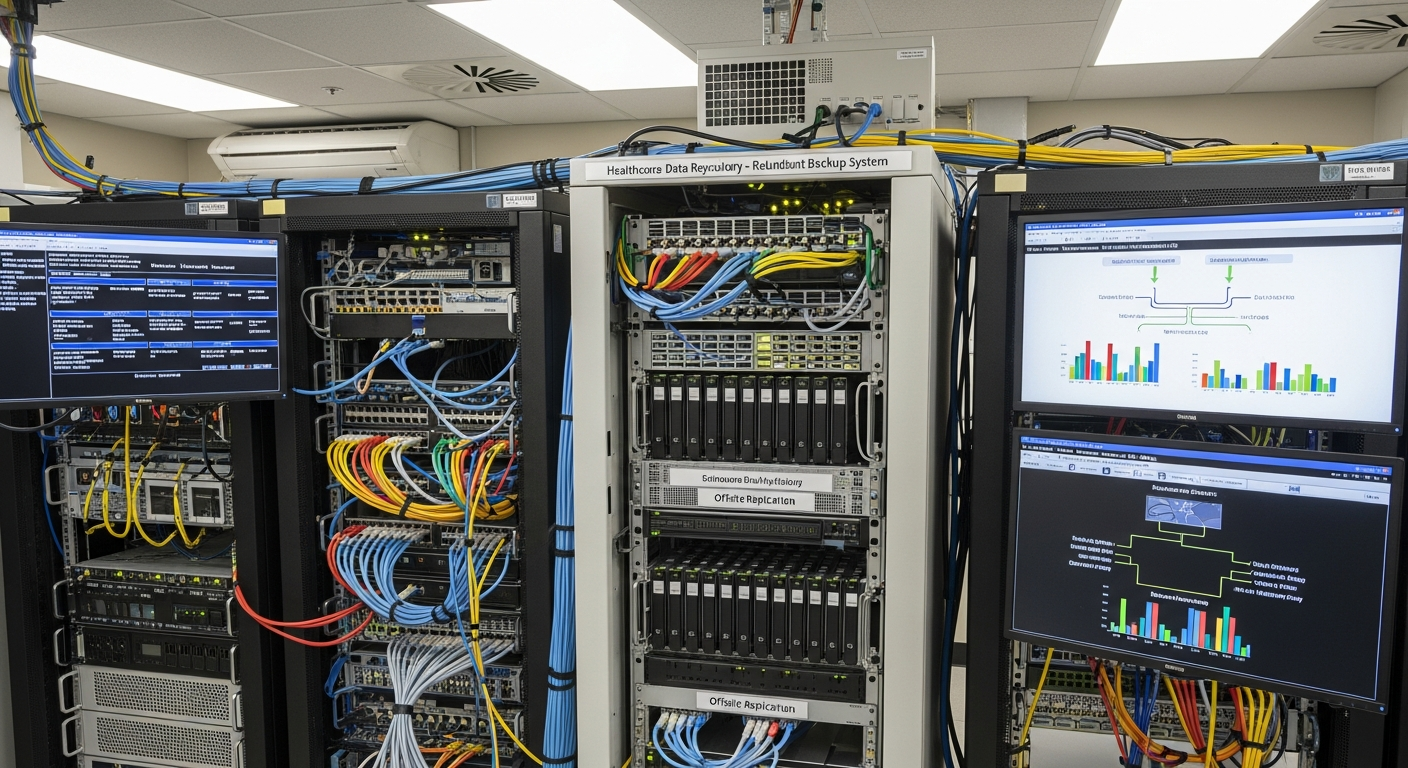
The foundation of any disaster recovery strategy is the 3-2-1 backup rule: maintain three copies of your data, on two different types of media, with one copy stored offsite. For Southern California businesses facing wildfire risk, the offsite component is critical. An offsite backup stored in a fireproof safe in the same building is not offsite if the building burns. True offsite backup means replicating your data to a geographically separated location, whether that is a colocation facility in Mission Valley, a cloud provider's regional data center, or a disaster recovery site in another metro area entirely.
The Lilac Fire came within two miles of our Fallbrook office. We were evacuated for three days. Because BlueHouse had configured cloud replication for all our critical systems, our team worked from home without missing a single client deadline.
— Managing partner, Fallbrook engineering firm
Recovery Time and Recovery Point Objectives
Two metrics define the effectiveness of any disaster recovery plan: Recovery Time Objective and Recovery Point Objective. RTO is how quickly you can restore operations after a disaster. RPO is how much data you can afford to lose, measured in time since the last successful backup. A business with an RPO of 24 hours will lose up to a full day of data in a disaster. A business with an RPO of one hour will lose at most 60 minutes of work. The tighter your RPO, the more frequently your backups must run and the more bandwidth you need for replication.
BlueHouse designs disaster recovery solutions for Southern California businesses that account for the specific threats in our region: wildfire, earthquake, power outages, and flood. From cloud backup and replication to full business continuity solutions that allow your team to resume operations from any location within hours, we build resilience into your infrastructure before disaster strikes. Contact us for a complimentary disaster recovery assessment.
Build the Right Network for Your Business
From dedicated fiber and fixed wireless to SD-WAN and redundant failover, we design connectivity solutions that match your location, budget, and performance requirements.