

How to Build a Cybersecurity Stack for a Mid-Size Business
A practical, layered approach to building security coverage for a company with 50 to 500 employees, without buying tools you will never fully use.
Sloane Vance
May 12, 2026
Most mid-size companies do not get breached because they ignored security. They get breached because they bought five tools that overlap on two problems and leave six problems uncovered. If you run IT for a company somewhere between 50 and 500 employees, you have probably felt this. The budget is real but not unlimited. The team is small. And every vendor on the planet wants thirty minutes of your time to sell you a platform.
The good news is that a strong stack for a company your size is not exotic. It is a handful of layers, chosen well, that each do one job and hand off cleanly to the next. Here is how we think about it when a client asks us to map their coverage from scratch.
Start With Identity, Not Antivirus
The old instinct was to protect the device first. The attacker today is more likely to log in than break in. Stolen or guessed credentials are behind a large share of incidents, which means identity is your real perimeter now. Before you spend a dollar on anything fancier, get multi factor authentication turned on everywhere it can go. Email, VPN, your finance system, the admin console for your cloud apps. Phishing resistant factors like hardware keys or app based push beat text message codes.
Pair that with single sign on so people are not reusing one weak password across forty tools. When an employee leaves, you want to cut one account and have access disappear across the board. That single change closes more doors than any antivirus upgrade you could buy this year.
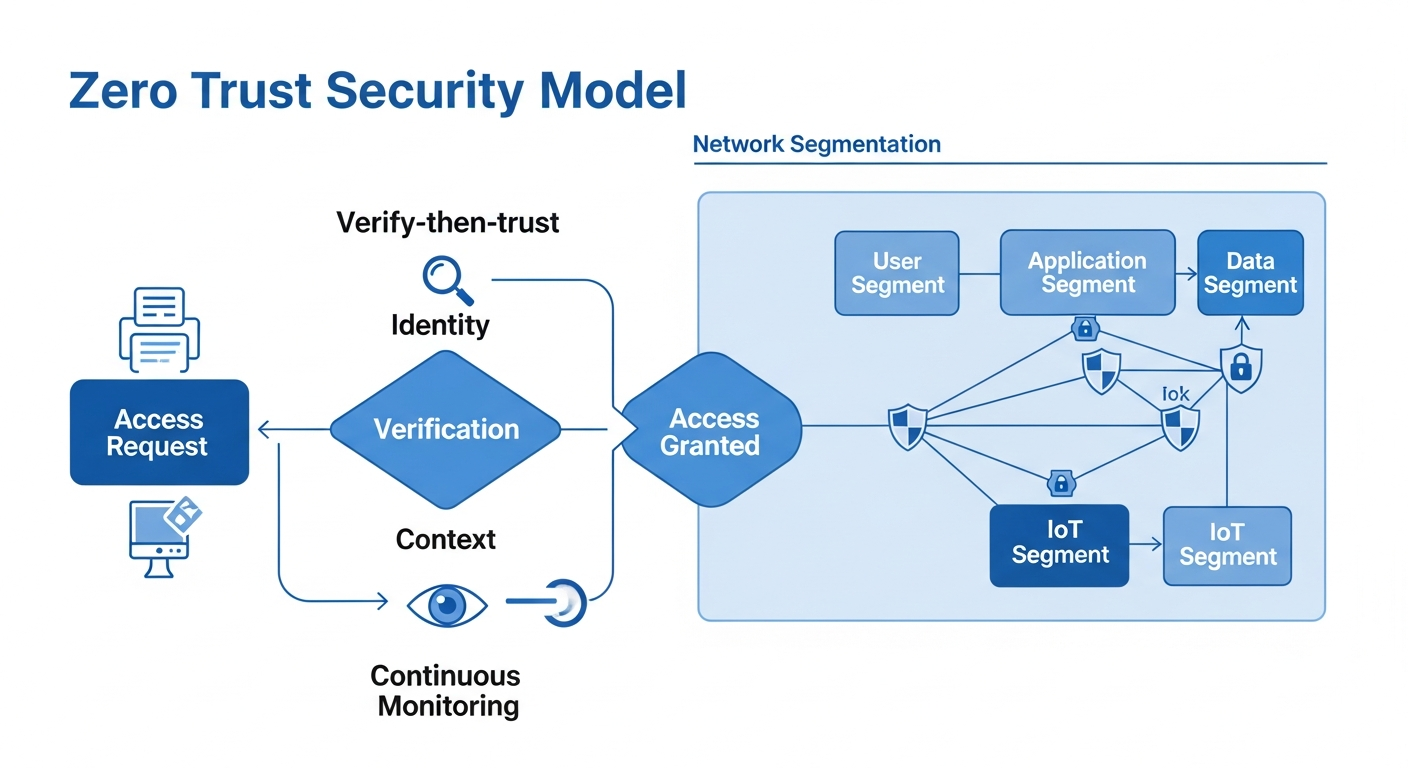
The Five Layers That Matter Most
Once identity is handled, build out the rest in order of impact. Endpoint detection and response on every laptop and server, because plain antivirus misses too much. Email security in front of your inbox, since most attacks still arrive there. A real firewall at each location with intrusion prevention turned on, not just the box your internet came with. Backups that are tested and stored where ransomware cannot reach them, ideally with one copy fully offline or immutable. And monitoring that ties it together so an alert at 2 a.m. reaches a human.
Notice what is not on that list. You do not need a dozen niche tools to start. A company of 200 people running these five layers well is in better shape than a company of 200 running fifteen tools nobody has time to tune. Coverage beats quantity every time.
We replaced four overlapping products with a tighter set of four that actually talk to each other. Our analysts stopped drowning in duplicate alerts, and our response time dropped by more than half within a quarter.
— IT Director, regional healthcare provider
Who Watches the Alerts
Tools generate alerts. Alerts mean nothing if no one reads them. This is where most mid-size companies quietly fail. You install good software, then the one person who understood it goes on vacation, and a real warning sits unread for nine days. For a team without a 24 hour security operations center, managed detection and response fills that gap. You pay a monthly fee per endpoint, and a staffed team watches your environment around the clock, investigates the noise, and calls you when something is real.
Budget roughly this way. Expect endpoint protection and MDR to run somewhere in the range of a few dollars to low double digits per device each month, depending on the depth of service. Email security adds a small per user cost. Firewalls are a hardware purchase plus a yearly subscription for the threat feeds. None of it is cheap, but compare it against the average cost of a single ransomware event, which routinely lands in the six figures once you count downtime, recovery, and lost trust. Seen that way, the math is not close.
Make It Match the Business, Then Revisit
A law firm has different exposure than a manufacturer with machines on the floor. A company chasing a SOC 2 report or HIPAA compliance has documentation requirements baked into the spend. Map your stack to what you actually do and what regulators actually ask, not to a generic checklist. Then look at it again every year, because both the threats and your headcount will have moved.
If you are not sure where your gaps are, that is a normal place to start. As a carrier neutral broker, we run a coverage review across your existing tools, show you the overlaps and the holes, and price options from multiple providers so you are choosing on merit rather than on whoever called you last. The goal is a stack you can actually run with the team you have.
Protect Your Business Today
Cyber threats are evolving faster than most businesses can keep up. Schedule a free security assessment with our team to identify vulnerabilities and build a defense strategy tailored to your organization.