
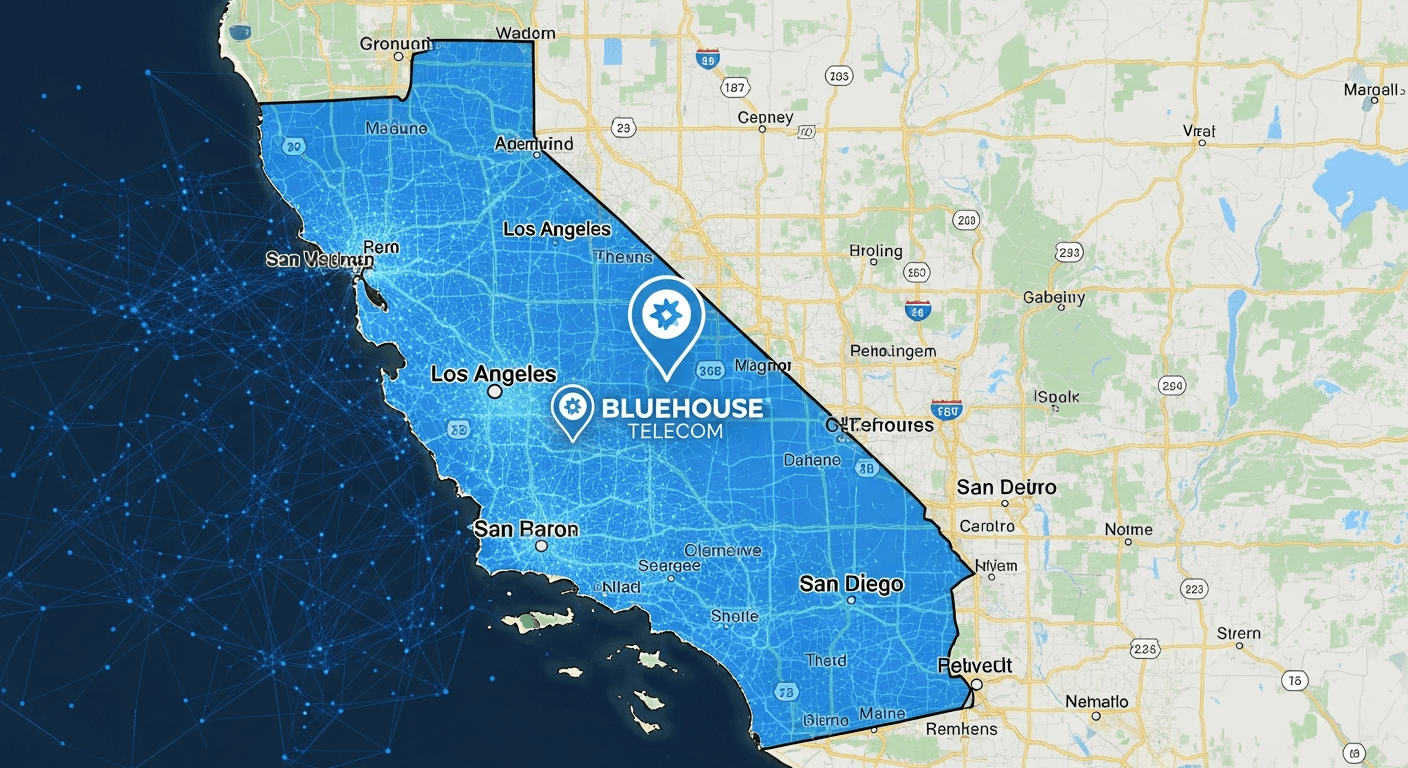
How to Choose the Right Telecom Partner in Southern California's Crowded Market
Southern California businesses have dozens of telecom providers competing for their contracts. Understanding what separates a reliable partner from a commodity vendor can save thousands in annual costs and countless hours of downtime.
Elias Thorne
August 1, 2025
Southern California is one of the most competitive telecom markets in the United States. Between the legacy incumbents, the cable operators, the fiber overbuilders, and the dozens of boutique providers serving niche markets from San Diego to Santa Barbara, a business searching for internet, voice, or unified communications services will receive no shortage of proposals. The challenge is not finding a provider. The challenge is finding the right provider, one whose infrastructure, support model, and long-term roadmap align with your business needs.
The default approach for many businesses is to compare proposals on price alone. A spreadsheet of monthly recurring costs makes the decision feel objective and straightforward. But telecom is a category where the lowest price frequently correlates with the highest total cost of ownership. Cheap circuits come with shared bandwidth, oversubscribed nodes, and support queues that stretch into hours during outages. The dollars saved on the monthly invoice evaporate the first time a four-hour outage costs your team a full day of productivity.
Evaluating Beyond the Price Sheet
The most important factor in selecting a telecom partner is the provider's infrastructure footprint relative to your locations. A provider with owned fiber and points of presence near your offices in Carlsbad, Irvine, or downtown Los Angeles can deliver lower latency, faster provisioning, and more responsive repair times than a provider who is reselling capacity on someone else's network. Ask every prospective provider whether they own or lease the last-mile infrastructure serving your building. The answer reveals how much control they have over your service quality.

Support responsiveness is the second critical differentiator. Request specific SLA metrics from each provider: mean time to respond, mean time to resolve, and the escalation path for critical outages. A provider who offers a four-hour hardware replacement SLA but routes all support calls through a national call center in another time zone is not delivering the same value as a local provider whose network operations center is staffed by engineers who know the Southern California infrastructure landscape.
We switched from a national carrier to a regional provider and our mean time to resolution dropped from eleven hours to ninety minutes. The monthly cost was nearly identical.
— IT Director, San Diego professional services firm
Building a Long-Term Relationship
The best telecom partnerships evolve with your business. A provider who conducts quarterly business reviews, proactively recommends technology upgrades, and notifies you about infrastructure improvements in your area is functioning as a strategic advisor rather than a commodity vendor. BlueHouse Telecom provides this level of engagement for businesses across San Diego, Orange County, Los Angeles, and the Inland Empire. Contact us for a complimentary telecom assessment that evaluates your current services against market alternatives.
Build the Right Network for Your Business
From dedicated fiber and fixed wireless to SD-WAN and redundant failover, we design connectivity solutions that match your location, budget, and performance requirements.